Sample 14051
14051 Impact Melt Breccia 191.3 grams
Section titled “14051 Impact Melt Breccia 191.3 grams”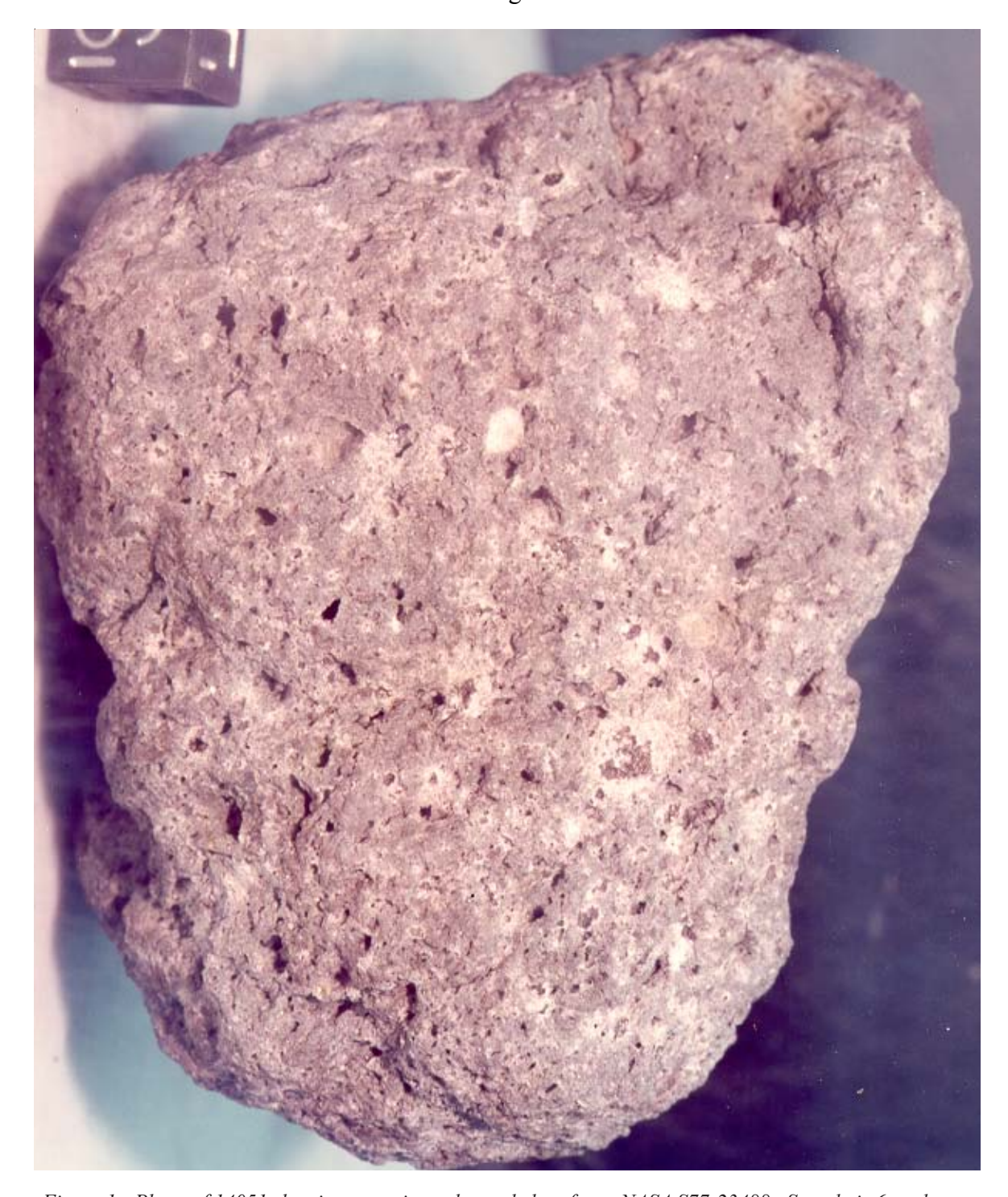
Figure 1: Photo of 14051 showing zap pits and rounded surface. NASA S77-23488. Sample is 6 cm long.
This breccia sample was picked up on the flank of Cone bombardment on all sides (a potato) (figure 2). It is a Crater (Swann et al. 1971). It was sitting on the surface blocky, subrounded rock with all surfaces lightly
Introduction and has been nicely rounded by micrometeorite
covered by zap pits with or without glass linings (figure 1). Spall-like fractures occur locally. Irregular to rounded cavities 1-3 mm across may be clast molds. The sample is a coherent, fine-grained clastic rock having a small percentage of subrounded light and subordinate dark clasts in a medium-tan matrix.
Petrography
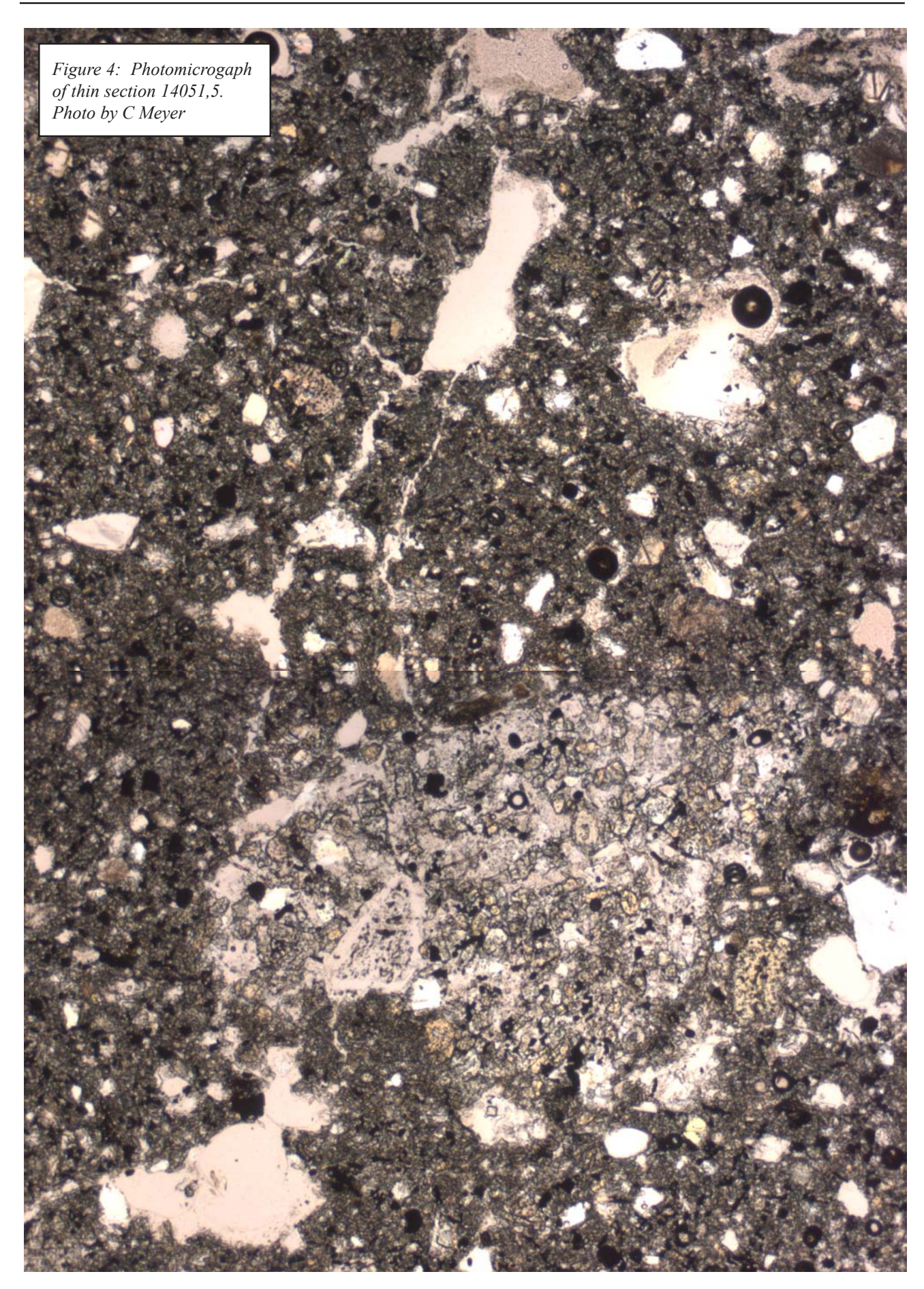
Section titled “Petrography”14051 has the texture of an “impact melt rock”, similar to the large boulders at Apollo 17. The fine grain matrix has recrystallized with formation of distinct grains of poikilitic ilmenite (figure 4). The void space has consolidated into distinct, millimeter-sized vugs and vesicles. Stadermann et al. (1991) give the mode.
Lithic clasts are not digested (figure 4). A minor amount of glass is seen in thin section?
Twedell et al. (1978) mapped the surface of 14051 (figure 5).
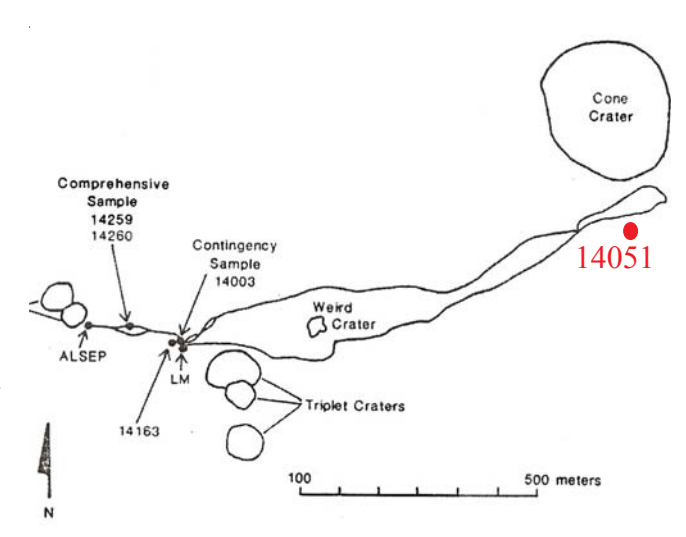
Figure 2: Map of Apollo 14 traverse to Cone Crater.
Chemistry
Section titled “Chemistry”The chemical composition of 14051 has not been reported.
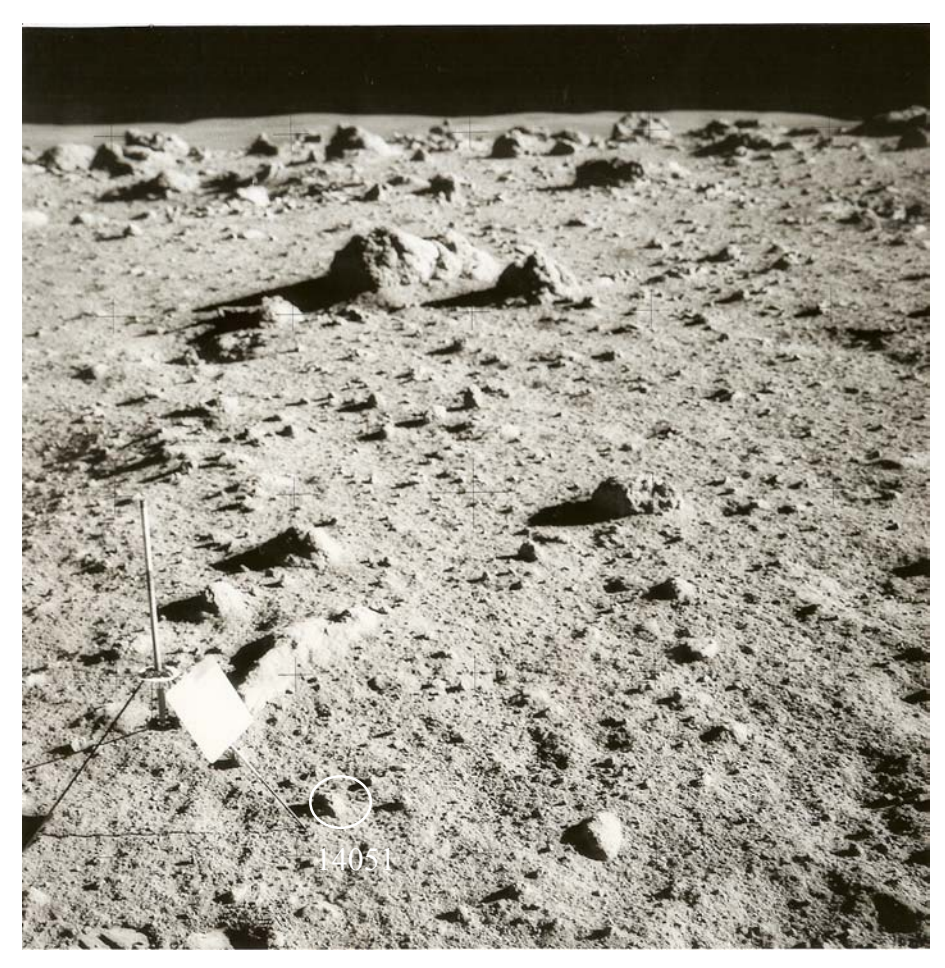
Figure 3: Photo of 14051 on lunar surface, with rim of Cone Crater in distance. AS14-68-9444.
Lunar Sample Compendium C Meyer 2011
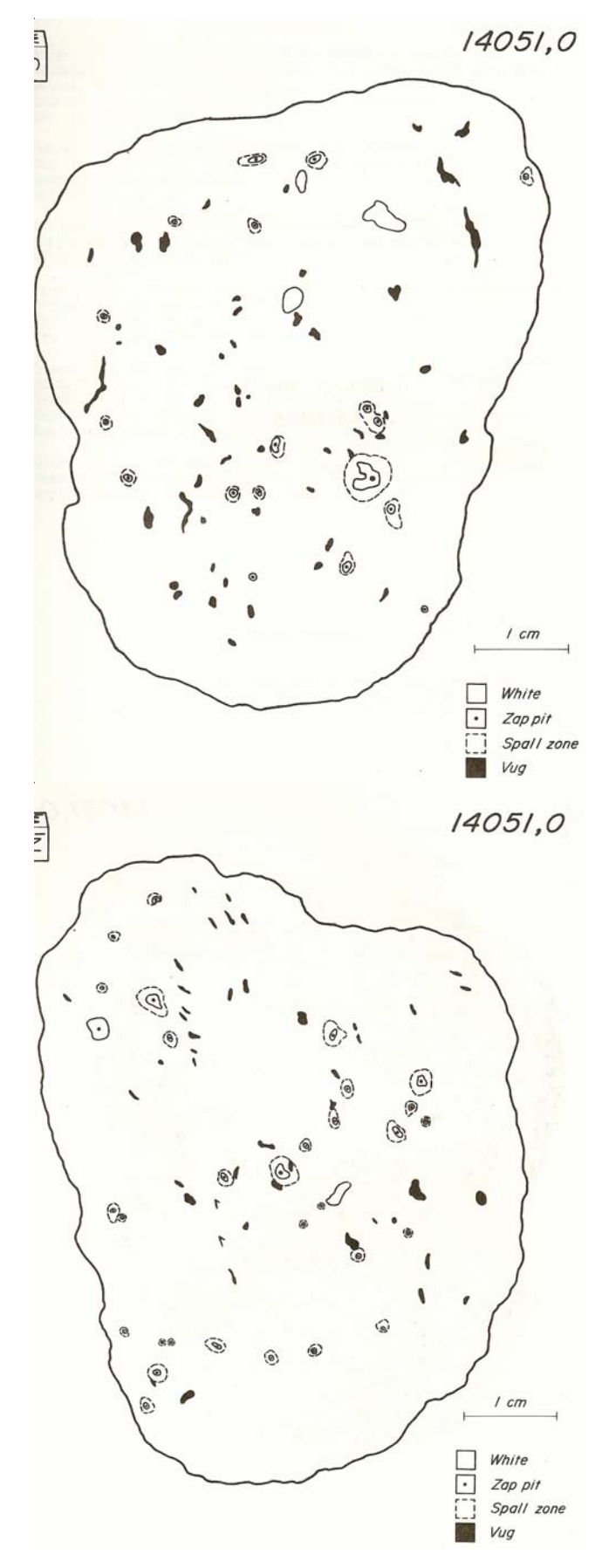
Figure 5: Maps of both side of 14051 showing zap pits (Twedell et al. 1978).
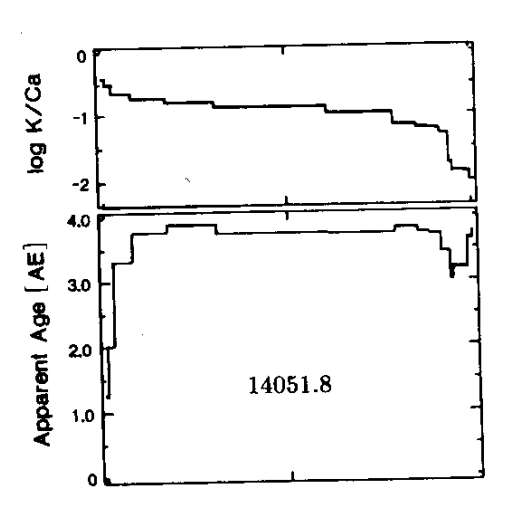
Figure 6: Ar plateau diagram for 14051 (Stadermann et al. 1991).
Summary of Age Data for 14051
Section titled “Summary of Age Data for 14051”Ar/Ar
Stadermann et al. 1991 3.71 ± 0.05 b.y.
Beware Ar control standard
Modal mineralogy of 14051
Section titled “Modal mineralogy of 14051”Stadermann et al. 1991 Plagioclase 51.2 % Pyroxewne, olivine42.4 Spinel 0 Fe + FeS 0.3 Zircon 0.6 Ilmenite 3.3 Mesotasis 2.4
Radiogenic age dating
Section titled “Radiogenic age dating”Stadermann et al. (1991) determined an Ar plateau age of 3.71 ± 0.05 b.y. for 14051 (figure 6). They argue that Imbrium can’t be older than that! But since it has an exposure age greater than Cone Crater, it may be exotic to the site. Nevertheless, this is a relatively young age for an impact melt rock, and needs to be checked.
Cosmogenic isotopes and exposure ages
Section titled “Cosmogenic isotopes and exposure ages”Stadermann et al. (1991) determined an Ar exposure age of 47 m.y., which is older than Cone Crater. However, Swann et al. (1977) believed that the sample was part of the Cone Crater ejecta.
Processing
Section titled “Processing”14051 was returned in a Teflon bag in ALSRC 1006, which was sealed.
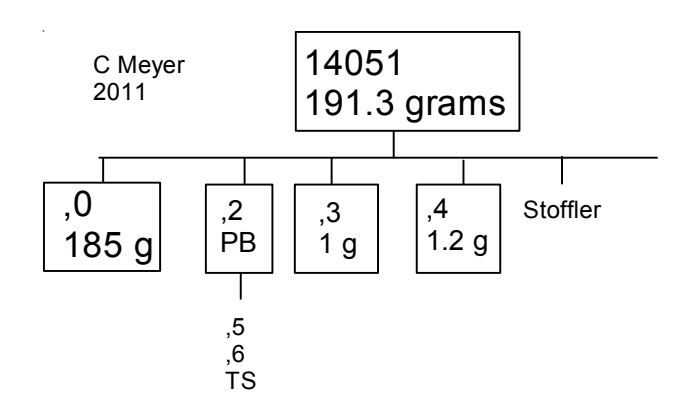
There are only two thin sections for 14051 and the sample has not been sawn.
References for 14051
Section titled “References for 14051”Carlson I.C. and Walton W.J.A. (1978) Apollo 14 Rock Samples. Curators Office. JSC 14240
Chao E.C.T., Minkin J.A. and Best J.B. (1972) Apollo 14 breccias: General characteristics and classification. Proc. 3rd Lunar Sci. Conf. 645-659.
Deutsch A. and Stoffler D. (1987) Rb-Sr analysis of Apollo 16 melt rocks and a new age estimate for the Imbrium basin: Lunar basin chronology and the early heavy bombardment of the moon. Geochim. Cosmochim. Acta 51, 1951-1964.
LSPET (1971) Preliminary examination of lunar samples from Apollo 14. Science 173, 681-693.
Simonds C.H., Phinney W.C., Warner J.L., McGee P.E., Geeslin J., Brown R.W. and Rhodes J.M. (1977) Apollo 14 revisited, or breccias aren’t so bad after all. Proc. 8th Lunar Sci. Conf. 1869-1893.
Stadermann F.J., Heusser E., Jessberger E.K., Lingner S. and Stoffler D. (1991) The case for a younger Imbrium basin: New 40Ar-39Ar ages of Apollo 14 rocks. Geochim. Cosmochim. Acta 55, 2339-2349.
Sutton R.L., Hait M.H. and Swann G.A. (1972) Geology of the Apollo 14 landing site. Proc. 3rd Lunar Sci. Conf. 27 38.
Swann G.A., Trask N.J., Hait M.H. and Sutton R.L. (1971a) Geologic setting of the Apollo 14 samples. Science 173, 716-719.
Swann G.A., Bailey N.G., Batson R.M., Eggleton R.E., Hait M.H., Holt H.E., Larson K.B., Reed V.S., Schaber G.G., Sutton R.L., Trask N.J., Ulrich G.E. and Wilshire H.G. (1977) Geology of the Apollo 14 landing site in the Fra Mauro Highlands. U.S.G.S. Prof. Paper 880.
Swann G.A., Bailey N.G., Batson R.M., Eggleton R.E., Hait M.H., Holt H.E., Larson K.B., McEwen M.C., Mitchell E.D., Schaber G.G., Schafer J.P., Shepard A.B., Sutton R.L., Trask N.J., Ulrich G.E., Wilshire H.G. and Wolfe E.W. (1972) 3. Preliminary Geologic Investigation of the Apollo 14 landing site. In Apollo 14 Preliminary Science Rpt. NASA SP-272. pages 39-85.
Twedell D., Feight S., Carlson I. and Meyer C. (1978) Lithologic maps of selected Apollo 14 breccia samples. Curators Office. JSC 13842
Warner J.L. (1972) Metamophism of Apollo 14 breccias. Proc. 3rd Lunar Sci. Conf. 623-643.
Williams R.J. (1972) The lithification of metamorphism of lunar breccias. Earth Planet. Sci. Lett. 16, 250-256.
Wilshire H.G. and Jackson E.D. (1972) Petrology and stratigraphy of the Fra Mauro Formation at the Apollo 14 site. U.S. Geol. Survey Prof. Paper 785.