Sample 15265
15265, 15266 and 15267
Section titled “15265, 15266 and 15267”Regolith Breccia 314.1, 271.4 and 1.8 grams
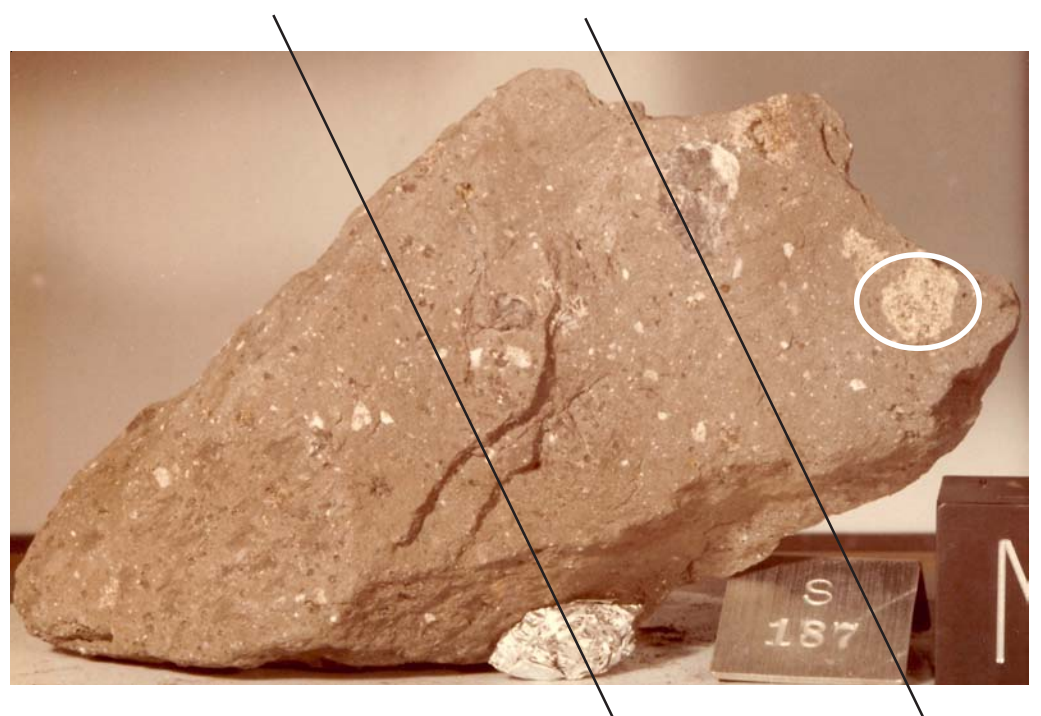
Figure 1: Flat side of 15265. Cube is 1 inch. S71-44152.
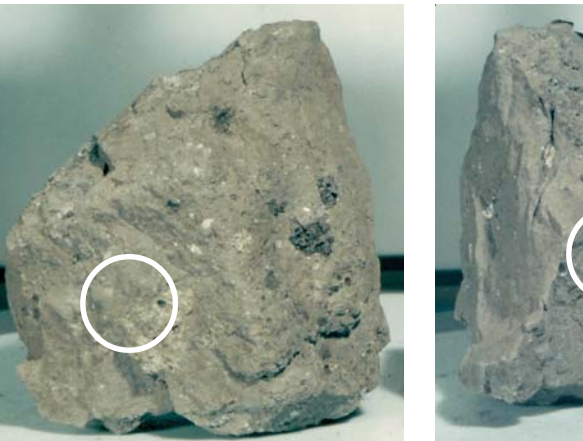
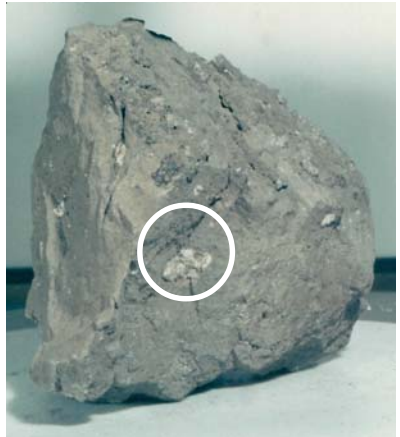
Figure 2: Two sides of 15266 showing two clasts. Sample is about 5 cm across. S71-44170 and 44172.
Introduction
Section titled “Introduction”These similar-looking breccia samples were returned in the same bag and are from the same small boulder, broken by the astronauts (figure 5). They are coherent regolith breccias with dark glassy matrix. A mare basalt clast was dated at 3.16 b.y.
Petrography
Section titled “Petrography”Fruland (1983) and Simon et al. (1986) included 15265 in the suite of Regolith Breccias. McKay et al. (1989) reported that the maturity index for 15265 was Is/FeO = 21 and 14 for 15266. Grain size distribution was determined by freeze-dry-cycled disaggregation (Graf, figure 11).
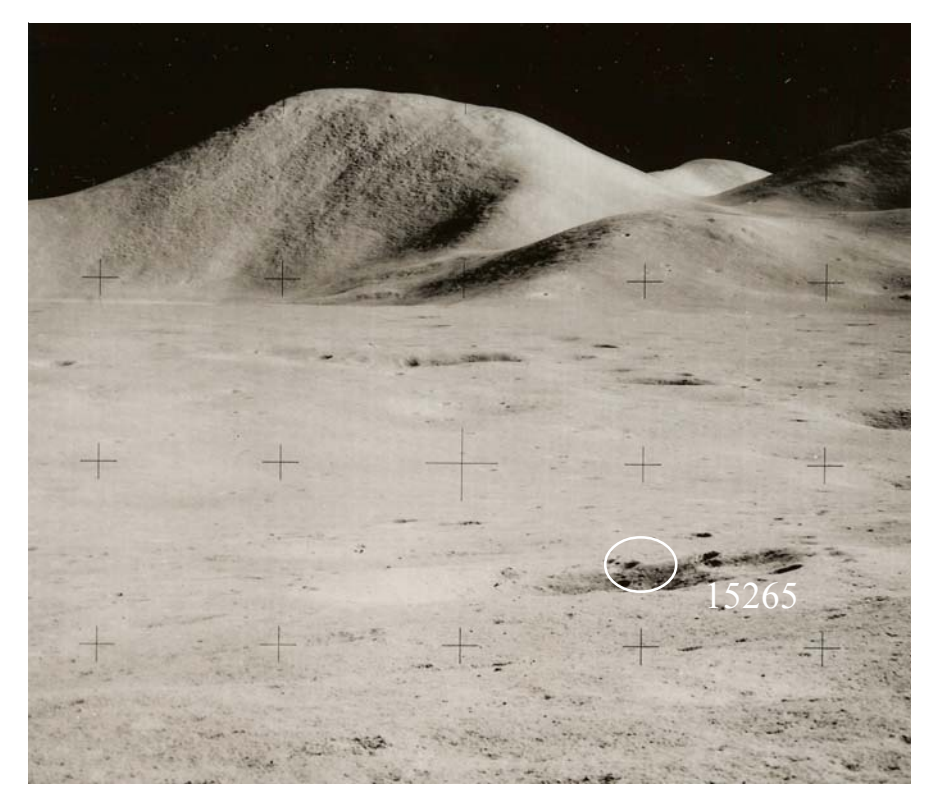
Figure 3: Location of 15265. AS15-85-11511
15265, 15266 and 15267 are coherent breccias containing mare basalt and KREEP basalt clasts as well as abundant glass. McKay et al. (1989) reported agglutinate fragments. Thin section photomicrographs can be found in the catalog by Ryder (1985).
Significant Clast
Section titled “Significant Clast”Basalt Clast
Section titled “Basalt Clast”Mark et al. (1974) determined the age of a mare basalt clast.
Chemistry
Section titled “Chemistry”LSPET (1972), Keith et al. (1972), Simon et al. (1986), McKay et al. (1989) and determined the composition of 15265 and 15266 (figures 8 and 9).
Moore et al. (1973) determined 57 ppm carbon for 15265 (figure 10). Kaplan et al. (1976) reported 76 ppm carbon, 41 ppn nitrogen and 870 ppm sulfur (including isotopic analysis). Figure 4: Location of 15265, 15266.
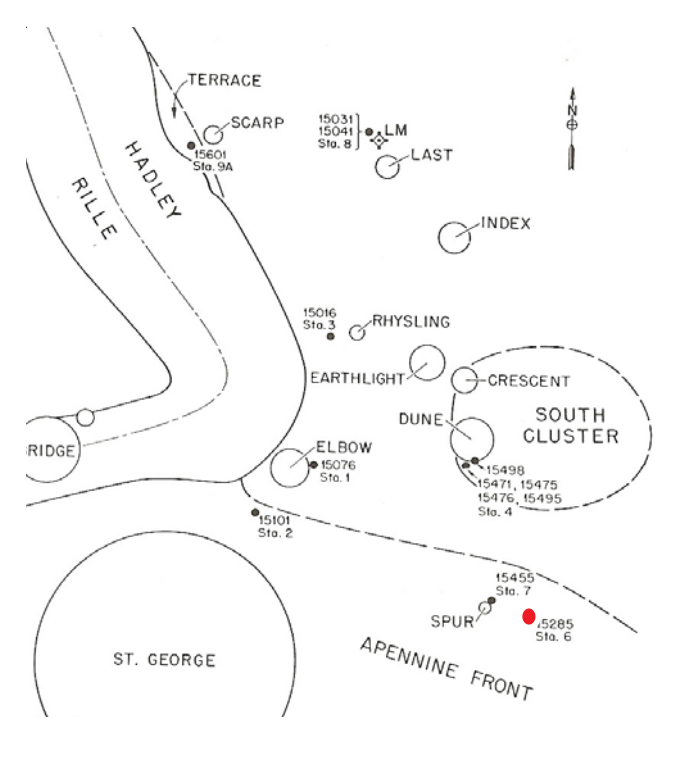
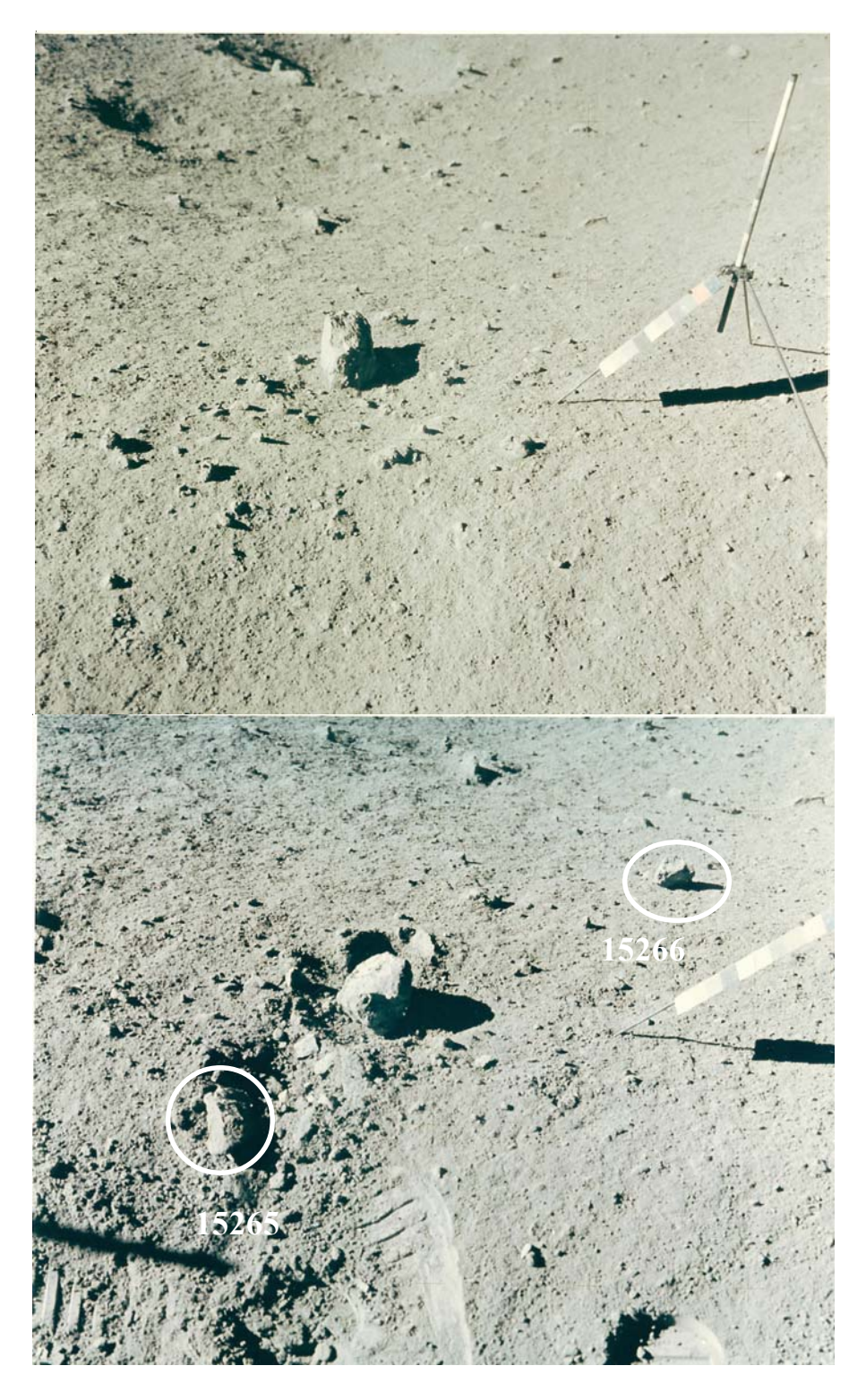
Figure 5: Before and after photos of small rock, broken by astronauts to yield 15265 and 15266. AS1586-11635 and 639. Gnomon is 50 cm.
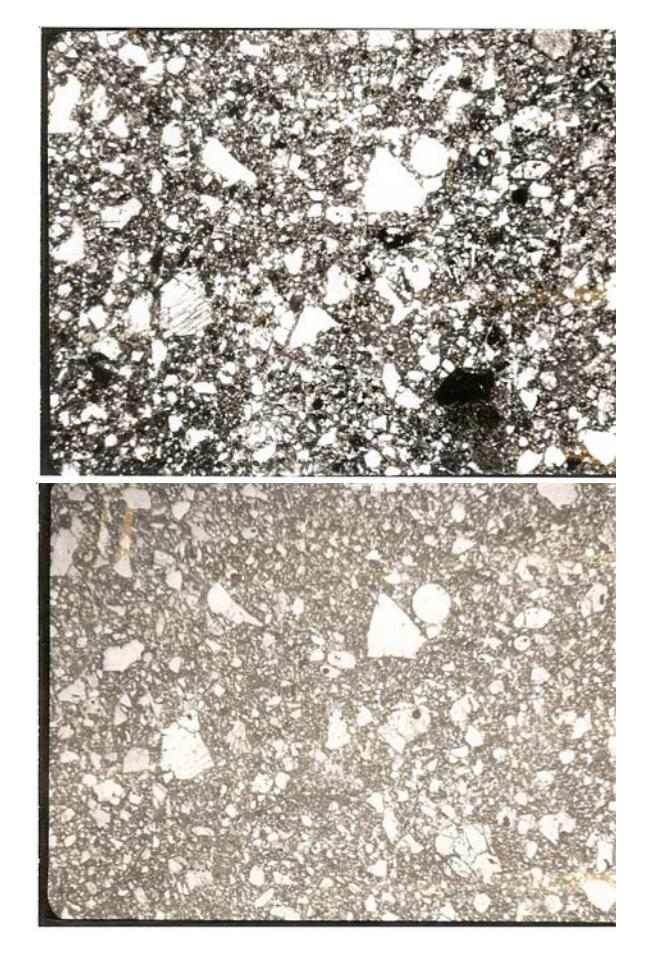
Figure 6 a,b: Transmitted and reflected light photomicrographs of thin section of 15265. Field of view is 2 mm.
| Mode for 15265 | (Simon et al. 1986) | ||||||||
|---|---|---|---|---|---|---|---|---|---|
| Matrix | <20 micron | 61.6 % | |||||||
| 20-90 micron | 90-1000 micron | ||||||||
| Mare basalt | 1.3 | 1.9 | |||||||
| Plutonic Rx. | 0.1 | 0.8 | |||||||
| Feld. CMB | 0.6 | ||||||||
| Feld. Basalt | |||||||||
| KREEP basalt | |||||||||
| Granulitic/Poik. | 0.8 | ||||||||
| Reg Bx. | 1.3 | 0.6 | |||||||
| Agglutinate | 1.8 | 1.3 | |||||||
| Pyroxene | 7.6 | 2.6 | |||||||
| Olivine | 0.8 | 0.3 | |||||||
| Plagioclase | 3.7 | 2.6 | |||||||
| Opaque | 0.5 | ||||||||
| Glass | 0.8 | 2.4 |
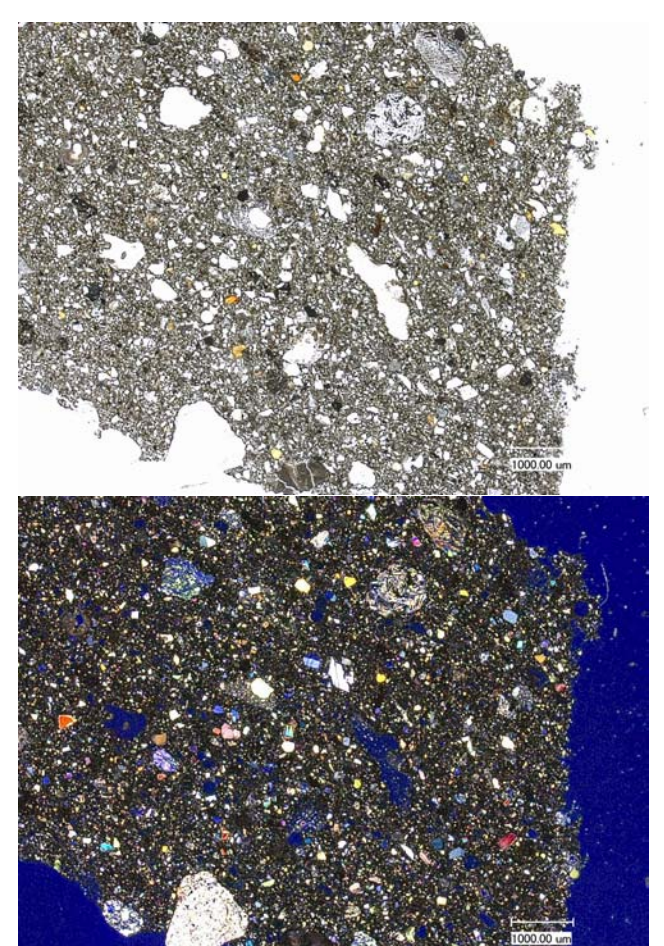
Figure 7a,b: Photomicrographs of 15265,74 by C Meyer. Scale bar is 1 mm.
Mineralogical Mode for 15265
Section titled “Mineralogical Mode for 15265”| (McKay et al. 1989) | |||||||||
|---|---|---|---|---|---|---|---|---|---|
| 20-500 micron | 500-1000 micron | ||||||||
| Mare Basalt | 2 % | 47.7 % | |||||||
| KREEP basalt | 7.6 | 0 | |||||||
| Plutonic | 0 | 0 | |||||||
| Breccias | 0.7 | 0 | |||||||
| Olivine | 0 | 0 | |||||||
| Pyroxene | 24.3 | 0 | |||||||
| Plagioclase | 16 | 0 | |||||||
| Opaques | 0.7 | 0 | |||||||
| Glass | 12.3 | 27.3 | |||||||
| Agglutinates | 15.3 | 2.3 | |||||||
Mineralogical Mode for 15266
Section titled “Mineralogical Mode for 15266”| (McKay et al. 1989) | |||||||||
|---|---|---|---|---|---|---|---|---|---|
| 20-500 micron | 500-1000 micron | ||||||||
| Mare Basalt | 0 % | 9.1 % | |||||||
| KREEP basalt | 14.4 | 29.1 | |||||||
| Plutonic | 0.8 | 5.5 | |||||||
| Breccias | 4 | 14.5 | |||||||
| Olivine | 1.6 | 0 | |||||||
| Pyroxene | 23.2 | 3.6 | |||||||
| Plagioclase | 28.4 | 1.8 | |||||||
| Opaques | 0.4 | 0 | |||||||
| Glass | 5.2 | 32.7 | |||||||
| Agglutinates | 6.4 | 0 |
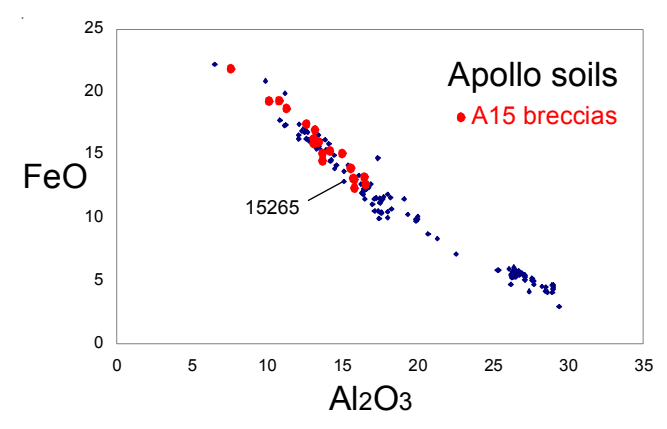
Figure 8: Compostion of Apollo soils, Apollo 15 breccias and 15265.
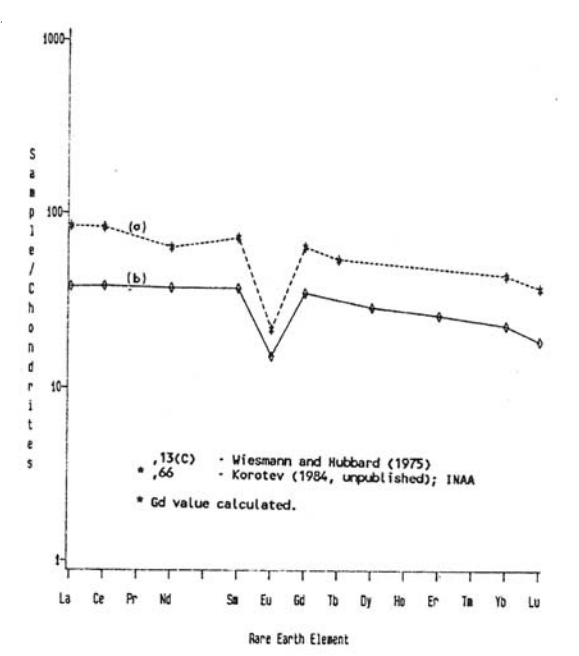
Figure 9: Normalized rare-earth-element diagram for 15265 (see table).
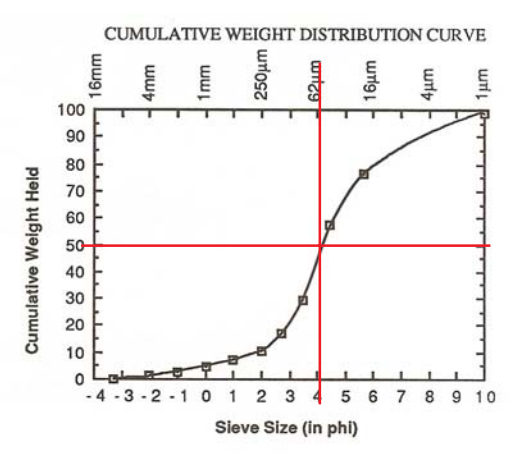
Average Grain Size = 44 microns
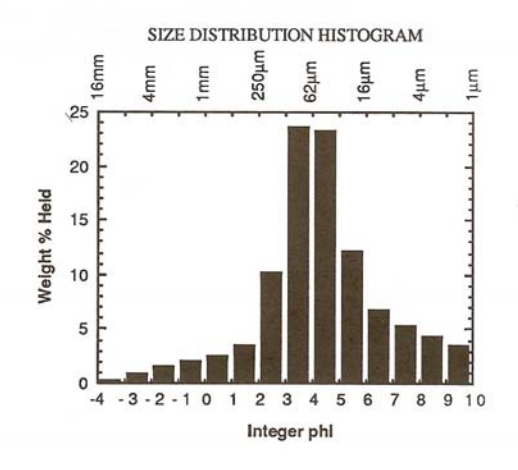
Figure 11: Grain size distribution for 15265 after freeze-thaw-cycle dissagregation (Graf 1987).
Radiogenic age dating
Section titled “Radiogenic age dating”The only age date is by Mark et al. (1974) who determined the age of a mare basalt clast (figure 12).
Cosmogenic isotopes and exposure ages
Section titled “Cosmogenic isotopes and exposure ages”Keith et al. (1972) determined the cosmic-ray-induced activity of 26Al = 72 dpm/kg, 22Na = 37 dpm/kg, 54Mn = 12 dpm/kg, and 56Co = 8 dpm/kg.
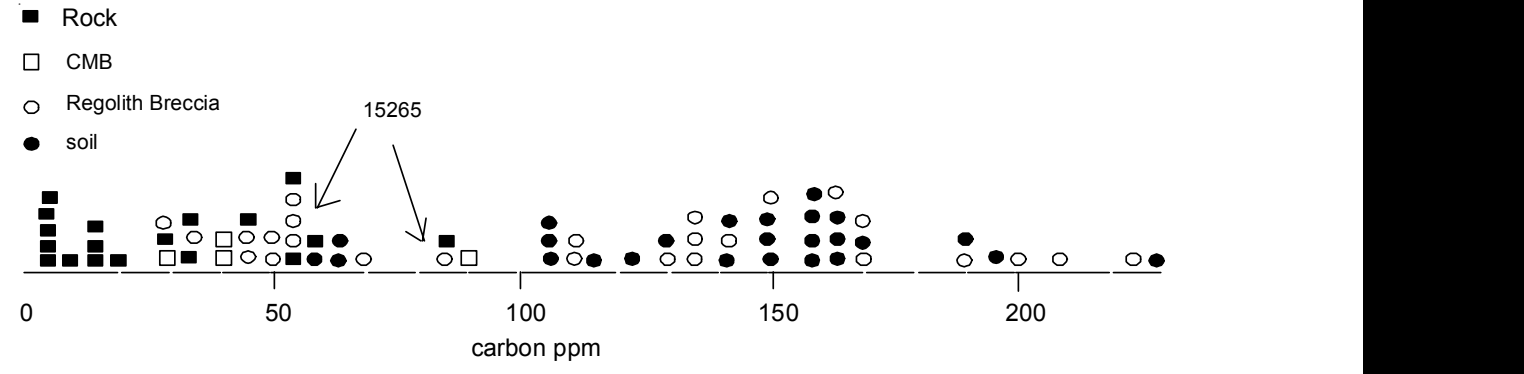
Figure 10: Carbon in lunar samples showing 15265..
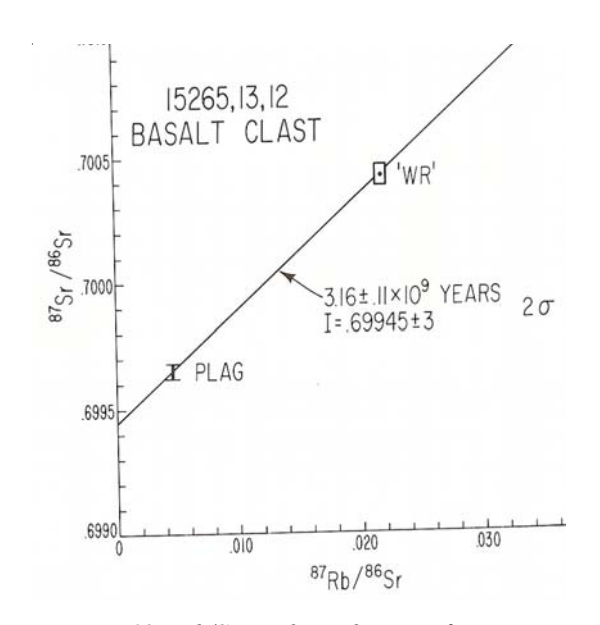
Figure 12: Rb/Sr isochron diagram for mare basalt clast from 15265 (Mark et al. 1974).
Summary of Age Data for clast in 15265 Rb/Sr
Section titled “Summary of Age Data for clast in 15265 Rb/Sr”Mark et al. 1974 $3.16 \pm 0.11$ b.y.
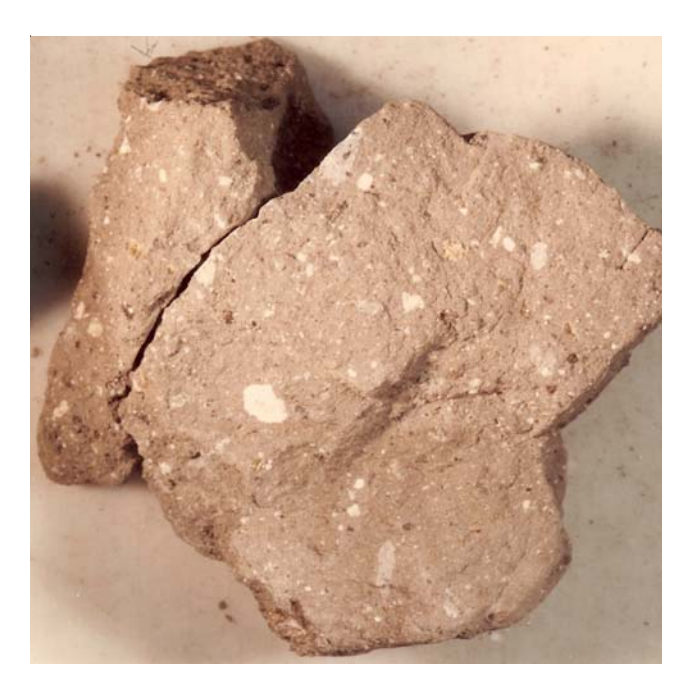
Figure 13: Photo of 15265,4. About 4 cm across. S75-33762.
Other Studies
Section titled “Other Studies”Rare gas concentrations and isotopic ratios were reported by McKay et al. (1989) and Bogard and Nyquist (1973).
Bhandari et al. (1973) studied the distribution of cosmic ray tracks
Processing
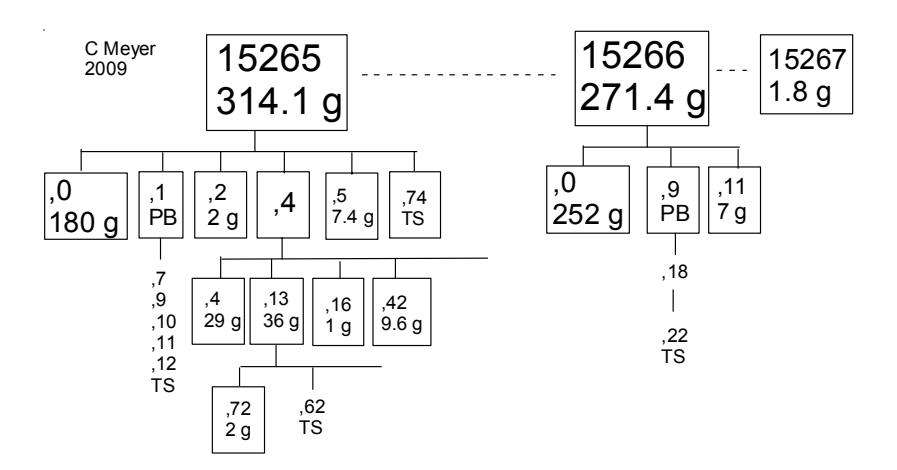
Section titled “Processing”15265 was originally issued to the Burlingame Consortium. There are 6 thin section of 15265 and 5 for 15266. These samples have not been sawn.
Table 1. Chemical composition of 15265.
| weight | reference LSPET72 LSPET | (Korotev) | McKay 89 Wiesmann76 Simon86 McKay89 | (Laul) | 15266 | Keith72 | clast | Warren87 Ganapathy Mark74 Wolf 79 | matrix | |||||||||||
|---|---|---|---|---|---|---|---|---|---|---|---|---|---|---|---|---|---|---|---|---|
| SiO2 % TiO2 Al2O3 FeO MnO MgO CaO Na2O K2O P2O5 S % sum | 46.9 1.4 16.7 11.2 0.15 9.95 11.2 0.51 0.25 0.25 0.08 | (a) (a) (a) (a) (a) (a) (a) (a) (a) (a) | (a) 0.19 | (b) | 1.4 16.7 11.2 10 11.4 0.51 | (c ) (c ) (c ) (c ) (c ) | (c ) 2.13 0.11 | (d) 1.5 16.9 10.7 0.15 10.6 11.1 0.54 (d) 0.25 | (e) (e) (e) (e) (e) | (e) 12.2 (e) 10.8 (e) 0.58 | (c ) (c ) (c ) | 0.25 | 44.9 2.33 9.07 21.6 0.27 9.3 9.7 0.27 (b) 0.14 | (e) (e) (e) (e) (e) (e) (e) (e) (e) | 0.26 | (g) | ||||
| Sc ppm | 21.4 | (c ) | 20.5 | (e) 23.7 | (c ) | 50 | (e) | |||||||||||||
| V Cr Co Ni | 2258 | (a) | 2070 34 214 | (c ) (c ) | (c ) 3225 | 73 33 200 | (e) | (d) 2121 (e) 2290 (e) 34 (e) 151 | (c ) (c ) (c ) | 3870 51 22 | (e) (e) | (e) 55 | (f) | |||||||
| Cu Zn Ga Ge ppb | 1.19 4.4 6 | (e) (e) | (e) 6.3 | (f) | ||||||||||||||||
| As Se Rb Sr | 7.8 150 | (a) (a) | 165 | 2.71 (c ) 109 | (d) | (d) 120 | (e) 140 | (c ) | 117 0.84 | (f) | (f) 6.96 142 | (g) (g) | ||||||||
| Y Zr Nb Mo Ru Rh | 100 468 29 | (a) (a) (a) | 420 | (c ) 181 | (d) 390 | (e) 560 | (c ) | 1200 | (e) | |||||||||||
| Pd ppb Ag ppb Cd ppb In ppb Sn ppb | 0.54 | (e) | 5.7 0.66 | (f) (f) | ||||||||||||||||
| Sb ppb Te ppb Cs ppm Ba La Ce | 0.33 292 27.8 73 | (c ) | (c ) 130 (c ) 12.5 (c ) 33.5 | (d) 350 (d) 30 (d) 70 | 0.43 (e) 379 (e) 39 (e) 101 | (c ) (c ) (c ) (c ) | 240 5.5 19 | (e) (e) (e) | 0.14 2.8 0.033 | (f) (f) (f) | ||||||||||
| Pr Nd Sm Eu | 38 13.1 1.48 | (c ) 22.2 (c ) 6.66 (c ) 1.05 | (d) 51 (d) 13.6 (d) 1.5 | (e) 59 (e) 17.6 (e) 1.71 | (c ) (c ) (c ) | 3.6 1.02 | (e) (e) | |||||||||||||
| Gd Tb Dy Ho | 2.55 | (c ) | 8.66 9.11 | (d) | 2.7 (d) 17.2 4.1 | (e) (e) | (e) 3.51 | (c ) | 0.8 | (e) | ||||||||||
| Er Tm Yb Lu Hf Ta W ppb | 8.8 1.26 10 1.22 | (c ) (c ) | 5.19 (c ) 4.54 (c ) 0.625 | (d) | 1.6 (d) 9.8 (d) 1.4 9.5 1.2 | (e) | (e) 12.3 (e) 1.66 (e) 14.3 (e) 1.68 | (c ) (c ) (c ) (c ) | 2.4 0.33 2.7 0.45 | (e) (e) (e) (e) | ||||||||||
| Re ppb Os ppb | 0.0065 (f) | |||||||||||||||||||
| Ir ppb Pt ppb | 7.8 | (c ) | 3.7 | (c ) | 0.01 | (e) 0.023 | (f) | |||||||||||||
| Au ppb Th ppm | 4.8 | (a) 5.1 | 2.1 (b) 4.6 | (c ) | (c ) 1.95 | (d) 4.9 | 1 (e) 6.2 | (c ) | (c ) 5.05 | 0.08 (b) 0.51 | (e) | (e) 0.091 | (f) | |||||||
| U ppm technique: (a) XRF, (b) radiation counting, (c ) INAA, (d) IDMS (e) INAA, (f) RNAA, (g) IDMS | 1.3 | (b) 1.21 | (c ) 0.54 | (d) 1.3 | (e) 1.68 | (c ) 1.27 | (b) | 0.167 | (f) |
References for 15265
Section titled “References for 15265”Bhandari N., Goswami J. and Lal D. (1973) Surface irradiation and evolution of the lunar regolith. Proc. 4th Lunar Sci. Conf. 2275-2290.
Bogard D.D. and Nyquist L.A. (1972) Noble gas studies on regolith materials from Apollo 14 and 15. Proc. 3rd Lunar Sci. Conf. 1797-1819.
Butler P. (1971) Lunar Sample Catalog, Apollo 15. Curators’ Office, MSC 03209
Ganapathy R., Morgan J.W., Krahenbuhl U. and Anders E. (1973) Ancient meteoritic components in lunar highland rocks: Clues from trace elements in Apollo 15 and 16 samples. Proc. 4th Lunar Sci. Conf. 1239-1261.
Graf J.C. (1993) Lunar Soils Grain Size Catalog. NASA Pub. 1265
Kaplan I.R., Kerridge J.F. and Petrowski C. (1976) Light element geochemistry of the Apollo 15 site. Proc. 7th Lunar Sci. Conf. 481-492.
Keith J.E., Clark R.S. and Richardson K.A. (1972) Gammaray measurements of Apollo 12, 14 and 15 lunar samples. Proc. 3rd Lunar Sci. Conf. 1671-1680.
LSPET (1972a) The Apollo 15 lunar samples: A preliminary description. Science 175, 363-375.
LSPET (1972b) Preliminary examination of lunar samples. Apollo 15 Preliminary Science Report. NASA SP-289, 6 1—6-28.
Mark R.K., Lee-Hu C-N. and Wetherill G.W. (1974) Equilibration and ages: Rb-Sr studies of breccias 14321 and 15265. Proc. 5th Lunar Sci. Conf. 1477-1485.
McKay D.S., Morris R.V. and Wentworth S.J. (1984) Maturity of regolith breccias as revealed by ferromagnetic and petrographic indicies (abs). Lunar Planet. Sci. XV, 530 531. Lunar Planetary Institute, Houston.
McKay D.S., Bogard D.D., Morris R.V., Korotev R.L., Wentworth S.J. and Johnson P. (1989) Apollo 15 regolith breccias: Window to a KREEP regolith*. Proc. 19th Lunar Sci. Conf*. 19-41. Lunar Planetary Institute, Houston.
Moore C.B., Lewis C.F. and Gibson E.K. (1973) Total carbon contents of Apollo 15 and 16 lunar samples. Proc. 4th Lunar Sci. Conf. 1613-1923.
Moore C.B. and Lewis C.F. (1976) Total nitrogen contents of Apollo 15, 16 and 17 lunar rocks and breccias (abs). Lunar Sci. VII, 571-573. Lunar Planetary Institute, Houston.
Ryder G. (1985) Catalog of Apollo 15 Rocks (three volumes). Curatoial Branch Pub. # 72, JSC#20787
Ryder G. and Sherman S.B. (1989) The Apollo 15 Coarse Fines. Curators Office #81, JSC#24035
Simon S.B., Papike J.J., Grosselin D.C. and Laul J.C. (1986) Petrology of the Apollo 15 regolith breccias. Geochim. Cosmochim. Acta 50, 2675-2691.
Swann G.A., Hait M.H., Schaber G.C., Freeman V.L., Ulrich G.E., Wolfe E.W., Reed V.S. and Sutton R.L. (1971b) Preliminary description of Apollo 15 sample environments. U.S.G.S. Interagency report: 36. pp219 with maps
Swann G.A., Bailey N.G., Batson R.M., Freeman V.L., Hait M.H., Head J.W., Holt H.E., Howard K.A., Irwin J.B., Larson K.B., Muehlberger W.R., Reed V.S., Rennilson J.J., Schaber G.G., Scott D.R., Silver L.T., Sutton R.L., Ulrich G.E., Wilshire H.G. and Wolfe E.W. (1972) 5. Preliminary Geologic Investigation of the Apollo 15 landing site. In Apollo 15 Preliminary Science Rpt. NASA SP-289. pages 5-1-112.
Warren P.H., Jerde E.A. and Kallemeyn G.W. (1987) Pristine moon rocks: A large felsite and a metal-rich ferroan anorthosite. Proc. 17th Lunar Planet. Sci. Conf. in J. Geophys. Res. 90, E303-E313.
Wentworth S.J. and McKay D.S. (1984) Density and porosity calculations for Apollo 15 and 16 regolith breccias (abs). Lunar Planet Sci. XV, 906-907. Lunar Planetary Institute, Houston.
Wiesmann H. and Hubbard N.J. (1975) A compilation of the Lunar Sample Data Generated by the Gast, Nyquist and Hubbard Lunar Sample PI-Ships. Unpublished. JSC
Wolf R., Woodrow A. and Anders E. (1979) Lunar basalts and pristine highland rocks: Comparison of siderophile and volatile elements. Proc. 10th Lunar Planet. Sci. Conf. 2107 2130.