Sample 15362
15362 Anorthosite 4.2 grams
Section titled “15362 Anorthosite 4.2 grams”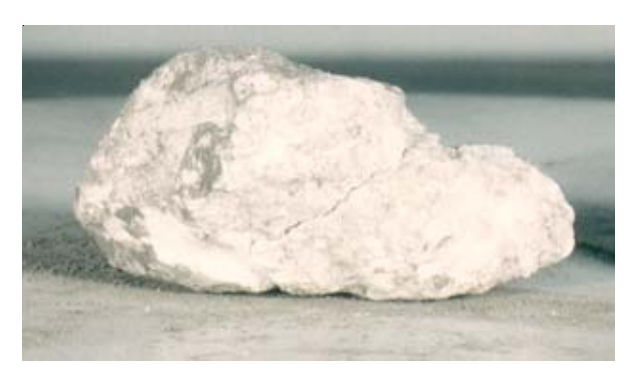
Figure 1: Photo of 15362. NASA S71-49627. Sample is about 2.5 cm long and 1 cm in cross section.
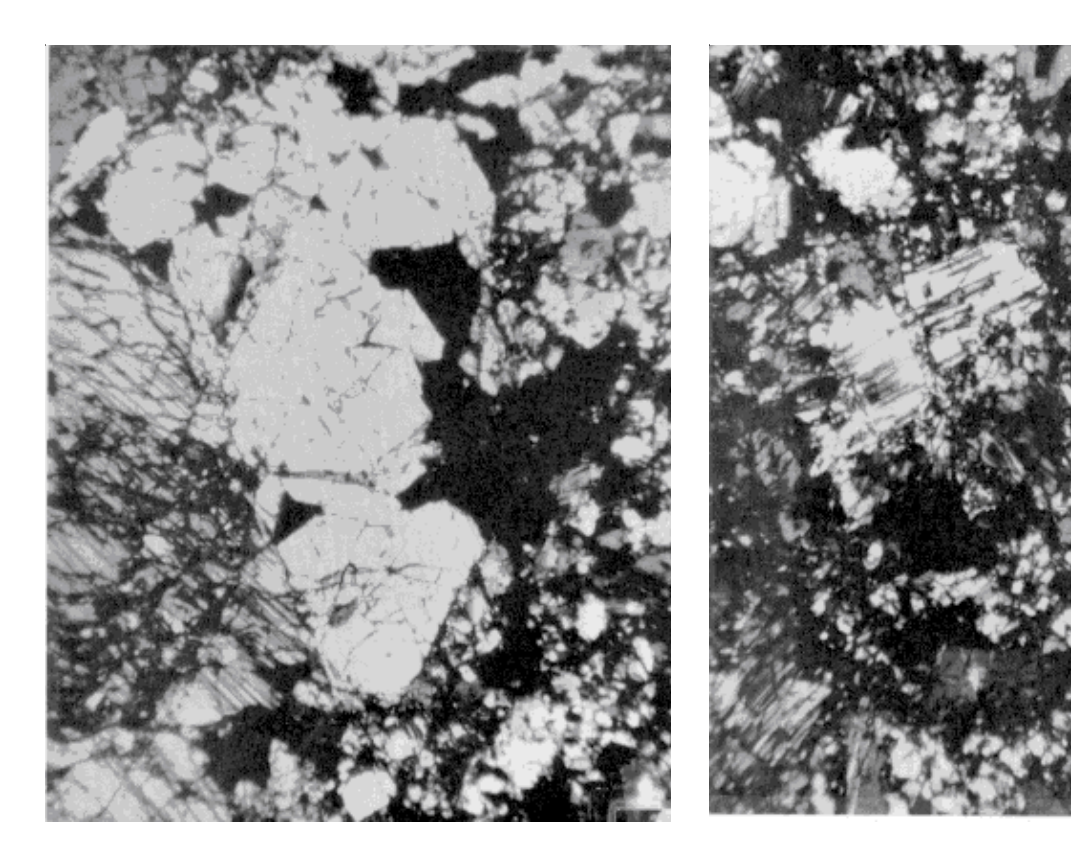
Figure 2: Two different views of thin section 15362,11 with crossed polarizers (from Ryder 1985). Width of field 2 mm.
Introduction
Section titled “Introduction”Sample 15362 is from a rake sample from Spur crater on the Hadley-Apennine Front. It is a cataclastic ferroan anorthosite that proved difficult to date. It has an old exposure age (428 m.y.).
Petrography
Section titled “Petrography”Dowty et al. (1972, 1973) studied the petrography of 15362 finding that it was 98 % plagioclase ( $An_{96.5}$ ), 2 % orthopyroxene ( $Wo_2En_{59}$ ) and trace augite, ilmenite, chromite and troilite. The plagioclase has been badly
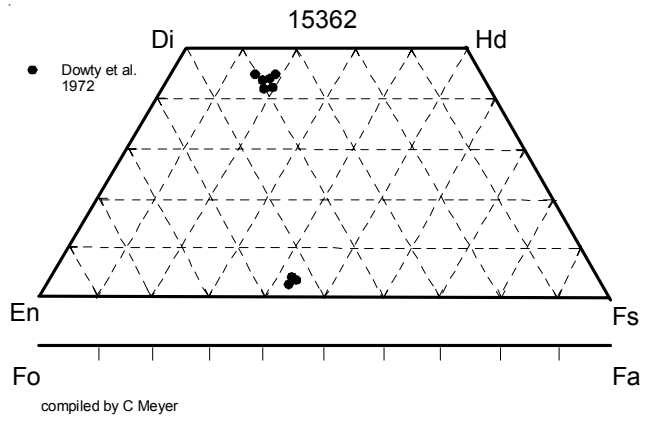
Figure 3: Composition of pyroxene in 15362 from Dowty et al. 1972).
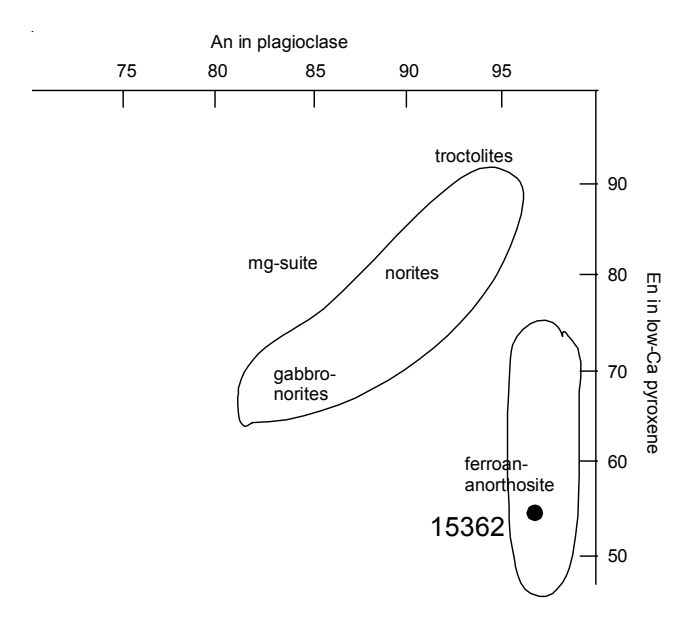
Figure 4: Composition of plagioclase and pyroxene in 15362 (from Dowty et al. 1972).
crushed and annealed (figure 2). The wide spread in composition of pyroxene indicates that the parent rock was held at subsolidus temperature for a long time.
Mineralogy
Section titled “Mineralogy”Olivine: none
Pyroxene: Dowty et al. (1972) and Bersch et al. (1991) determined the composition of pyroxene in 15362. Orthopyroxene is Wo2En59Fs39 and augite is Wo40En40Fs20 (figure 3).
Plagioclase: Dowty et al. (1972) analyzed plagioclase (An ). 96.5
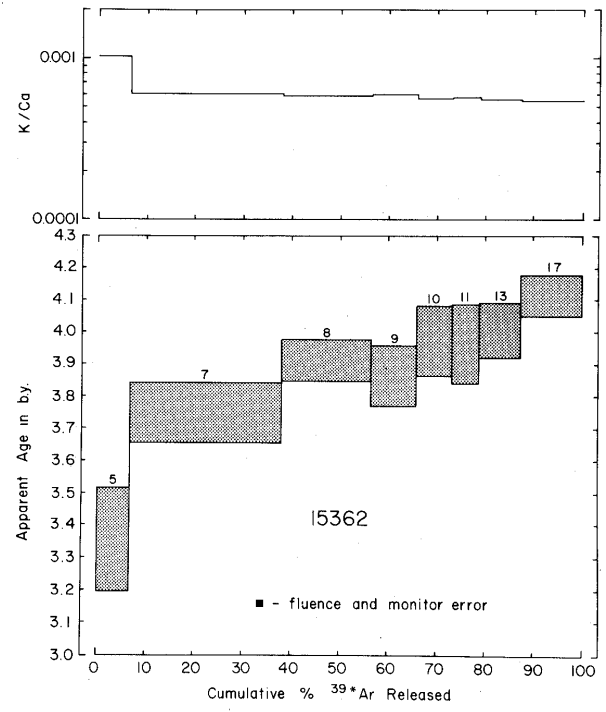
Figure 5: Ar/Ar plateau for 15362 as determined by Alexandra and Kahl (1974).
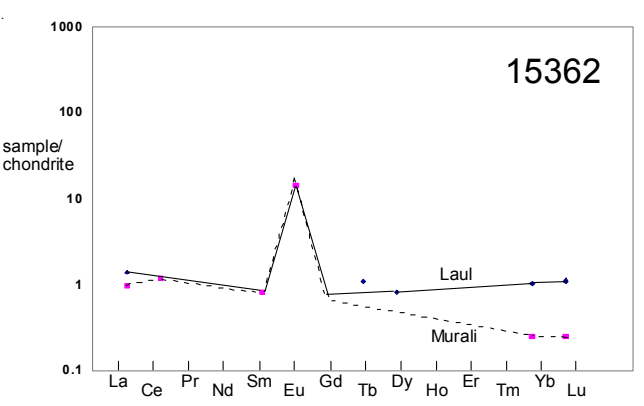
Figure 6: Normalized rare-earth-element composition of 15362 (data from Laul and Schmitt 1973 and Murali et al. 1977).
Ilmenite: An analysis of ilmenite in 15362 is given in Dowty et al. (1972).
Chromite: Dowty et al. (1972) reported two minute grains of chromite and gave an analysis.
Chemistry
Section titled “Chemistry”The chemical composition of 15362 was reported by Laul and Schmitt (1973), Murali et al. (1977) and Dowty et al. (1972). The sample has a tall Eu anomaly (figure 6).
Table 1. Chemical composition of 15362.
| ,7 SiO2 % 44 TiO2 0.2 (a) 0.03 Al2O3 32.3 (a) 35.4 (a) 35.1 FeO 0.23 (a) 0.57 (a) 0.29 MnO 0.005 (a) 0.014 (a) 0.01 MgO 0.3 (a) 0.31 CaO 17 (a) 18.4 (a) 19.8 Na2O 0.39 (a) 0.347 (a) 0.35 K2O 0.011 (a) <0.02 (a) 0.04 P2O5 S % sum Sc ppm 0.7 (a) 1.6 (a) V <28 (a) Cr 27 (a) 80 (a) Co 0.31 (a) 1.4 (a) Ni 10 (a) Cu Zn Ga Ge ppb As Se Rb Sr Y Zr <70 (a) Nb Mo Ru Rh Pd ppb Ag ppb Cd ppb In ppb Sn ppb Sb ppb Te ppb Cs ppm Ba La 0.23 (a) 0.33 (a) Ce 0.72 (a) Pr Nd Sm 0.12 (a) 0.12 (a) Eu 0.8 (a) 0.8 (a) Gd Tb <0.04 (a) Dy 0.2 (a) Ho Er Tm | reference weight | Murali 78 | Laul 73 | Dowty 72 | |||
|---|---|---|---|---|---|---|---|
| (b) (b) (b) (b) (b) (b) (b) (b) (b) | |||||||
| Yb Lu Hf Ta W ppb Re ppb Os ppb Ir ppb Pt ppb Au ppb Th ppm U ppm | |||||||
| 0.04 (a) <0.17 (a) 0.006 (a) 0.027 (a) 0.05 (a) |
Radiogenic age dating
Section titled “Radiogenic age dating”Alexander and Kahl (1974) set a lower limit for the age of 15362 (3.98 b.y.) by Ar/Ar, but the sample did not yield a good plateau (figure 5). The simplest explanation of the Ar release pattern is that material older than 4.1 b.y. was extensively, but not completely, outgassed around 3.92 b.y.
Cosmogenic isotopes and exposure ages
Section titled “Cosmogenic isotopes and exposure ages”The cosmic ray exposure age for 15362 was determined to be 428 ± 43 m.y. (Alexander and Kahl 1974).
technique: (a) INAA, (b) broad beam elec. Probe
References for 15362
Section titled “References for 15362”Alexander E.C. and Kahl S.B. (1974) 40Ar-39Ar studies of lunar breccias. Proc. 5th Lunar Sci. Conf. 1353-1373.
Butler P. (1971) Lunar Sample Catalog, Apollo 15. Curators’ Office, MSC 03209
Dowty E., Keil K. and Prinz M. (1972) Anorthosite in the Apollo 15 rake samples form Spur Crater. In The Apollo 15 Lunar Samples, 62-65.
Dowty E., Conrad G.H., Green J.A., Hlava P.F., Keil K., Moore R.B., Nehru C.E. and Prinz M. (1973a) Catalog of Apollo 15 rake samples from stations 2 (St. George), 7 (Spur Crater) and 9a (Hadley Rille). Inst. Meteoritics Spec. Publ. No 11, 51-73. Univ. New Mex. ABQ.
Dowty E., Keil K. and Prinz M. (1974) Plagioclase twin laws in lunar highland rocks; possible petrogenetic significance. Meteoritics 9, 183-197.
Dowty E., Prinz M. and Keil K. (1974b) Ferroan anorthosite: a widespread and distinctive lunar rock type. Earth Planet. Sci. Lett. 24, 15-25.
Hansen E.C., Steele I.M. and Smith J.V. (1979a) Lunar highland rocks: Element partitioning among minerals 1: Electron microprobe analyses of Na, K, and Fe in plagioclase; mg partitioning with orthopyroxene. Proc. 10th Lunar Planet. Sci. Conf. 627-638.
Hlava P.F., Green J.A., Prinz M., Keil K., Dowty E. and Bunch T.E. (1973) Apollo 15 rake samples, microbreccias and non-mare rocks: Bulk rock, mineral and glass electron microprobe analyses. Inst. Meteoritics Spec. Publ. No 11, 51-73. Univ. New Mex. ABQ
Laul J.C., Wakita H., Showalter D.L., Boynton W.V. and Schmitt R.A. (1972a) Bulk, rare earth, and other trace elements in Apollo 14 and 15 and Luna 16 samples. Proc. 3rd Lunar Sci. Conf. 1181-1200.
Laul J.C., Wakita H. and Schmitt R.A. (1972c) Bulk and REE abundances in anorthosites and noritic fragments. In The Apollo 15 Lunar Samples, 221-224. Lunar Planetary Institute, Houston.
Laul J.C. and Schmitt R.A. (1973b) Chemical composition of Apollo 15, 16, and 17 samples. Proc. 4th Lunar Sci. Conf. 1349-1367.
LSPET (1972a) The Apollo 15 lunar samples: A preliminary description. Science 175, 363-375.
LSPET (1972b) Preliminary examination of lunar samples. Apollo 15 Preliminary Science Report. NASA SP-289, 6 1—6-28.
Meyer C. (1979) Trace elements in plagioclase from the lunar highlands. In Papers presented to the Conference on the Lunar Highlands Crust (abs). LPI Contr. 394, 111 113. Lunar Planetary Institute, Houston
Murali A.V., Ma M.-S., Laul J.C. and Schmitt R.A. (1977a) Chemical composition of breccias, feldspathic basalt and anorthosites from Apollo 15 (15308, 15359,15382, and 15362), Apollo 16 (60618 and 65785), Apollo 17 (72434, 72536, 72559, 72735, 72738, 78526, and 78527) and Luna 20 (22012 and 22013) (abs). Lunar Sci. VIII, 700-702. Lunar Planetary Institute, Houston.
Nehru C.E., Prinz M., Dowty E. and Keil K. (1973) Electron microprobe analyses of spinel group minerals and ilmenite in Apollo 15 rake samples of igneous origin. Spec. Pub. Num. 10, UNM Inst. Meteor. ABQ
Nehru C.E., Prinz M., Dowty E. and Keil K. (1974) Spinelgroup minerals and ilmenite in Apollo 15 rake samples. Am. Mineral. 59, 1220-1235.
Ryder G. (1985) Catalog of Apollo 15 Rocks (three volumes). Curatoial Branch Pub. # 72, JSC#20787
Ryder G. and Norman M.D. (1979b) Catalog of pristine non-mare materials Part 2. Anorthosites. Revised. Curators Office JSC #14603
Steele I.M., Hutcheon I.D. and Smith J.V. (1980) Ion microprobe analysis and petrogenetic interpretations of Li, Mg, Ti, K, Sr, Ba in lunar plagioclase. Proc. 11th Lunar Planet. Sci. Conf. 571-590.
Swann G.A., Hait M.H., Schaber G.C., Freeman V.L., Ulrich G.E., Wolfe E.W., Reed V.S. and Sutton R.L. (1971b) Preliminary description of Apollo 15 sample environments. U.S.G.S. Interagency report: 36. pp219 with maps
Swann G.A., Bailey N.G., Batson R.M., Freeman V.L., Hait M.H., Head J.W., Holt H.E., Howard K.A., Irwin J.B., Larson K.B., Muehlberger W.R., Reed V.S., Rennilson J.J., Schaber G.G., Scott D.R., Silver L.T., Sutton R.L., Ulrich G.E., Wilshire H.G. and Wolfe E.W. (1972) 5. Preliminary Geologic Investigation of the Apollo 15 landing site. In Apollo 15 Preliminary Science Rpt. NASA SP-289. pages 5-1-112.