Sample 15668
Fine-grained, Olivine-normative Basalt 15.1 grams
Section titled “Fine-grained, Olivine-normative Basalt 15.1 grams”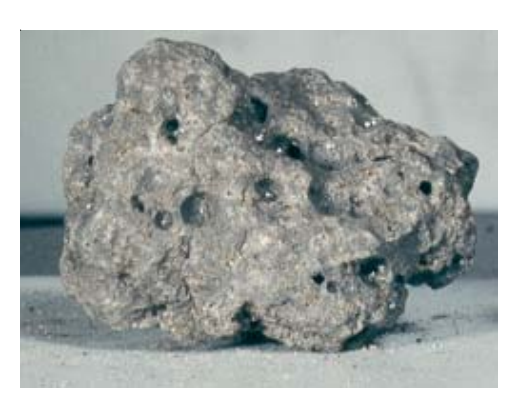
Figure 1: Photo of 15668. Sample is 3 cm across. NASA S71-49725.
Introduction
Section titled “Introduction”Lunar sample 15668 was collected by rake about 20 meters from Hadley Rille (Swann et al. 1971). It is a vesicular, subophitic basalt with a very fine grain size (quite unlike other Apollo 15 basalts). Olivine phenocrysts are seen in hand specimen. It has been dated at 3.13 ± 0.06 b.y., which is younger than most Apollo 15 basalts.
Petrography
Section titled “Petrography”Ryder (1985) gives the only description. The “mode” attributed to Rhodes and hubbard (1973) is probably a calculated “norm” based on their analysis, as olivine phenocrysts are “conspicuous” in hand specimen. The texture is subophitic and the average grain size of this basalt is very fine (0.1 mm.). A few small olivine phenocrysts are seen in thin section (figure 2). Euhedral chromite is present in olivine; ulvospinel and ilmenite in the groundmass. Interstial glass is present and shows immiscibility.
Chemistry
Section titled “Chemistry”Ryder and Schuraytz (2001) repeated the analysis of Ryder and Steele (1988). Helmke et al. (1972) found higher trace elements than Neal (2001), Fruchter et al. (1973), and Ryder (figure 4). It is possible that this rocklet is something special, but probably not.
Mineralogical Mode of 15668
Section titled “Mineralogical Mode of 15668”| Rhodes and | ||||||||||
|---|---|---|---|---|---|---|---|---|---|---|
| Hubbard 1973 | ||||||||||
| Olivine | 0.8 | |||||||||
| Pyroxene | 59.6 | |||||||||
| Plagioclase | 31.2 | |||||||||
| Opaques | 4.9 | |||||||||
| Mesostasis | 3 | |||||||||
Radiogenic age dating
Section titled “Radiogenic age dating”Husain (1974) reported an age of 3.13 ± 0.06 b.y by Ar/Ar plateau, but if you take the highest temperature release steps only, you get an age similar to the other Apollo 15 basalts (figure 5).
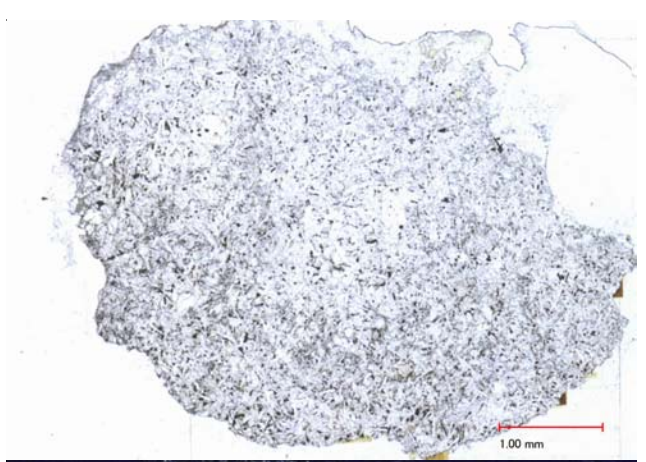
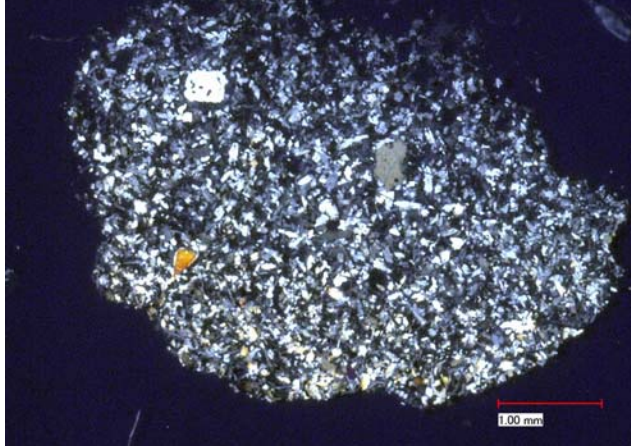
Figure 2: Photomicrographs of 15668,13 by C Meyer @ 50x.
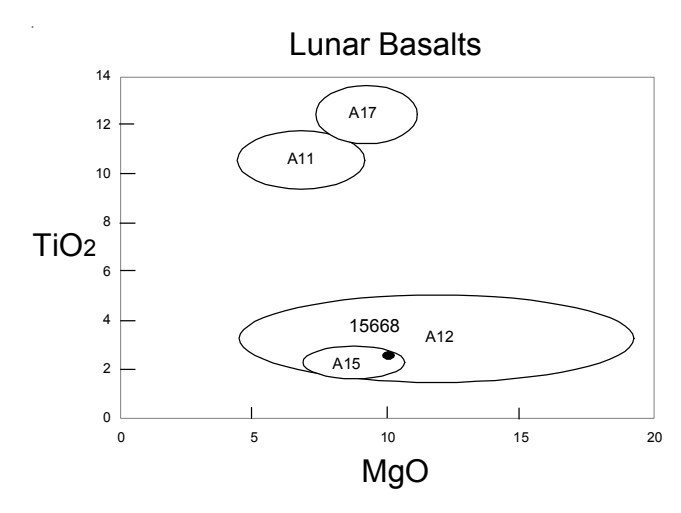
Figure 3: Chemical composition of 15668 compared with other Apollo samples.

Pearce et al. (1973) reported magnetic properties.
Processing
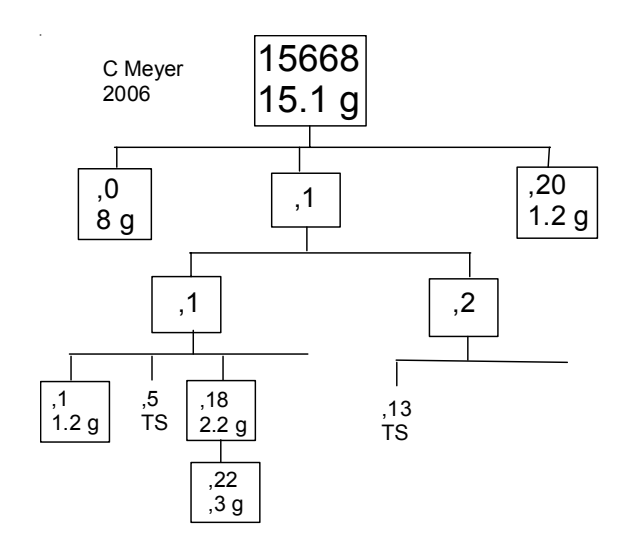
Section titled “Processing”There are only two thin sections of 15668.
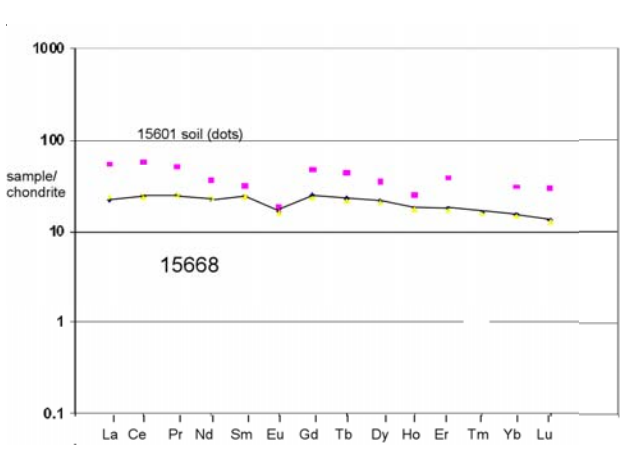
Figure 4: Normalized rare-earth-element diagram for 15668 (data by Neal 2001). Data for 15601 is for comparison.
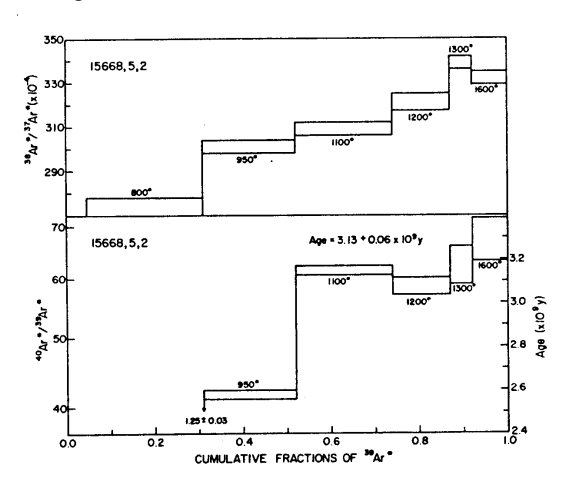
Figure 5: Ar/Ar plateau diagram for 15668 (from Husain 1974).
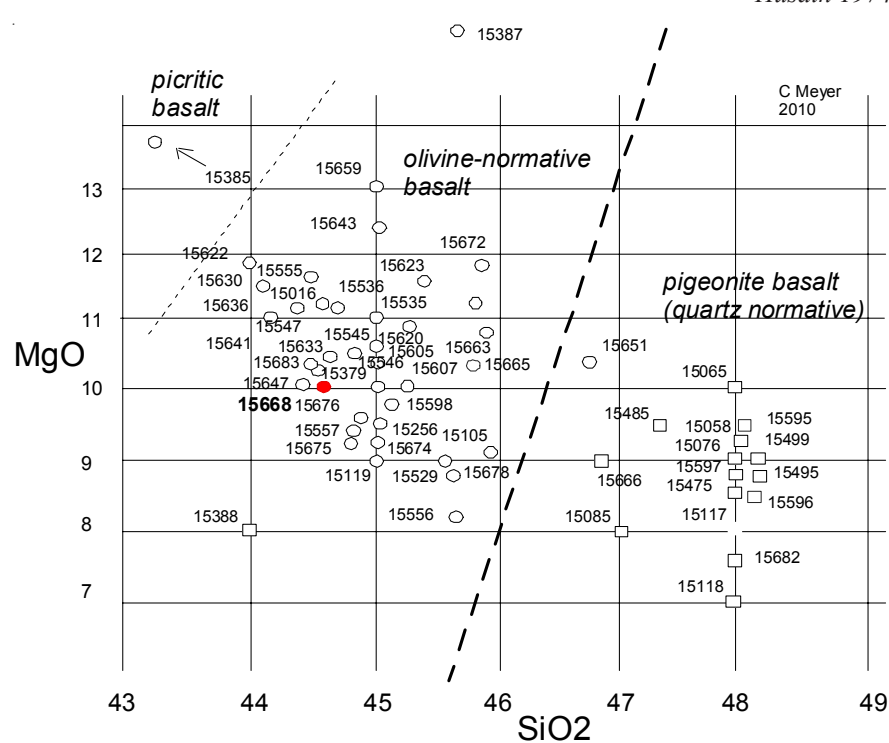
Table 1. Chemical composition of 15668.
| reference Ryder2001 2.5 g | Rhodes73 | Chappell73 Fruchter73 | Ryder88 | Neal2001 | Helmke72 | |||||||||
|---|---|---|---|---|---|---|---|---|---|---|---|---|---|---|
| weight SiO2 % TiO2 Al2O3 FeO MnO MgO | 44.6 2.43 8.81 22.32 0.28 10.13 | (b) (b) (b) (b) 22.4 (b) (b) | 45.48 2.56 9.09 (a) 22.22 0.31 9.19 | (b) 45.01 (b) 2.53 (b) 8.73 (b) 22.58 (b) 0.31 (b) 9.96 | (b) (b) (b) | (b) 2.74 (b) 8.2 (b) 22.3 | 46.7 (a) 2.37 (a) 9.1 (a) 21.9 0.38 8.9 | (c ) (c ) (c ) (c ) (c ) (c ) | ||||||
| CaO Na2O | 9.71 0.234 | (b) (b) 0.248 | 10.23 (a) 0.26 | (b) 10.16 (b) 0.28 | (b) | (b) 0.266 | 9.9 (a) 0.25 | (c ) (c ) | ||||||
| K2O P2O5 S % sum | 0.043 0.064 | (b) (b) | 0.05 0.08 0.08 | (b) 0.04 (b) 0.07 (b) 0.05 | (b) (b) (b) | 0.12 | (c ) | |||||||
| Sc ppm V | 43.5 | (a) | 44 | (a) 44.6 | (a) 44.7 197 | (d) | (d) 39.5 | (a) | ||||||
| Cr Co Ni Cu Zn Ga Ge ppb As Se Rb Sr Y Zr Nb Mo Ru Rh | 4426 49 9 | (b) 4310 53.1 (b) 80 (b) | (a) (a) (a) | 3700 | (b) 4250 55 | (a) 3462 (a) 46.8 | (a) 3397 (a) 55.9 57.2 13.8 23.5 4.19 | (d) (d) (d) | (d) 4200 (d) 54 (d) 3.7 | (a) (a) (a) | ||||
| 6 93 24 86 11 | (b) (b) 112 (b) (b) (b) | (a) | 0.92 99 28 87 7.43 0.09 | (d) (d) (d) (d) (d) (d) | ||||||||||
| Pd ppb Ag ppb Cd ppb In ppb Sn ppb Sb ppb Te ppb Cs ppm | 260 0.03 | (d) (d) | ||||||||||||
| Ba La Ce | 39 4.82 13.7 | (a) (a) (a) | 4.5 | (a) 4.95 11.7 | 53.2 (a) 5.19 (a) 14.5 | (d) | (d) 6.68 (d) 17.6 | (a) (a) | ||||||
| Pr Nd Sm | 12 3.45 | (a) (a) | 3.1 | (a) 3.5 | 2.23 10.4 (a) 3.57 | (d) | (d) 13.3 (d) 4.45 | (a) (a) | ||||||
| Eu Gd | 0.88 | (a) | 0.92 | (a) 0.907 | (a) 0.93 4.93 | (d) 0.99 (d) 5.7 | (a) (a) | |||||||
| Tb Dy Ho Er | 0.77 | (a) | 0.85 | (a) 0.83 5.2 1.01 2.9 | (d) 0.95 (d) 6.2 (d) 1.14 (d) 2.08 | (a) (a) (a) (a) | ||||||||
| Tm Yb Lu Hf | 2.18 0.29 2.69 | (a) (a) (a) | 1.6 0.29 2.3 | (a) 2.26 (a) 0.319 (a) 2.63 | 0.39 (a) 2.47 (a) 0.32 (a) 2.77 | (d) (d) | (d) 2.9 (d) 0.394 | (a) (a) | ||||||
| Ta W ppb Re ppb Os ppb Ir ppb Pt ppb | 0.37 | (a) | 0.37 | (a) | 0.43 40 | (d) (d) | ||||||||
| Au ppb Th ppm U ppm | 0.38 | (a) | 0.42 | (a) 0.51 0.11 | (d) (d) | |||||||||
| technique: (a) INAA, (b) XRF, (c ) fused bead, elec. Probe, (d) ICP-MS |
Lunar Sample Compendium C Meyer 2010
References for 15668
Section titled “References for 15668”Arvidson R., Crozaz G., Drozd R.J., Hohenberg C.M. and Morgan C.J. (1975) Cosmic ray exposure ages of features and events at the Apollo landing sites. The Moon 13, 259-276.
Butler P. (1971) Lunar Sample Catalog, Apollo 15. Curators’ Office, MSC 03209
Chappell B.W. and Green D.H. (1973) Chemical compositions and petrogenetic relationships in Apollo 15 mare basalts. Earth Planet. Sci. Lett. 18, 237-246.
Dowty E., Conrad G.H., Green J.A., Hlava P.F., Keil K., Moore R.B., Nehru C.E. and Prinz M. (1973a) Catalog of Apollo 15 rake samples from stations 2 (St. George), 7 (Spur Crater) and 9a (Hadley Rille). Inst. Meteoritics Spec. Publ. No 11, 51-73. Univ. New Mex. ABQ.
Dowty E., Prinz M. and Keil K. (1973b) Composition, mineralogy, and petrology of 28 mare basalts from Apollo 15 rake samples. Proc. 4th Lunar Sci. Conf. 423-444.
Fruchter J.S., Stoeser J.W., Lindstrom M.M. and Goles G.G. (1973) Apollo 15 clastic materials and their relationship to local geologic features. Proc. 4th Lunar Sci. Conf. 1227-1237.
Husain L., Schaeffer O.A., Funkhouser J. and Sutter J. (1972b) The ages of lunar material from Fra Mauro, Hadley Rille and Spur Crater. Proc. 3rd Lunar Sci. Conf. 1557-1567.
Husain L. (1974) 40Ar-39Ar chronology and cosmic ray exposure ages of the Apollo 15 samples. J. Geophys. Res. 79, 2588-2606.
Lofgren G.E., Donaldson C.H. and Usselman T.M. (1975) Geology, petrology and crystallization of Apollo 15 quartz-normative basalts. Proc. 6th Lunar Sci. Conf. 79-99.
LSPET (1972a) The Apollo 15 lunar samples: A preliminary description. Science 175, 363-375.
LSPET (1972b) Preliminary examination of lunar samples. Apollo 15 Preliminary Science Report. NASA SP-289, 6-1—6-28.
Neal C.R. (2001) Interior of the moon: The presence of garnet in the primitive deep lunar mantle. J. Geophys. Res. 106, 27865-27885.
Pearce G.W., Gose W.A. and Strangway D.W. (1973) Magnetic studies on Apollo 15 and 16 lunar samples. Proc. 4th Lunar Sci. Conf. 3045-3076.
Rhodes J.M. and Hubbard N.J. (1973) Chemistry. classification, and petrogenesis of Apollo 15 mare basalts. Proc. 4th Lunar Sci. Conf. 1127-1148.
Ryder G. (1985) Catalog of Apollo 15 Rocks (three volumes). Curatoial Branch Pub. # 72, JSC#20787
Ryder G. and Steele A. (1988) Chemical dispersion among Apollo 15 olivine-normative mare basalts. Proc. 18th Lunar Planet. Sci. 273-282. Lunar Planetary Institute, Houston.
Ryder G. and Schuraytz B.C. (2001) Chemical variations of the large Apollo 15 olivine-normative mare basalt rock samples. J. Geophys. Res. 106, E1, 1435-1451.
Snyder G.A., Borg L.E., Taylor L.A., Nyquist L.E. and Halliday A.N. (1998) Volcanism in the Hadley-Apennine region of the Moon: Geochronology, Nd-Sr isotopic systematics and depths of melting (abs#1141). Lunar Planet. Sci. XXIX, Lunar Planetary Institute, Houston.
Swann G.A., Hait M.H., Schaber G.C., Freeman V.L., Ulrich G.E., Wolfe E.W., Reed V.S. and Sutton R.L. (1971b)