Sample 60017
60017 Impact Melt Breccia 2102 grams
Section titled “60017 Impact Melt Breccia 2102 grams”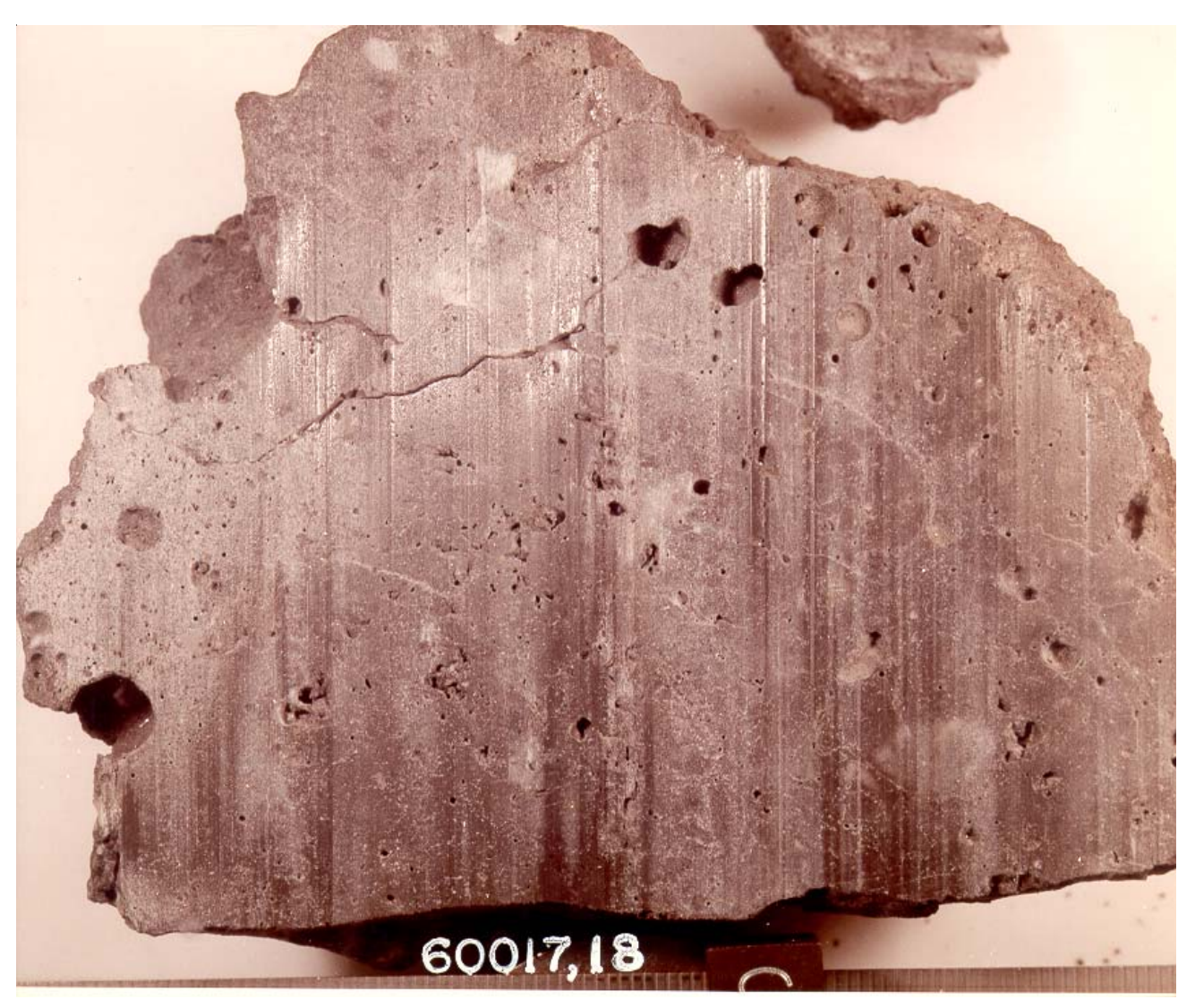
Figure 1: Photo of sawn surface of 60017,18. NASA S75-33756. Sample is 9 cm across. Note the vesicles and saw marks.
Introduction
Section titled “Introduction”60017 is a piece of Shadow Rock from station 13, near North Ray Crater (Sutton 1981). It was too large to fit in the Teflon sample bag, and was returned in sample bag SCB7, with other large samples (Butler 1972). The outer surface has a thick patina, while the freshly broken surface is hackly (figure 2). Sample 63335 and 63355 were chipped from the same location on the boulder (and returned in documented sample bags). The astronauts remarked on the large round vesicles in the sample.
Petrography
Section titled “Petrography”Kridelbaugh et al. (1973) found that 60017 was a microbreccia composed primarily of well-rounded clasts of anorthositic gabbro, mosaically recrystallized anorthosite and large crystals of olivine set in a cryptocrystalline matrix (figure 2). The clasts frequently have a fine-grained rim due to reaction of the clast with the matrix.
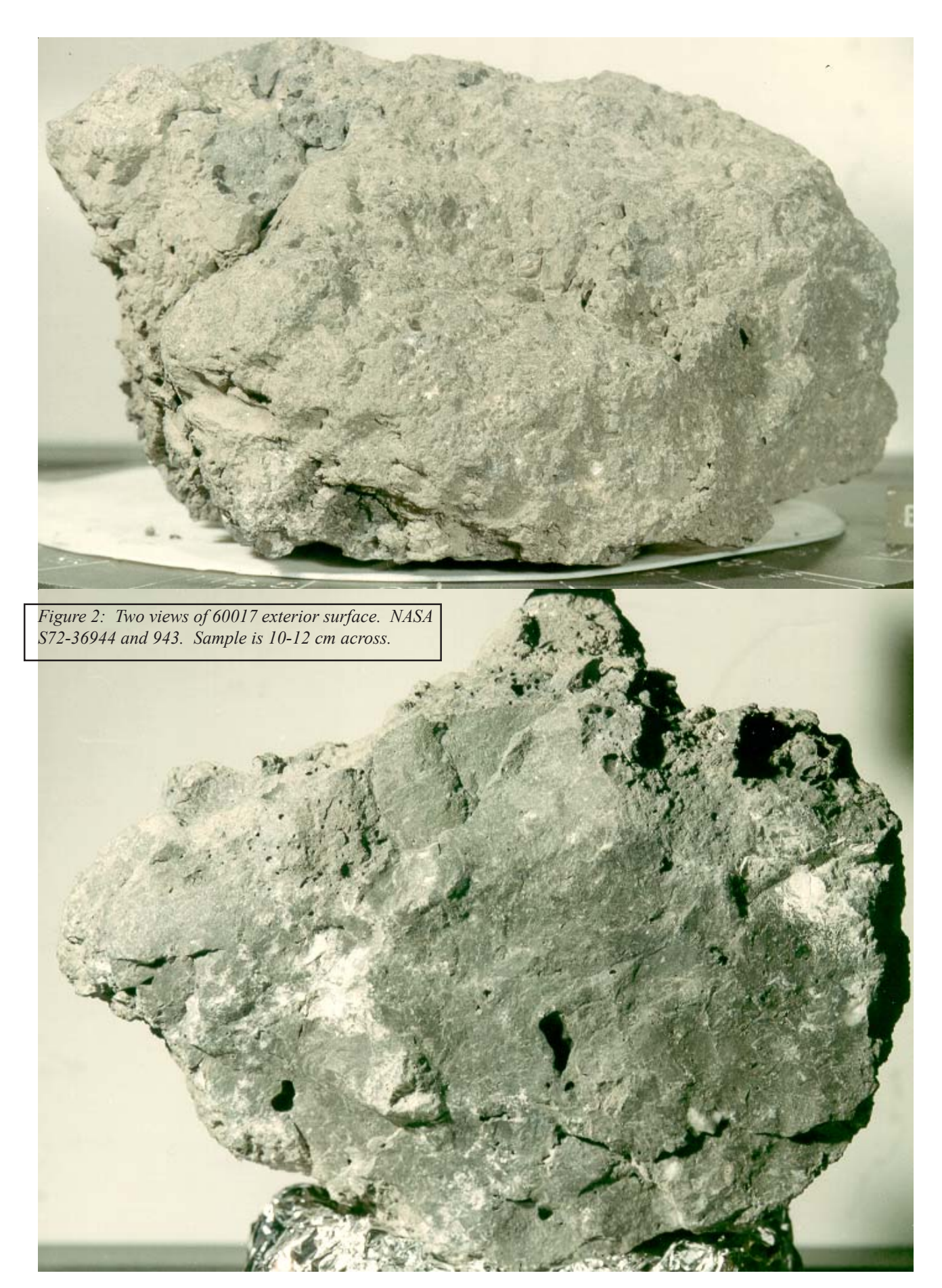
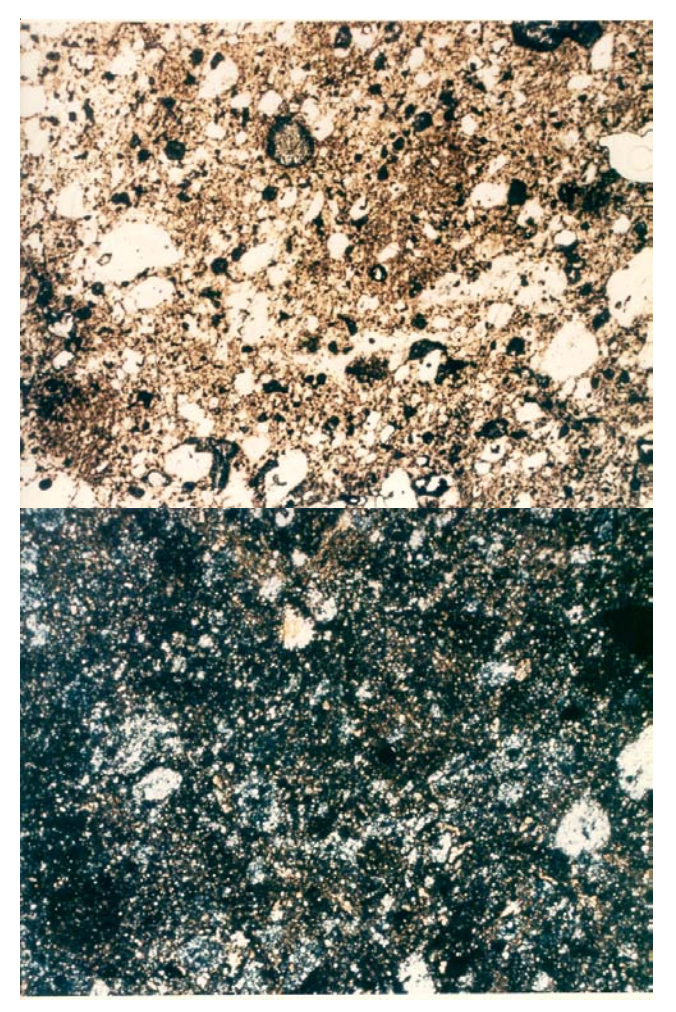
Figure 3: Thin section photomicrograph of 60017. Top is plane polarized light and bottom is cross polarized. NASA S72-42268-269. About 3 mm across.
Nord et al. (1975) found that the matrix of 60017 had a fine-grained igneous texture and that the plagioclase laths in the matrix were aligned in such a way as to indicate flow around the clasts. They conclude the occurrence of dark matrix clasts and deformation in the clasts and crystal fragments “suggest that this rock was formed by partial melting of regolith or breccia material”.
Ryder and Norman (1981) review the petrography of 60017 and made new observations. The rock contains two dominant lithologies $\sim$ 70% variolitic melt and $\sim$ 30% dark aphanitic clasts. The variolitic melt consists of plagioclase clasts with interstitial mafic minerals, minor ilmenite, Fe-metal, rare troilite, rare spinel and cryptocrystalline material. Plagioclase is $An_{93-95}$ and olivine is $Fo_{68}$ . Spherulitic texture is often found. The dark matrix clasts are aphanitic and inhomogeneous.
LMP Okay, Tony, I got three chips off of the rock scattered over about a 2-meter area. One of them (60017) is too big to go in the bags, but the other one is going in 429 (63355). And Tony, this rock here looks like the same – it’s the same character as the one up on the rim (60017). That great, huge black one that we sampled except that we don’t – that one up there didn’t have any of these holes in it. I can’t really say what these holes are here. They just look – they’re vugs – let’s just call them vugs. What cause them I don’t know.
CDR Yeah, they look more vuggy to me although they’re round.
LMP They look like drill holes is what they look like.
CDR Okay, they look like the holes that you get in rocks where you have a venting of gas that comes up through there like along –
LMP Vesicle pipe.
CDR Yeah, vesicle pipe that’s it. Couldn’t be zap holes.
LMP Look at this. Tony, this is a black matrix with some excellent crystals in it and also that are milky in color. Don’t see any cleavage though, or striations – about a centimeter across, and it has a matrix that white rocks like up on the rim – not a matrix but some clasts of that.
They are plagioclase-rich and often have reaction rims with matrix.
Metal: Misra and Taylor (1975) found that there was a wide range in Co content in metal particles in 60017 (figure 4). Hunter and Taylor (1981) found no rust.
Chemistry
Section titled “Chemistry”Rose et al. (1973), Laul et al. (1974) and Taylor et al. (1973) obtained similar results indicating that 60017 is highly aluminous ( $Al_2O_3 = 30%$ ) and very depleted in trace elements (table 1, figure 5). In general, the breccia samples from the rim of North Ray Crater are more aluminous than the breccia samples from the rest of the Apollo 16 collection. 60017 also has high Ni, Ir and Au (although not as high as for many lunar breccias).
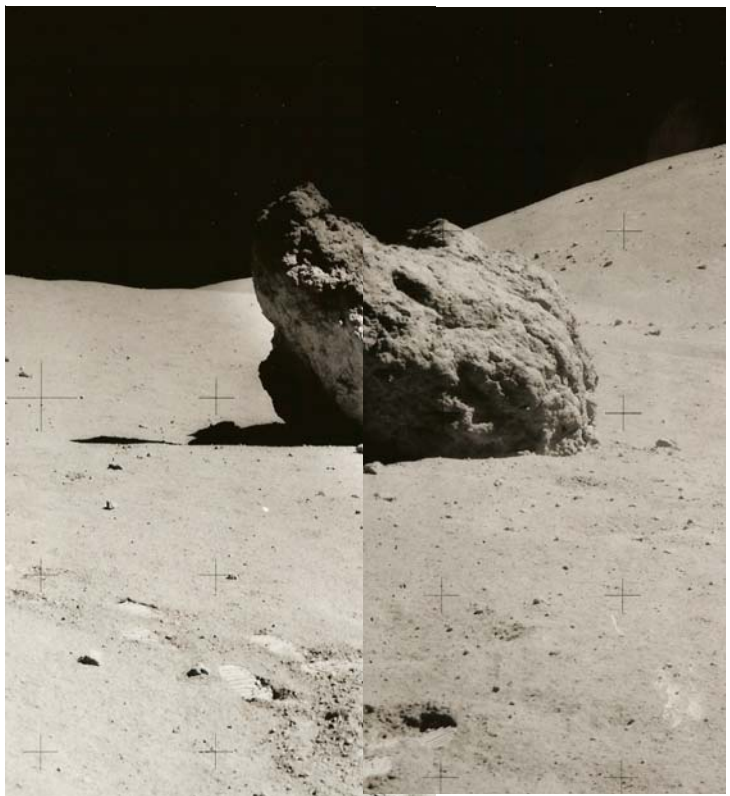
Figure 4: Shadow Rock near North Ray Crater,
Apollo 16. S16-106-17392, 17394.
Section titled “Apollo 16. S16-106-17392, 17394.”Tera et al. (1974) reported U, Th and Pb isotope data for bulk sample. Murthy and Coscio (1977) and Murthy (1978) reported Sr isotopes data. No age has been given.
Other Studies
Section titled “Other Studies”Radiogenic age dating
| Macdougal et al. (1973) | Fission track, no solar |
|---|---|
| wind tracks | |
| Housley et al. (1976) | Magnetic data |
| Fireman et al. (1973) | Tritium (3 H) data |
| Cadenhead (1976) | Surface |
Processing
Section titled “Processing”Ryder and Norman mistakenly give the wrong weight for 60017 (it is only 2 kg). The sample broke up during sawing, but a portion of a slab was obtained (figures 6 and 7). There are 19 thin sections.
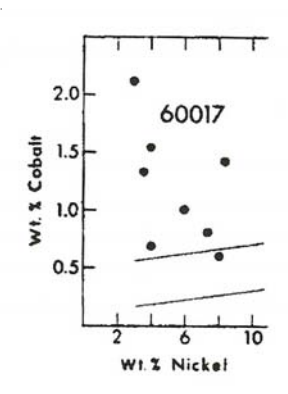
Figure 5: Ni, Co composition of iron grains in 60017 (Misra and Taylor 1975).
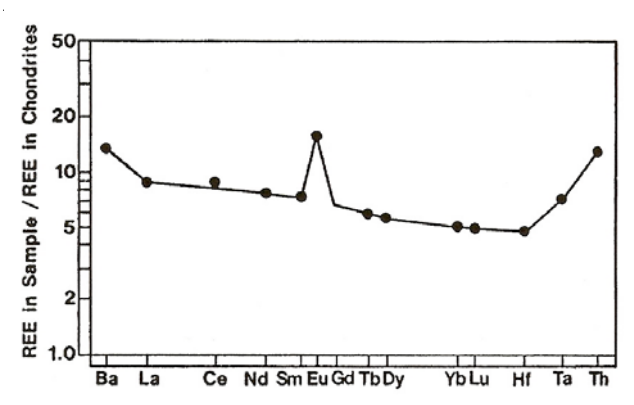
Figure 6: Normalized rare-earth-element diagram for 60017 (data from Laul et al. 1974).
Table 1. Chemical composition of 60017.
| reference weight | Rose73 | Krahenbuhl73 Morrison73 | Laul74 | Ganapathy74 Garg76 | Taylor73 | ||||||||
|---|---|---|---|---|---|---|---|---|---|---|---|---|---|
| SiO2 % TiO2 Al2O3 FeO MnO MgO CaO | 44.43 0.3 30.9 2.97 0.04 2.77 17.72 | (a) (a) (a) (a) (a) (a) (a) | 0.37 27.8 3.27 0.04 5.27 15.1 | (c ) 3 | (c ) 0.37 (c ) 31.2 (c ) 3.6 (c ) 0.048 (c ) 17 | (d) (d) (d) (d) (d) (d) | 44.5 0.07 31.9 2.55 2.65 17.5 | (e) (e) (e) (e) (e) (e) | |||||
| Na2O K2O P2O5 S % sum | 0.58 0.06 0.02 | (a) (a) (a) | 0.06 0.04 | (c ) 0.52 (c ) 0.056 | (d) (d) | 0.53 0.14 | (e) (e) | ||||||
| Sc ppm V Cr | 7.1 17 | (a) (a) | 6 | (c ) 6.7 10 370 | (d) (d) (d) | 1.7 10 390 | (e) (e) (e) | ||||||
| Co Ni Cu | 22 360 4 | (a) (a) | (a) 47 | 8 (b) 59 2.1 | (c ) (c ) | (c ) 7.1 | (d) | 35 | (b) | 6.2 54 1 | (e) (e) (e) | ||
| Zn Ga | 2.3 | (a) | 3.25 | (b) 8.2 3.3 | (c ) (c ) | 5.4 | (b) | ||||||
| Ge ppb As | 9.35 | (b) | 20 | (b) | |||||||||
| Se Rb Sr | 1.2 140 | (a) | 21 (a) 0.7 | (b) | (b) 0.8 250 | (c ) (c ) | 18 0.78 | (b) (b) | 0.67 | (e) | |||
| Y Zr Nb Mo Ru | 9 26 | (a) (a) | 6 52 2.1 | (c ) (c ) | (c ) 30 | (d) | 52 | 7 (d) 37 2.82 | (e) (e) (e) | ||||
| Rh Pd ppb | |||||||||||||
| Ag ppb Cd ppb In ppb | 3.4 5 | (b) (b) | 0.59 4.1 | (b) (b) | |||||||||
| Sn ppb Sb ppb | 0.347 | (b) | 1.01 | (b) | 100 | (e) | |||||||
| Te ppb Cs ppm | 1.2 | 6.75 0.041 | (b) | (b) 0.004 | (c ) | 7.2 0.049 | (b) (b) | 0.03 | (e) | ||||
| Ba La Ce | 92 | 46 3 10 | (c ) 8 | (c ) 50 (c ) 3.1 | (d) (d) (d) | 57 2.89 7.84 | (e) (e) (e) | ||||||
| Pr Nd | 8.4 | (c ) 5 | (d) | 0.87 3.55 | (e) (e) | ||||||||
| Sm Eu Gd | 1.7 1.4 3.4 | (c ) | (c ) 1.4 (c ) 1.24 | (d) (d) (d) | 1 1.08 1.3 | (e) (e) (e) | |||||||
| Tb Dy | 0.37 1.8 | (c ) 0.3 (c ) 1.7 | (d) (d) | 0.21 1.4 | (e) (e) | ||||||||
| Ho Er | 0.4 | (c ) | 0.31 0.9 | (e) (e) | |||||||||
| Tm Yb | 0.6 | 0.17 1.1 | (c ) | (c ) 1.2 | (d) | 0.14 0.86 | (e) (e) | ||||||
| Lu Hf Ta | 0.2 0.98 | (c ) 1 | (c ) 0.16 0.14 | (d) (d) (d) | 1.17 | 0.13 (d) 0.58 | (e) (e) | ||||||
| W ppb Re ppb | 0.1 | (b) | 0.16 | (b) | |||||||||
| Os ppb Ir ppb | 1.24 | (b) | 1.5 | (d) 1.75 | (b) | ||||||||
| Pt ppb Au ppb | 4.25 | (b) | 4 | (d) 0.41 | (b) | ||||||||
| Th ppm U ppm | 0.135 | 0.6 (b) 0.13 | 0.5 (c ) 0.14 | (d) | (d) 0.117 | (b) | 0.36 0.1 | (e) (e) | |||||
| technique: (a) “microchemical”, (b) RNAA, (c ) multi, (d INAA, (e SSMS |
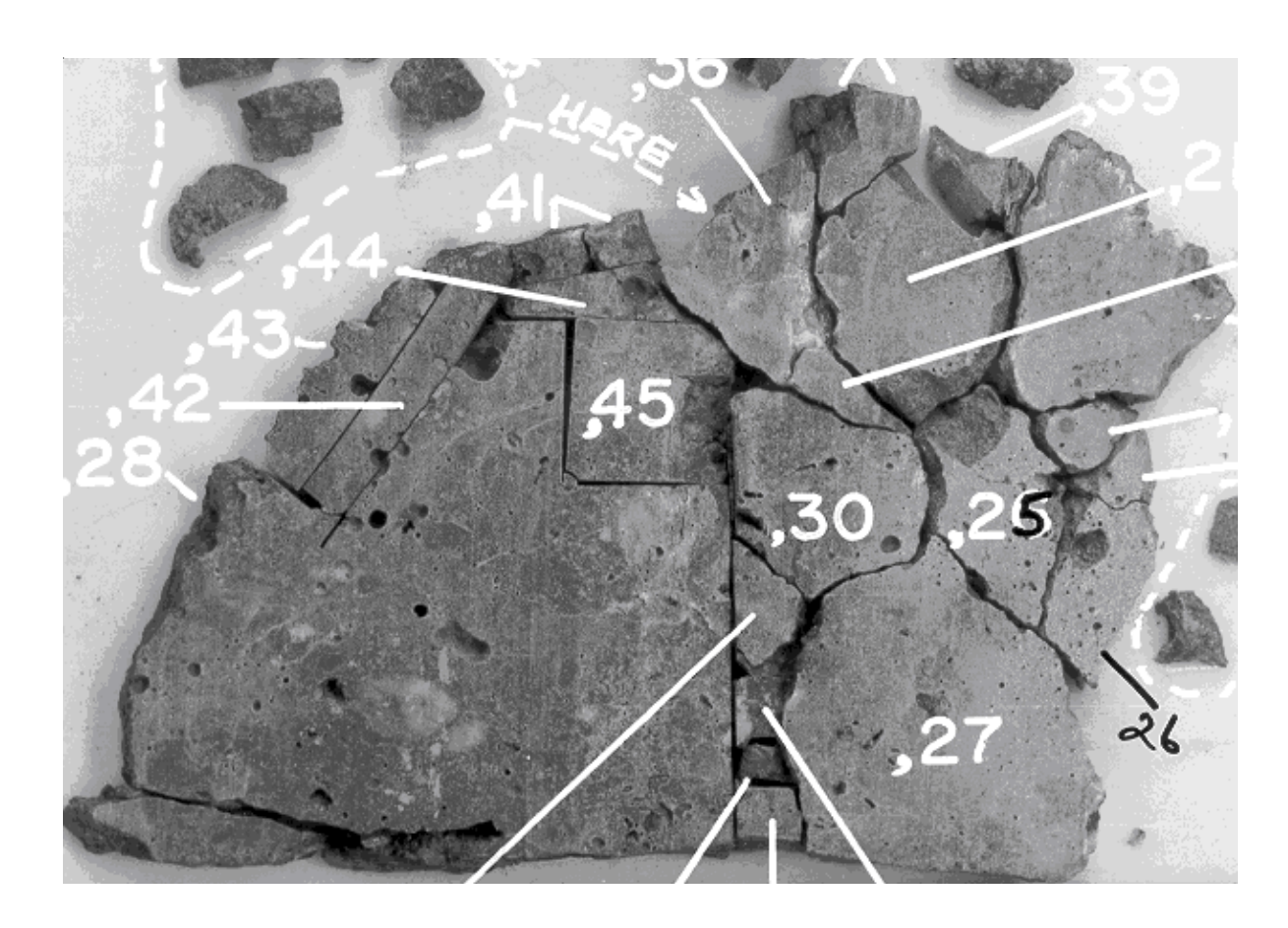
Figure 7: Photo of slab A of 60017 showing splits. NASA S73-21544. about 10 cm across.
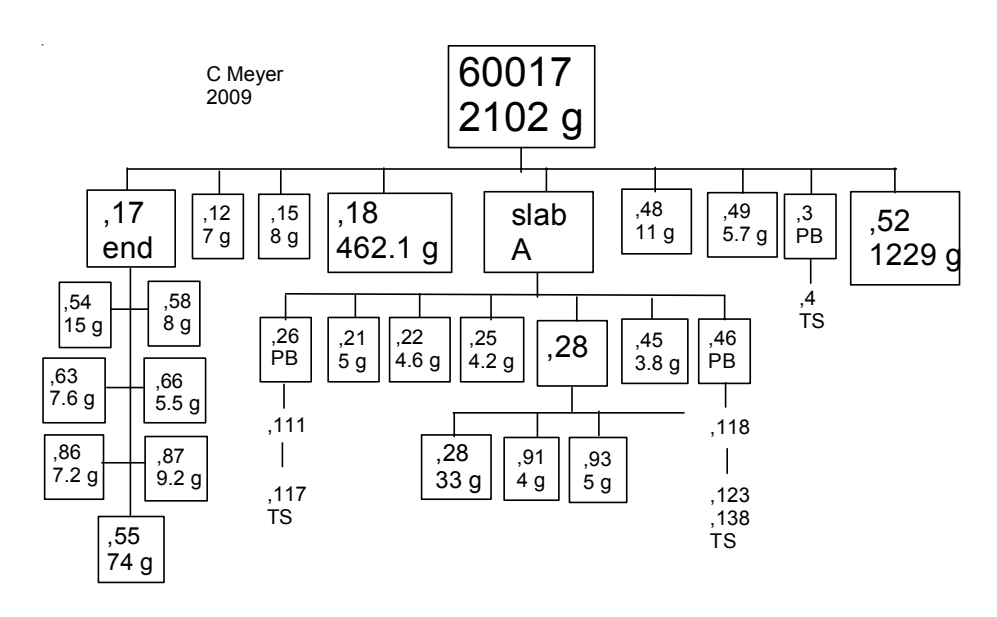
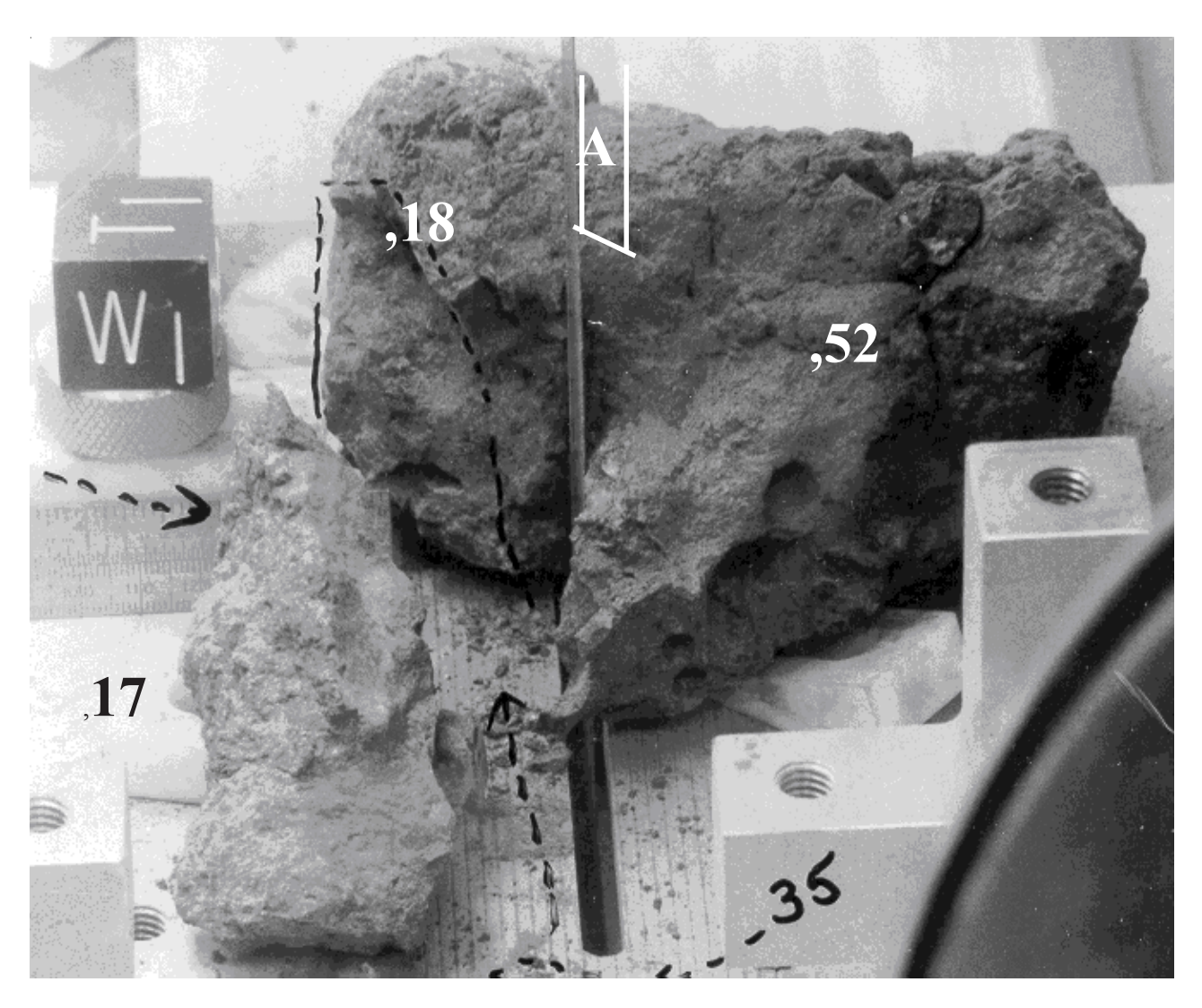
Figure 8: Processing photo of 60017. NASA 76-21703. Cube is 1 inch.
References for 60017
Section titled “References for 60017”Bogard D.D., Nyquist L.E., Hirsch W.C. and Moore D.R. (1973b) Trapped solar and cosmogenic noble gas abundances in Apollo 15 and 16 deep drill samples. Earth Planet. Sci. Lett. 21, 52-69.
Butler P. (1972) Lunar Sample Information Catalog Apollo 16. Lunar Receiving Laboratory. MSC 03210 Curator’s Catalog. pp. 370.
Cadenhead D.A. and Brown M.G. (1976) The surface and composition of 60017,43. Proc. 7th Lunar Sci. Conf. 927 936.
Fireman E.L., D’Amico J. and DeFelice J. (1973) Radioactivities vs. depth in Apollo 16 and 17 soil. Proc. 4th Lunar Sci. Conf. 2131-2144.
Ganapathy R., Morgan J.W., Higuchi H., Anders E. and Anderson A.T. (1974) Meteoritic and volatile elements in Apollo 16 rocks and in separated phases from 14306. Proc. 5th Lunar Sci. Conf. 1659-1683.
Garg A.N. and Ehmann W.N. (1976a) Zr-Hf fractionation in chemically defined lunar rock groups. Proc. 7th Lunar Sci. Conf. 3397-3410.
Housley R.M., Cirlin E.H., Goldberg I.B. and Crowe H. (1976) Ferromagnetic resonance studies of lunar core stratigraphy. Proc. 7th Lunar Sci. Conf. 13-26.
Hunter R.H. and Taylor L.A. (1981) Rust and schreibersite in Apollo 16 highland rocks: Manifestations of volatileelement mobility. Proc. 12th Lunar Planet. Sci. Conf. 253 259.
Krahenbuhl U., Ganapathy R., Morgan J.W. and Anders E. (1973b) Volatile elements in Apollo 16 samples: Implications for highland volcanism and accretion history of the moon. Proc. 4th Lunar Sci. Conf. 1325-1348.
Kridelbaugh S.J., McKay G.A. and Weill D.F. (1973) Breccias from the lunar highlands: Preliminary petrographic report on Apollo 16 samples 60017 and 63335. Science 179, 71-74.
Laul J.C.. Hill D.W. and Schmitt R.A. (1974d) Chemical studies of Apollo 16 and 17 samples. Proc. 5th Lunar Sci. Conf. 1047-1066.
LSPET (1973) The Apollo 16 lunar samples: Petrographic and chemical description. Science 179, 23-34.
LSPET (1972) Preliminary examination of lunar samples. Apollo 16 Preliminary Science Report. NASA SP-315, 7 1—7-58.
Macdougall D., Rajan R.S., Hutcheon I.D. and Price P.B. (1973) Irradiation history and accretionary processes in lunar and meteoritic breccias. Proc. 4th Lunar Sci. Conf. 2319 2336.
Misra K.C. and Taylor L.A. (1975) Characteristics of metal particles in Apollo 16 rocks. Proc. 6th Lunar Sci. Conf. 615-639.
Morrison G.H., Nadkarni R.A., Jaworski J., Botto R.I. and Roth J.R. (1973) Elemental abundances of Apollo 16 samples. Proc. 4th Lunar Sci. Conf. 1399-1405.
Murthy V.R. and Coscio C. (1977) Rb-Sr isotopic systematics and initial Sr considerations for some lunar samples (abs). Lunar Sci. VIII, 706-708. Lunar Planetary Institute, Houston.
Murthy V.R. (1978) Considerations of lunar initial strontium ratio (abs). Lunar Planet. Sci. IX, 778-780. Lunar Planetary Institute, Houston.
Nord G.L., Christie J.M., Heuer A.H. and Lally J.S. (1975) North Ray Crater breccias: An electron petrographic study. Proc. 6th Lunar Sci. Conf. 779-797.
Rose H.J., Cuttitta F., Berman S., Carron M.K., Christian R.P., Dwornik E.J., Greenland L.P. and Ligon D.T. (1973) Compositional data for twenty-two Apollo 16 samples. Proc. 4th Lunar Sci. Conf. 1149-1158.
Ryder G. and Norman M.D. (1980) Catalog of Apollo 16 rocks (3 vol.). Curator’s Office pub. #52, JSC #16904
Stöffler D., Ostertag R., Reimold W.U., Borchardt R., Malley J. and Rehfeldt A. (1981) Distribution and provenance of lunar highland rock types at North Ray Crater, Apollo 16. Proc. 12th Lunar Planet. Sci. Conf. 185-207.
Sutton R.L. (1981) Documentation of Apollo 16 samples. In Geology of the Apollo 16 area, central lunar highlands. (Ulrich et al.) U.S.G.S. Prof. Paper 1048.
Taylor S.R., Gorton M.P., Muir P., Nance W.B., Rudowski R. and Ware N. (1973a) Composition of the Descartes region, lunar highlands. Geochim. Cosmochim Acta 37, 2665-2683.
Tera F. and Wasserburg G.J. (1974) U-Th-Pb systematics on lunar rock: and inferences about lunar evolution and the age of the Moon. Proc. 5th Lunar Sci. Conf. 1571-1599.
Ulrich G.E. (1973) A geologic model for North Ray Crater and stratigraphic implications for the Descartes region. Proc. 4th Lunar Sci. Conf. 27-39.
Ulrich G.E., Hodges C.A. and Muehlberger W.R. (1981) Geology of the Apollo 16 Area, Central Lunar Highlands. U.S. Geol. Survey Prof. Paper 1048