Sample 62295
Impact melt Breccia 250.8 grams
Section titled “Impact melt Breccia 250.8 grams”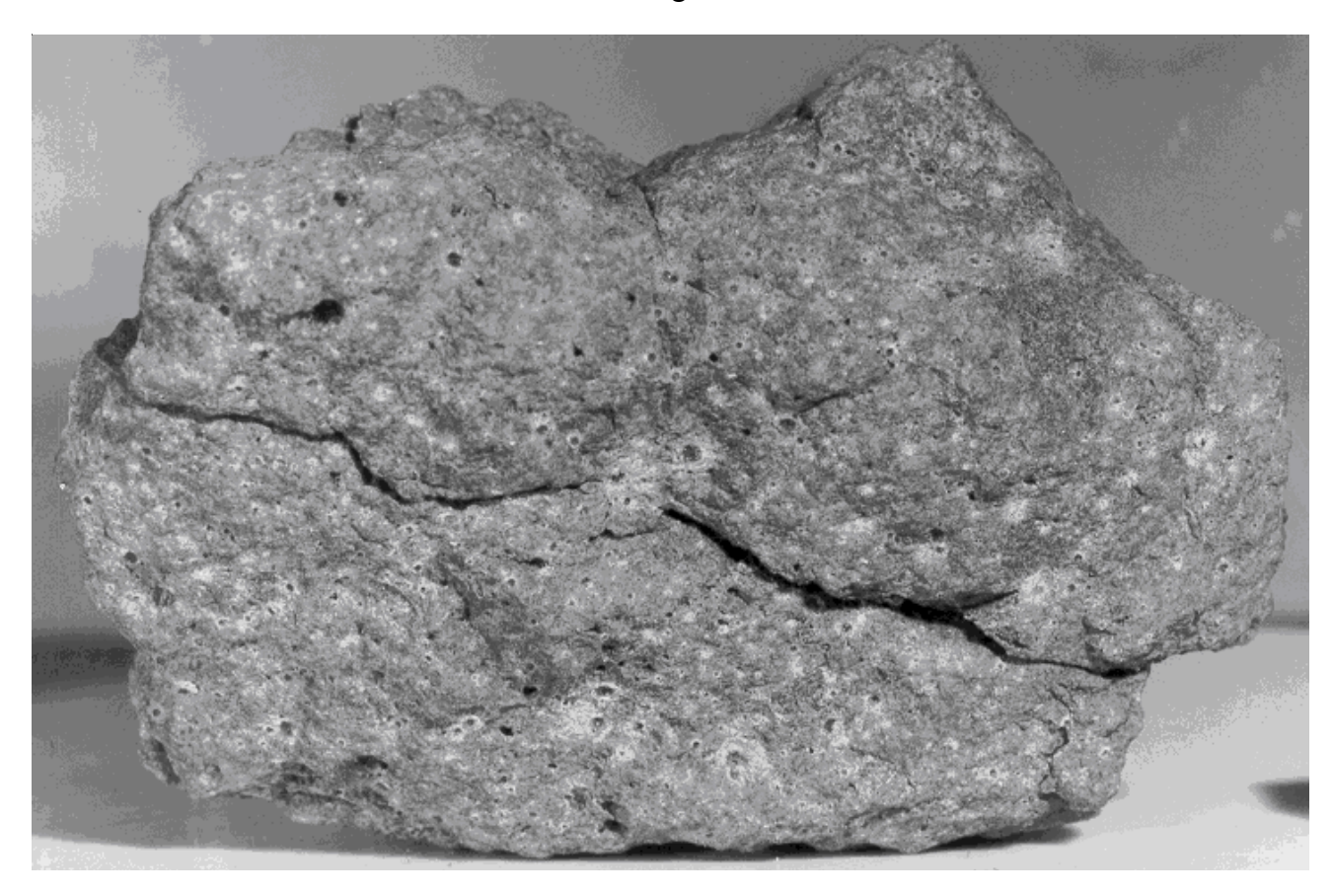
Figure 1: Photo of 62295. NASA S72-44492 - about 8 cm across. Micrometeorite bombardment smoothed the surface and nearly broke the rock.
rock with numerous micrometeorite pits on one side and none on the other (figure 1). It contains abundant Petrography Mg-rich olivine along with minor Mg-Al spinel and McGee et al. (1977) describe 62295 as a clast-bearing
Introduction 62295 is unusual in that it has a very high Mg/Fe ratio, Lunar sample 62295 is a blocky coherent impact melt and has also been terned a “troctolitic vitrophyre.”
has a high Ni and Ir content. It was collected near impact-melt breccia characterized by randomly Buster Crater and is 3.87 b.y. old, with cosmic ray oriented plagioclase laths (up to 0.8 mm) intergrown exposure 300 m.y. with skeletal olivine crystals resulting in a variolitic texture (figure 2). The intersticies are filled with a
Mineralogical Mode for 62295
Section titled “Mineralogical Mode for 62295”| McGee et al. 1977 | Ryder and Norman 1980 | Walker et al. 1973 | |
|---|---|---|---|
| Olivine | 25 | 25 | 28.3 |
| Pyroxene | 1 | ||
| Plagioclase | 55 | 55 | 33.5 |
| Mesostasis | 15 | 15 | 31.6 |
| Spinel | 5 | 6.5 | |
| Opaque | 4 |
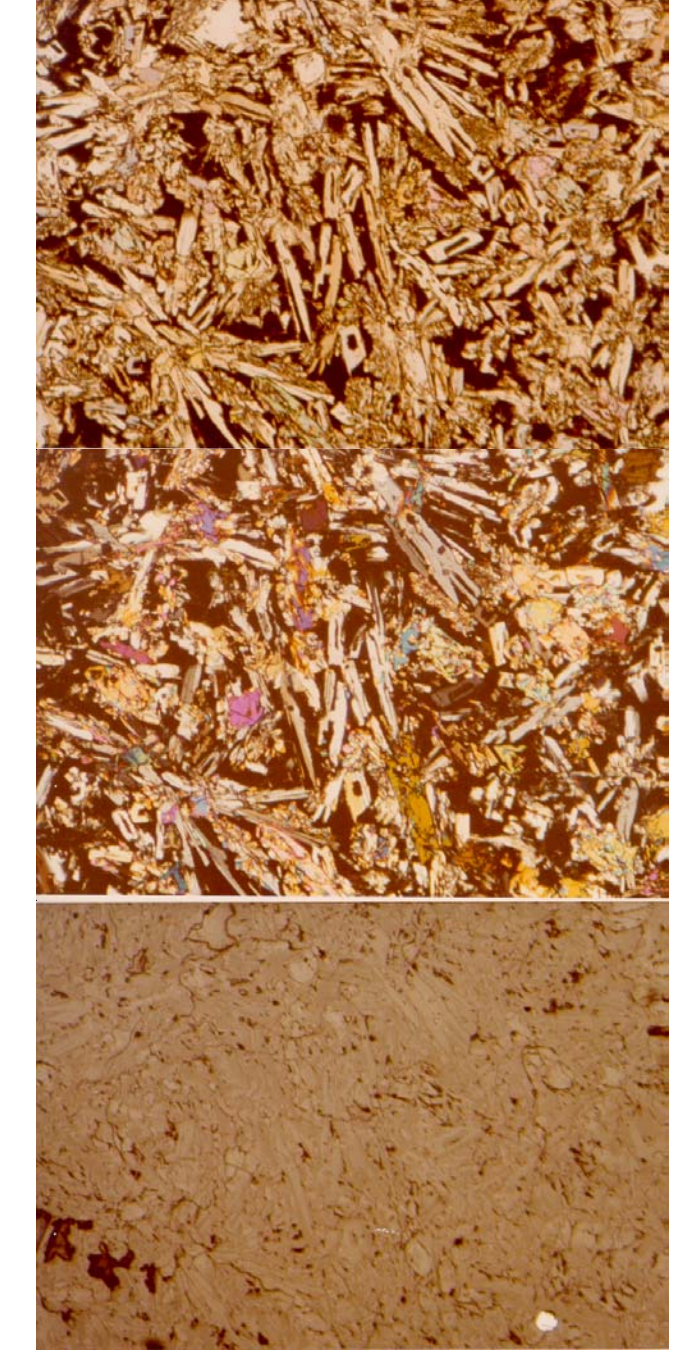
Figure 2: Photomicrographs of thin section 62295,69. Top is S79-27425(plane polarized light), middle is S79-27426 (crossed polarized light), bottom is S79-27424 (reflected light). All are 2.5 mm across.
complex mesostasis and relict clasts of plagioclase, rare lithic clasts and conspicuous barred olivine-like bodies scattered randomly throughout the rock. Octahedra of tiny pink Mg-rich spinel commonly occur in plagioclase. Both irregular vugs (up to 1 mm) and spherical vesicles (up to 0.4 mm) are relatively common.
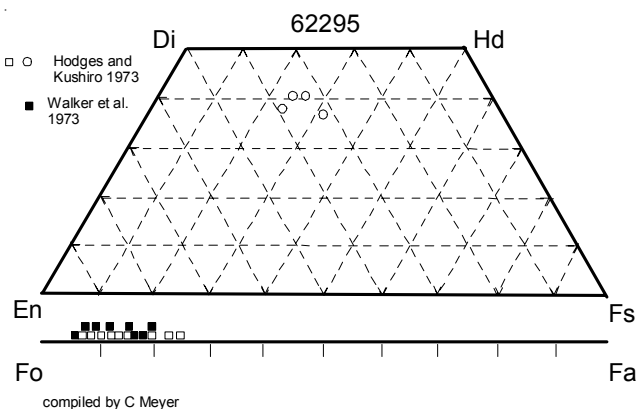
Figure 3: Pyroxene and olivine composition of 62295 impact melt with xenocrysts.
Brown et al. (1973) and Norman and Ryder (1980) describe 62295 as a fine-grained, mesostasis-rich basaltic impact melt with the mineralogy of a “spinel troctolite”. Xenocrysts of Mg-rich olivine, Ca-rich plagioclase, pink spinel and metal grains (with attached schreibersite) are found throughout (figure 4).
Walker et al. (1973) found reaction rims on some inclusions along with evidence of extremely rapid crystallization. Weiblen and Roedder (1973) studied melt inclusions in the olivine and plagioclase.
Mineralogy
Section titled “Mineralogy”Olivine: Olivine is present as xenocrysts ( $Fo_{90.95}$ ) and as fine skeletal grains ( $Fo_{75.92}$ ) in the matrix (spiniflex texture). Steele and Smith (1975) reported on the minor elements in olivine.
Pyroxene: Clinopyroxene with ferroaugite composition is a minor phase found only in the mesostasis (figure 3).
Plagioclase: McGee et al. (1979), Hodges and Kushiro (1973), Walker et al. (1973) and Vaniman and Papike (1981) determined plagioclase was An95,91.
Spinel: Pink Mg, Al- spinel is 9-16% chromite.
Metal: Misra and Taylor (1975) and Taylor et al. (1976) studied metal particles in 62295 (figure 5).
Schreibersite: Hunter and Taylor (1981) reported abundant schreibersite. Schreibersite in 62295 is Ni rich (Brown et al. 1973).
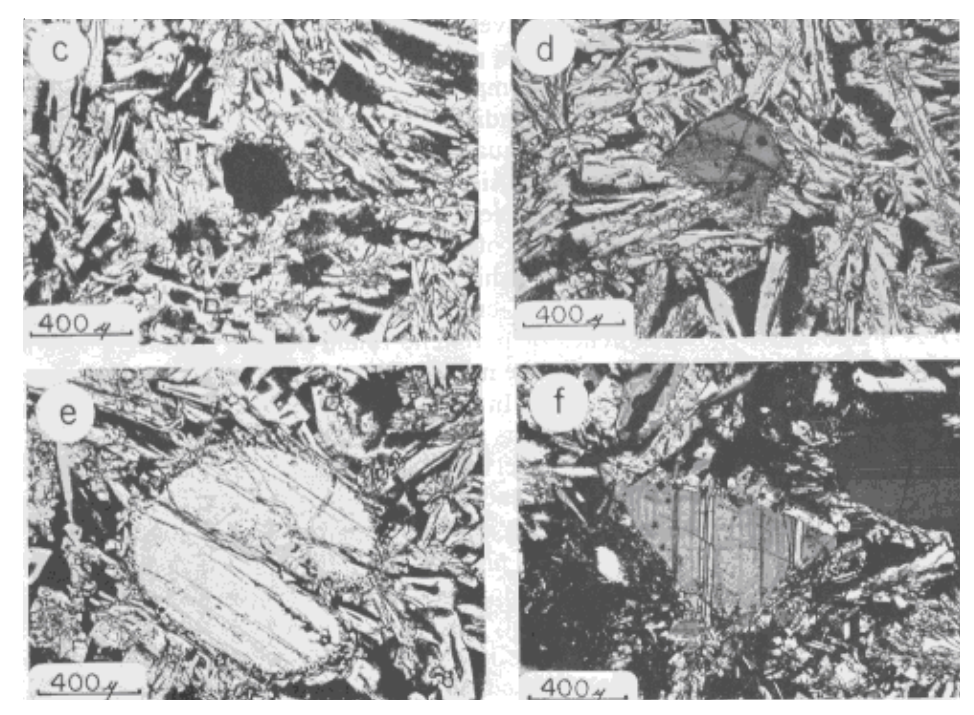
Figure 4: Thin section pictures of small xenocrysts in 62295: c) iron grain, d) pink spinel, e) olivine with reaction rim, f) plagioclase with spinel rim (this is part of figure 3 in Walker et al. 1973).
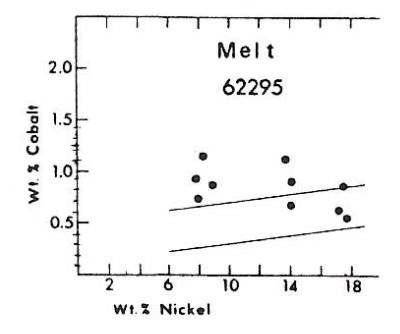
Figure 5: Ni and Co content of iron grains in 62295 (Misra and Taylor 1975).
Figure 6: Barred olivine “chondrule” in 62295 (figure lifted from Roedder and Weiblen 1977). About 700 microns across.
Chemistry
Section titled “Chemistry”The bulk analysis of 62295 by Eldridge et al. (1973) is consistent with the small samples analyzed by Rose et al. (1973), Wanke et al. (1976) and Hubbard et al. (1973). The sample is very Mg rich (table 1) and plots near the coetectic on the multisaturated equilibrium phase diagram (figure 8). It contains substantial Ni and Ir, indicating meteoritical contamination of the melt. The rare earth element content is high (figure 7).
Radiogenic age dating
Section titled “Radiogenic age dating”Nyquist et al. (1973) determined the Sr isotopic composition. Turner et al. (1973) determined the age (3.89 b.y.) of 62295 by the Ar/Ar plateau technique
(figure 9). Mark et al. (1974) determined a Rb/Sr isochron of 4.0 b.y. (figure 10). Norman et al. (2006) repeated these measurements with perhaps better instrumentation and got essentially the same result (3.866 ± 0.012 b.y.)(figures 11 and 12).
Cosmogenic isotopes and exposure ages
Section titled “Cosmogenic isotopes and exposure ages”Eldridge et al. (1973) determined the cosmic-rayinduced activity of 26Al = 110 dpm/kg and 22Na = 59 dpm/kg. Turner et al. (1973) determined an exposure age of 310 m.y. by 38Ar. Marti et al. (1974) determined a 81Kr exposure age of 235 m.y. Bhandari et al. (1973) reported on the solar flare tracks in 62295.
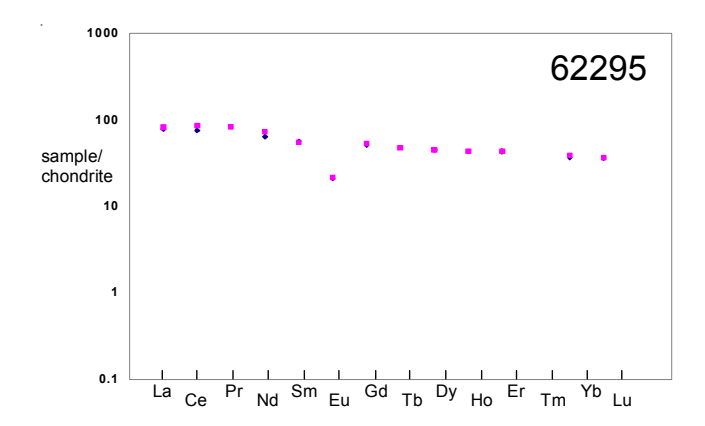
Figure 7: Normalized rare-earth-element composition of 62295 (data from Hubbard et al. 1973 and Wanke et al. 1973).
Other Studies
Section titled “Other Studies”Taylor and Epstein (1973) reported the oxygen isotope composition of 62295 and Lightner and Marti (1974) reported Xe isotopes.
Walker et al. (1973), Hodges and Kushiro (1973) and Ford et al. (1974) experimentally studied phase equilibria as function of temperature and pressure (figure 14), but these experiments seem meaningless if the rock is an impact melt.
Morrison et al. (1973) and Neukum et al. (1973) studied the microcraters on the exposed surface of 62295 (figure 16).
Brecher et al. (1973) studied the magnetic properties and Todd et al. (1973), Wang et al. (1973) and Katsube and Collett (1973) studied the physical properties of 62295.
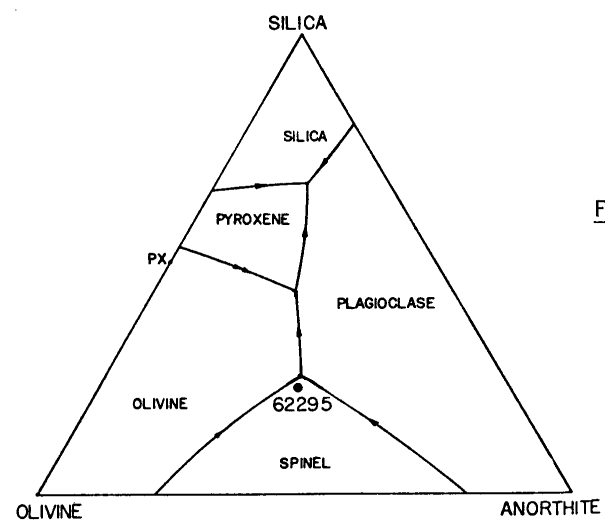
Figure 8: Composition of 62295 plotted on pseudoquaturnary phase diagram determined by Walker et al. 1973.
Processing
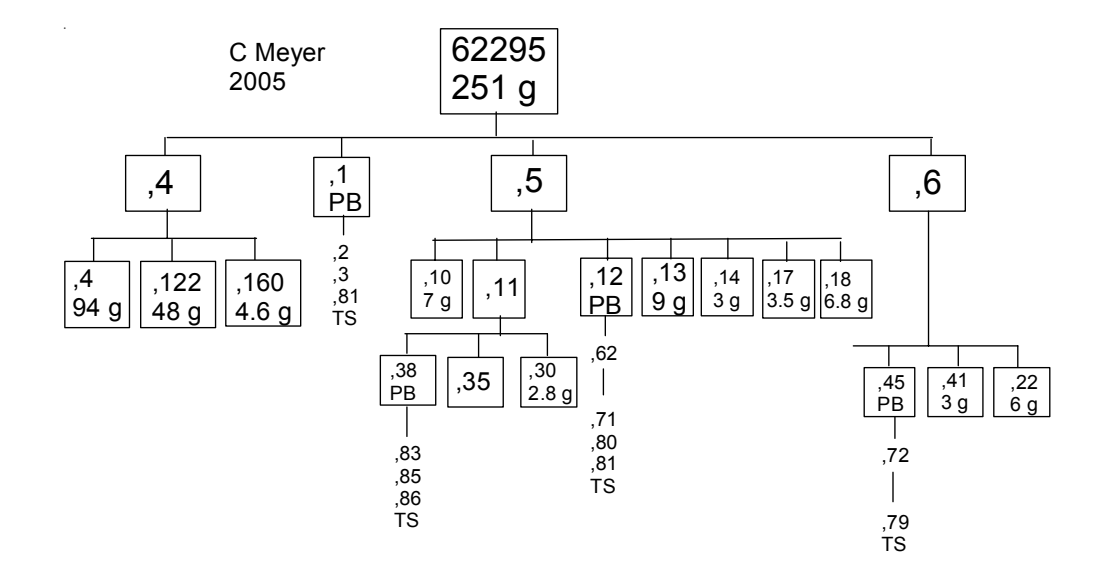
Section titled “Processing”The rock broke in three pieces along existing cracks (figure 13). One piece (,5), was sawn apart (figures 15 and 17). This is an “oriented sample”, but it has not been studied as such. There are 33 thin sections of 62295. The research on 62295 is well summarized in the catalog by Ryder and Norman (1980).
| Table 2 | U ppm Th ppm K ppm Rb ppm Sr ppm Nd ppm Sm ppm technique | |||||||
|---|---|---|---|---|---|---|---|---|
| Nyquist et al. 1973 | 4.59 | 138.6 | idms | |||||
| 4.69 | 136.5 | idms | ||||||
| Mark et al. 1974 | 562 | 4.02 | idms | |||||
| Eldridge et al. 1973 | 0.82 | 3.2 | 630 | counting | ||||
| Wiesmann 1975 | 0.88 | 3.47 | 605 | 4.59 | 139 | 29 | 8.3 | idms |
| Wanke et al. 1976 | 0.76 | 2.7 | 5.58 | 132 | 33 | 8.1 | INAA |
Table 1. Chemical composition of 62295.
| reference weight | Hubbard73 Wiesmann75 | Krahenbuhl 73 Rose73 | McKinley84 | Eldridge 73 Wanke 76 | ||||||||||
|---|---|---|---|---|---|---|---|---|---|---|---|---|---|---|
| SiO2 % TiO2 Al2O3 FeO MnO | 0.685 20.3 5.84 | 0.68 | 0.67 | (a) | 45.16 0.7 20.05 6.4 0.09 | (c ) 45.3 (c ) 0.72 (c ) 20.5 (c ) 6.2 (c ) 0.09 | (d) (d) (d) (d) (d) | 45.1 0.72 20.8 6.3 0.08 | 46 21 6.4 0.08 | (f) (f) (f) (f) (f) | ||||
| MgO 14.3 CaO 10.6 Na2O 0.46 K2O 0.073 P2O5 S % sum | 0.46 0.073 | 0.43 0.074 | (a) (a) | 14.85 11.85 0.48 0.11 0.15 | (c ) 14.7 (c ) 11.6 (c ) 0.44 (c ) 0.08 (c ) 0.14 | (d) (d) (d) (d) | (d) 0.076 | 14.7 12 0.46 (e) 0.079 0.15 | 14.9 0.45 0.079 | (f) (f) (f) (f) (f) | ||||
| Sc ppm V | (a) (a) | 9.2 23 | (c ) (c ) | 10.3 | 10.5 | (f) | ||||||||
| Cr Co Ni | 773 | 773 | 1009 | (a) | 215 | 1300 34 (b) 313 | (c ) (c ) (c ) | 1270 23 330 | 1295 19.6 280 | (f) (f) (f) | ||||
| Cu | 10 | (c ) | 18.1 | (f) | ||||||||||
| Zn Ga Ge ppb | 16.5 642 | (b) | (b) 18 2.6 | (c ) (c ) | 22.1 2.74 800 | (f) (f) (f) | ||||||||
| As Se | 186 | (b) | 110 310 | (f) (f) | ||||||||||
| Rb Sr | 4.59 139 | 4.59 139 | 4.692 137 | (a) | (a) 5.8 | (b) 6.4 100 | (c ) (c ) | 5.58 132 | 142 | (f) (f) | ||||
| Y Zr | 247 | (a) | 210 | (c ) | 59 283 | 300 | (f) (f) | |||||||
| Nb Mo | 12 | (c ) | 18 | (f) | ||||||||||
| Ru Rh | ||||||||||||||
| Pd ppb Ag ppb Cd ppb | 2.9 4.9 | (b) (b) | ||||||||||||
| In ppb Sn ppb | ||||||||||||||
| Sb ppb Te ppb | 0.88 12.5 | (b) (b) | ||||||||||||
| Cs ppm Ba | 187 | 187 | 182 | (a) | 0.53 | (b) | 135 | (c ) | 0.56 197 | 0.49 184 | (f) (f) | |||
| La Ce | 18.6 45.9 | 18.6 45.9 | 18.1 46 | (a) (a) | 19.2 52.2 | 19.5 53.4 | (f) (f) | |||||||
| Pr Nd | 29 | 29 | (a) | 7.4 33 | 36 | (f) (f) | ||||||||
| Sm Eu | 8.3 1.18 | 8.3 1.18 | 8.05 1.15 | (a) (a) | 8.1 1.21 | 8.17 1.19 | (f) (f) | |||||||
| Gd Tb | 10.1 | 10.1 | 10.2 | (a) | 10.4 1.76 | 1.79 | (f) (f) | |||||||
| Dy Ho | 10.8 | 10.8 | 10.6 | (a) | 11 2.4 | 10.6 2.4 | (f) (f) | |||||||
| Er Tm | 6.85 | 6.85 | 6.69 | (a) | 6.9 | (f) | ||||||||
| Yb Lu | 6.06 0.879 | 6.06 0.879 | 5.86 0.863 | (a) (a) | 6.4 | (c ) | 6.29 0.905 | 6.48 0.883 | (f) (f) | |||||
| Hf Ta | 6.3 | (a) | 6.55 0.78 | 6.74 0.82 | (f) (f) | |||||||||
| W ppb Re ppb | 0.336 | (b) | 372 1.2 | (f) (f) | ||||||||||
| Os ppb Ir ppb | 3.58 | (b) | 5.5 | 3.8 | (f) | |||||||||
| Pt ppb Au ppb | 3.1 | (b) | 7 | (f) | ||||||||||
| Th ppm U ppm | 0.882 | 3.47 0.88 | 0.87 | (a) | (a) 0.935 | (b) | 3.2 0.82 | (e) 2.7 (e) 0.76 | 2.74 | (f) (f) | ||||
| technique: (a) IDMS, (b) RNAA, (c ) microchemical, (d) strange, (e) radiation counting. (f) INAAand RNAA |
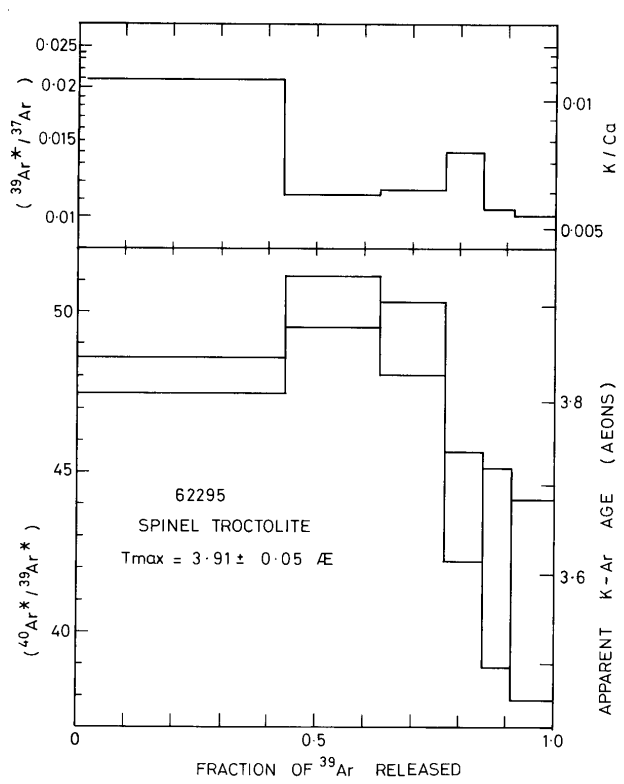
Figure 9: Ar plateau diagram for 62295 (Turner et al. 1973).
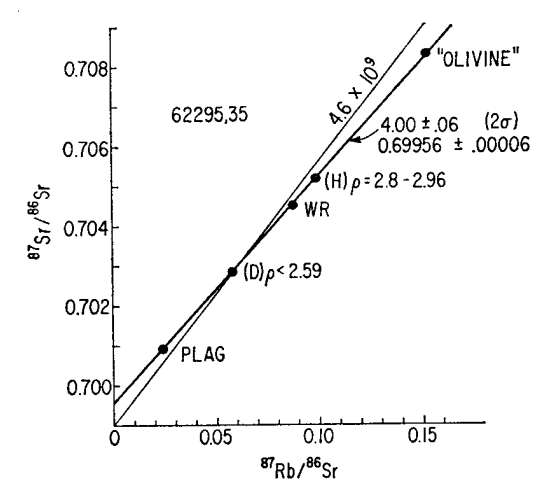
Figure 10: Rb/Sr internal mineral isochron for 62295 (Mark et al. 1974).
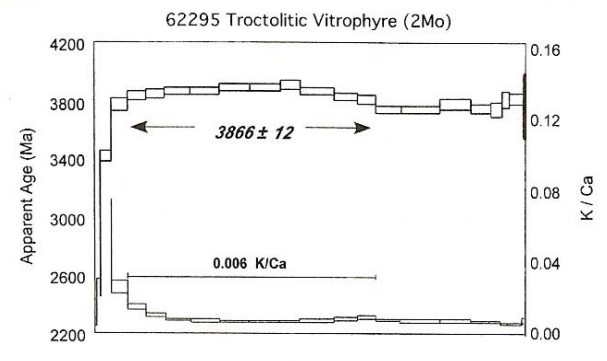
Figure 11: Ar/Ar plateau diagram for 62295 (Norman et al. 2006).
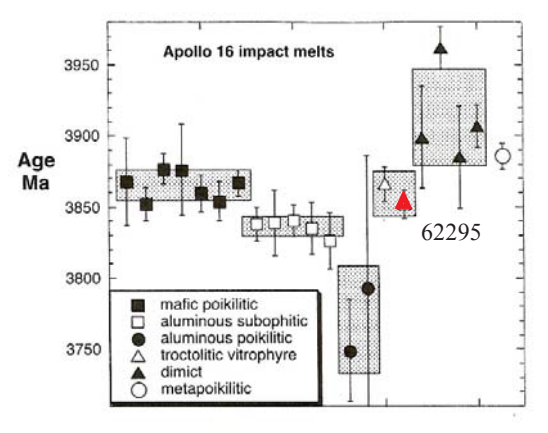
Figure 12: Ages of Apollo 16 samples collected by Marc Norman, with 62295 highlighted.
Summary of Age Data for 62295
Section titled “Summary of Age Data for 62295”Ar/Ar Rb/Sr
Turner et al. 1973 3.89 ± 0.05 b.y.
Mark et al. 1974 4.00 ± 0.06
Caution : Old decay constants !
Norman et al. 2006 3.886± 0.012
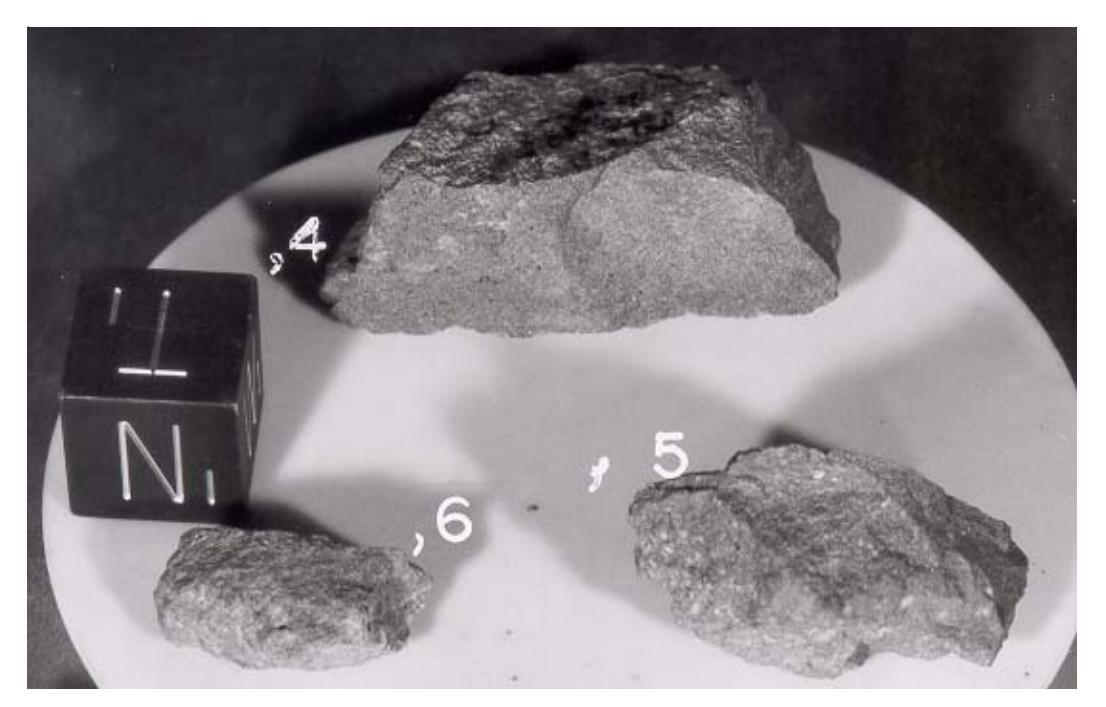
Figure 13: Pieces of 62295. NASA S72-42839. Cube is 1 inch.
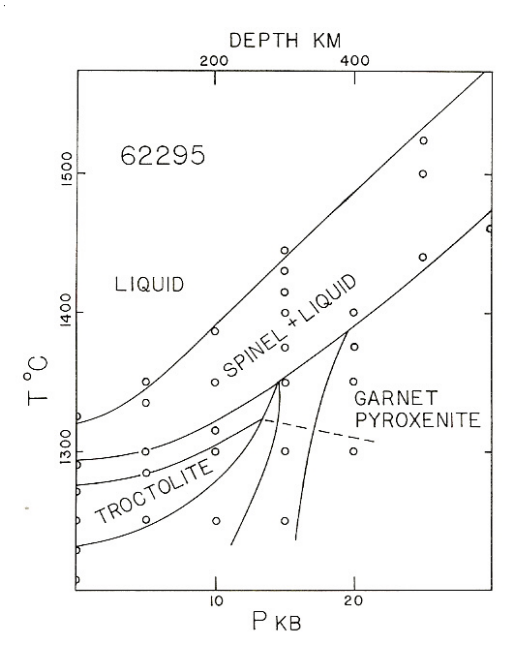
Figure 14: Experimental phase diagram for 62295 (Walker et al. 1973).
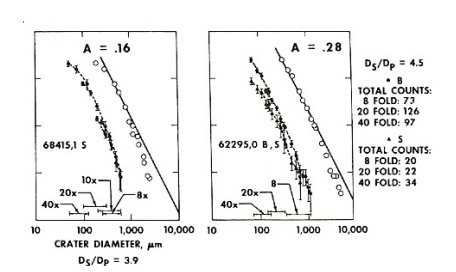
Figure 16: Density distribution of micrometeorite craters on exposed surface of 62295 and 68415 (Neukum et al. 1973).
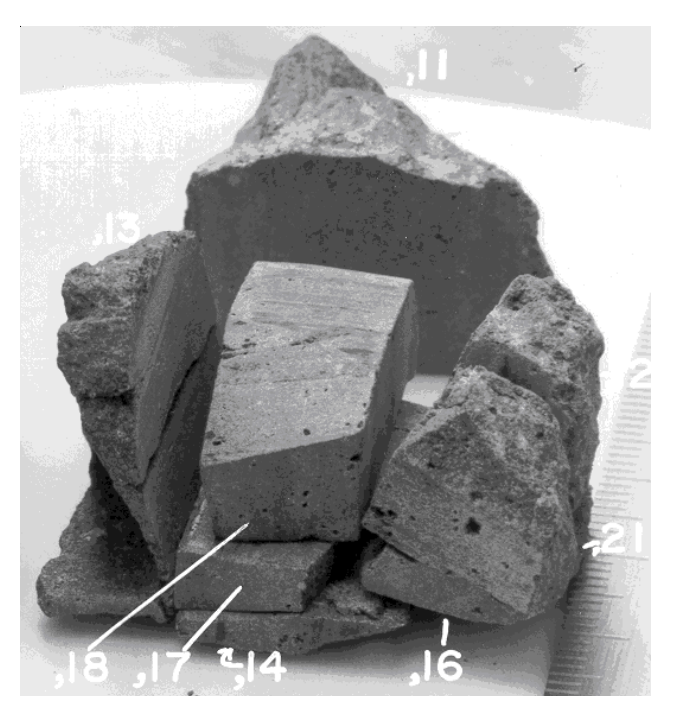
Figure 15: Cutting diagram for 62295,5. NASA S72-50656. Sample is about 1 inch.
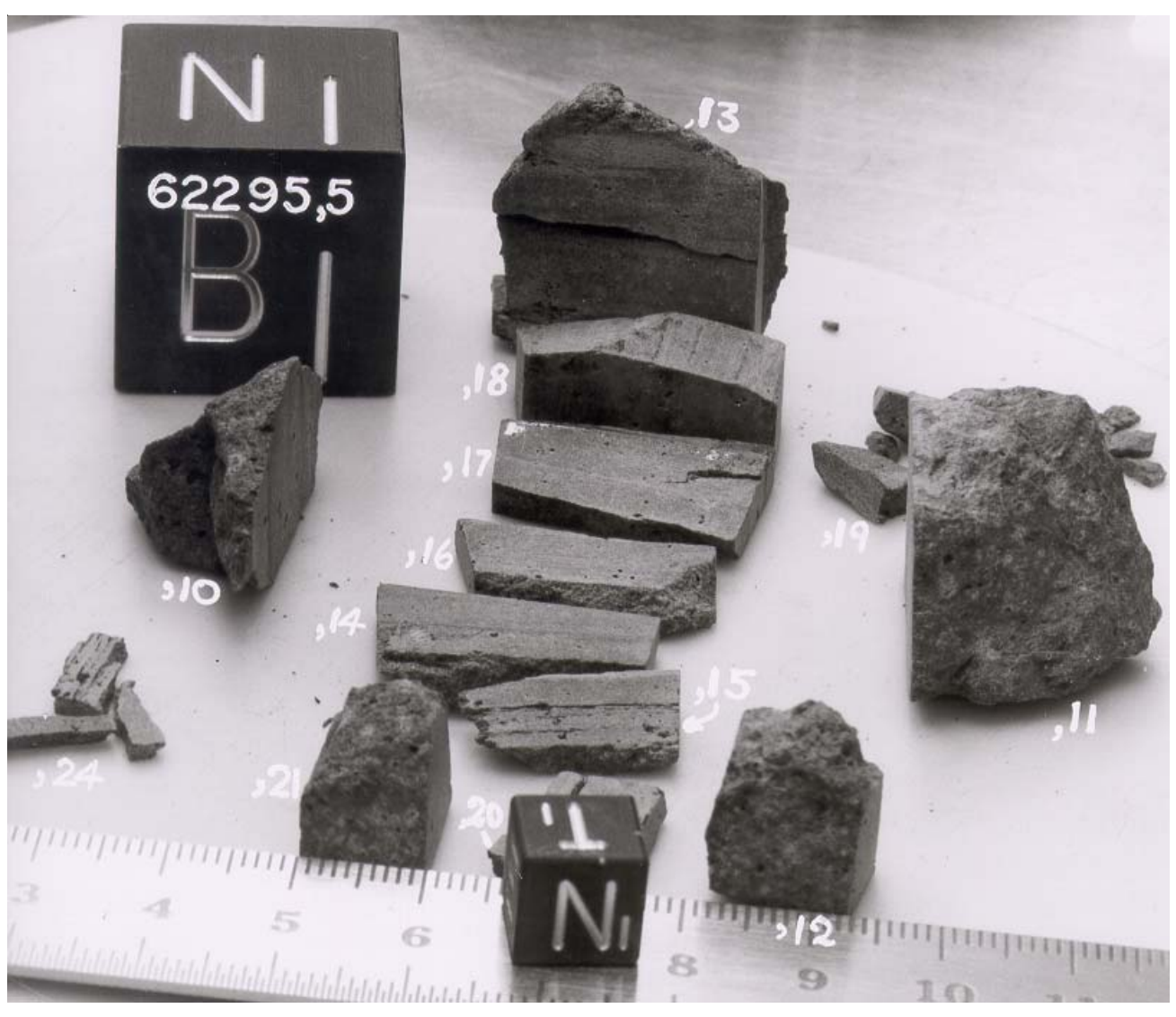
Figure 17: Exploded parts diagram for 62295,5. NASA S72-50654. Large cube is 1 inch.
References for 62295
Section titled “References for 62295”Agrell S.O., Agrell J.E., Arnold A.R. and Long J.V.P. (1973) Some observations on rock 62295 (abs). Lunar Sci. IV, 15 17. Lunar Planetary Institute, Houston.
Bhandari N., Goswami J. and Lal D. (1973) Surface irradiation and evolution of the lunar regolith. Proc. 4th Lunar Sci. Conf. 2275-2290.
Brecher A., Vaughan D.J., Burns R.G. and Morash K.R. (1974) Magnetic and Mossbauer studies of Apollo 16 rocks chips 60315 and 62295. Proc. 4th Lunar Sci. Conf. 2991 3001.
Brown G.M., Peckett A., Phillips R. and Emeleus C.H. (1973) Mineral-chemical variations in the Apollo 16 magnesiofeldspathic highland rocks. Proc. 4th Lunar Sci. Conf. 505 518.
Butler P. (1972) Lunar Sample Information Catalog Apollo 16. Lunar Receiving Laboratory. MSC 03210 Curator’s Catalog. pp. 370.
Cisowski S.M., Collinson D.W., Runcom S.K., Stephenson A. and Fuller M. (1983) A review of lunar paleointensity data and implications for the origin of lunar magnetism. Proc. 13th Lunar Planet. Sci. Conf. A691-A704.
Eldridge J.S., O’Kelley G.D. and Northcutt K.J. (1973) Radionuclide concentrations in Apollo 16 lunar samples determined by nondestructive gamma-ray spectrometry. Proc. 4th Lunar Sci. Conf. 2115-2122.
Engelhardt W. von (1979) Ilmenite in the crystallization sequence of lunar rocks. Proc. 10th Lunar Planet. Sci. Conf. 677-694.
Ford C.E., Biggar G.M., O’Hara M.J., Humphries D.J. and Spencer P.M. (1974) Origin of the lunar highlands (abs). Lunar Sci. V 239-241. Lunar Planetary Institute, Houston.
Hodges F.N. and Kushiro I. (1973) Petrology of Apollo 16 lunar highland rocks. Proc. 4th Lunar Sci. Conf. 1033-1048.
Hörz F., Gibbons R.V., Gault D.E., Hartung J.B. and Brownlee D.E. (1975a) Some correlation of rock exposure ages and regolith dynamics. Proc. 6th Lunar Sci. Conf. 3495 3508.
Hubbard N.J., Rhodes J.M., Gast P.W., Bansal B.M., Shih C.-Y., Wiesmann H. and Nyquist L.E. (1973b) Lunar rock types: The role of plagioclase in non-mare and highland rock types. Proc. 4th Lunar Sci. Conf. 1297-1312.
Katsube T.J. and Collett L.S. (1973a) Electrical characteristics of Apollo 16 lunar samples. Proc. 4th Lunar Sci. Conf. 3101-3110.
Katsube T.J. and Collett L.S. (1973b) Electrical characteristics of rock and their application to planetary and terrestrial EM-sounding. Proc. 4th Lunar Sci. Conf. 3111 3131.
Korotev R.L. (1994) Compositional variation in Apollo 16 impact melt breccias and inferences for the geology and bombardment history of the central highlands of the Moon. Geochim. Cosmochim. Acta 58, 3931-3969.
Krahenbuhl U., Ganapathy R., Morgan J.W. and Anders E. (1973a) Volatile elements in Apollo 16 samples: Possible evidence for outgassing of the Moon. Science 180, 858 861.
Krahenbuhl U., Ganapathy R., Morgan J.W. and Anders E. (1973b) Volatile elements in Apollo 16 samples: Implications for highland volcanism and accretion history of the moon. Proc. 4th Lunar Sci. Conf. 1325-1348.
Leitner B.D. and Marti K. (1974) Lunar trapped xenon. Proc. 5th Lunar Sci. Conf. 2023-2031.
LSPET (1973) The Apollo 16 lunar samples: Petrographic and chemical description. Science 179, 23-34.
Mark R.K., Lee-Hu C.-N. and Wetherill G.W. (1974) Rb-Sr age of lunar igneous rocks 62295 and 14310. Geochim. Cosmochim. Acta 38, 1643-1648.
McGee P.E., Warner J.L., Simonds C.E. and Phinney W.C. (1979) Introduction to the Apollo collections. Part II: Lunar Breccias. Curator’s Office. JSC
Misra K.C. and Taylor L.A. (1975) Characteristics of metal particles in Apollo 16 rocks. Proc. 6th Lunar Sci. Conf. 615-639.
Neukum G., Horz F., Morrison D.A. and Hartung J.B. (1973) Crater populations on lunar rocks. Proc. 4th Lunar Sci. Conf. 3255-3276.
Nord G.L., Lally J.S., Heuer A.H., Christie J.M., Radcliffe S.V., Griggs D.T. and Fisher R.M. (1973) Petrologic study of igneous and metaigneous rocks from Apollo 15 and 16 using high voltage transmission electron microscopy. Proc. 4th Lunar Sci. Conf. 953-970.
Norman M.D., Duncan R.A. and Huard J.J. (2006) Identifing impact events within the lunar catalysm from 40Ar-39Ar ages and compositions of Apollo 16 impact melt rocks. Geochim. Cosmochim. Acta 70, 6032-6049.
Nyquist L.E., Hubbard N.J., Gast P.W., Bansal B.M., Wiesmann H. and Jahn B-M. (1973) Rb-Sr systematics for chemically defined Apollo 15 and 16 materials. Proc. 4th Lunar Sci. Conf. 1823-1846.
Reimold W.U., Nyquist L.E., Bansal B.M., Wooden J.L., Shih C.-Y., Wiesmann H. and Mackinnnon I.D.R. (1985) Isotope analysis of crystalline impact-melt rocks from Apollo 16 stations 11 and 13. North Ray Crater. Proc. 15th Lunar Planet. Sci. Conf. in J. Geophys. Res. 90, C597-C612.
Roedder E. and Weiblen P.W. (1977) Barred olivine “chondrules” in lunar spinel troctolite 62295. Proc. 8th Lunar Sci. Conf. 2641-2654.
Rose H.J., Cuttitta F., Berman S., Carron M.K., Christian R.P., Dwornik E.J., Greenland L.P. and Ligon D.T. (1973) Compositional data for twenty-two Apollo 16 samples. Proc. 4th Lunar Sci. Conf. 1149-1158.
Ryder G. and Norman M.D. (1980) Catalog of Apollo 16 rocks (3 vol.). Curator’s Office pub. #52, JSC #16904
Steele I.M. and Smith J.V. (1975) Minor elements in lunar olivine as a petrologic indicator. Proc. 6th Lunar Sci. Conf. 451-467.
Taylor H.P. and Epstein S. (1973) O18/O16 and Si30/Si28 studies of some Apollo 15, 16 and 17 samples. Proc. 4th Lunar Sci. Conf. 1657-1679.
Taylor L.A., Misra K.C. and Walker B.M. (1976) Subsolidus reequilibration, grain growth, and compositional changes of native FeNi metal in lunar rocks. Proc. 7th Lunar Sci. Conf. 837-857.
Todd T., Richter D.A., Simmons G. and Wang H. (1973) Unique characterization of lunar samples by physical properties. Proc. 4th Lunar Sci. Conf. 2639-2662.
Turner G., Cadogan P.H. and Yonge C.J. (1973a) Argon selenochronology. Proc. 4th Lunar Sci. Conf. 1889-1914.
Vaniman D.T. and Papike J.J. (1978) The lunar highland melt-rock suite. Geophys. Res. Lett. 5, 429-432.
Vaniman D.T. and Papike J.J. (1980) Lunar highland melt rocks: Chemistry, petrology and silicate mineralogy. Proc. Conf. Lunar Highlands Crust (Papike J.J. and Merrill R.B., eds.) 271-337. Pergamon. Lunar Planetary Institute, Houston.
Walker D., Longhi J., Grove T., Stolper E. and Hays J.F. (1973) Experimental petrology and origin of rocks from the Descartes Highlands. Proc. 4th Lunar Sci. Conf. 1013 1032.
Wang H., Todd T., Richter D. and Simmons G. (1973) Elastic properties of plagioclase aggregtes and seismic velocities in the Moon. Proc. 4th Lunar Sci. Conf. 2663-2671.
Wänke H., Palme H., Kruse H., Baddenhausen H., Cendales M., Dreibus G., Hofmeister H., Jagoutz E., Palme C., Spettel B. and Thacker R. (1976) Chemistry of lunar highland rocks: a refined evaluation of the composition of the primary matter. Proc. 7th Lunar Sci. Conf. 3479-3499.
Weiblen P.W. and Roedder E. (1973) Petrology of melt inclusions in Apollo samples 15598 and 62295 and of clasts in 67915 and several lunar soils. Proc. 4th Lunar Sci. Conf. 681-703.
Wilshire H.G., Stuart-Alexander D.E. and Jackson E.D. (1973) Apollo 16 rocks – Petrology and classification. J. Geophys. Res. 78, 2379-2391.
Wilshire H.G., Stuart-Alexander D.E. and Schwarzman E.C. (1981) Petrology and distribution of returned samples, Apollo 16. in Geology of the Apollo 16 Area, Central Lunar Highlands. U.S. Geol. Survey Rpt 1048.