Sample 63335
Impact Melt Breccia 65.4 grams
Section titled “Impact Melt Breccia 65.4 grams”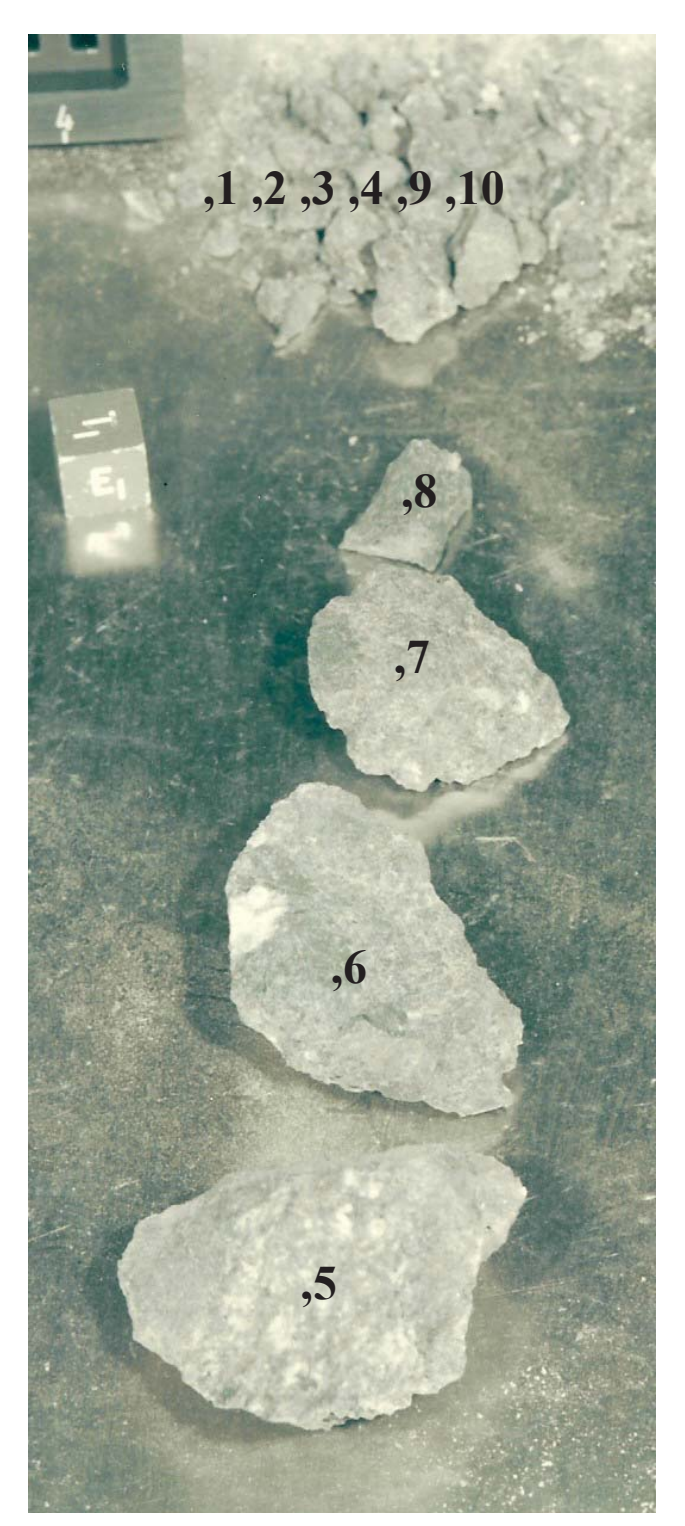
Figure 1: PET photo of 63335 right out of the bag. Cube is 1 cm. S72-37808.
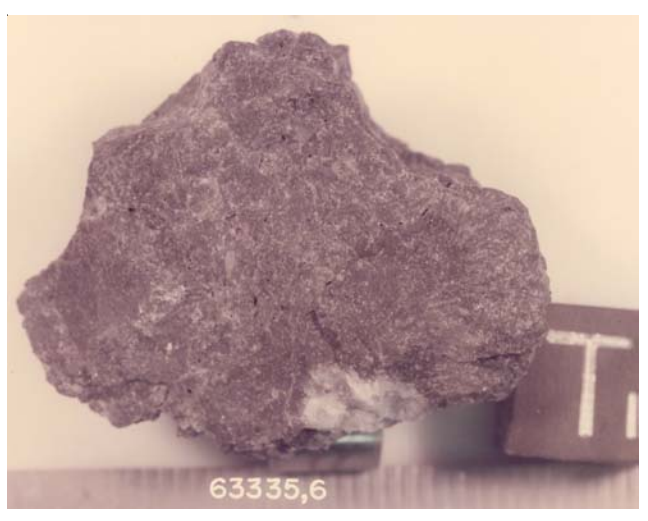
Figure 2: 63335,6. Cube is 1 cm. S75-33389.
Introduction
Section titled “Introduction”63335 is a sample chipped off of Shadow Rock (Ulrich 1973). It was collected as several fragments (figure 1) along with 60017 and 63355 – also from Shadow Rock – see transcript in 60017. A few zap pits are found on the surface. The age is not determined.
Petrography
Section titled “Petrography”Kridelbaugh et al. (1973) described 63335 as a dark grey microbreccia, cut by a light vein of devitrified glass. Clasts include anorthosite, plagioclase and gabbroic anorthosite, but there is more matrix than clasts. Ryder and Norman (1981) describe 63335 as a complex mix of melt-breccia and anorthositc clasts. The vein has a spherulitic texture (figure 3) while the matrix is a mesostasis-olivine-plagioclase met rock with devitrified glass (figure 4). Misra and Taylor (1975) and Hunter and Taylor (1981) reported the characteristics of metal particles in 63335. (meteoritic).
Significant Clast
Section titled “Significant Clast”Plagioclase Clast
Section titled “Plagioclase Clast”Obvious in figures of 63335,6. Not studied.
Chemistry
Section titled “Chemistry”Hubbard et al. (1974) and Laul et al. (1974) obtained similar data for 63335, which is also similar to that of
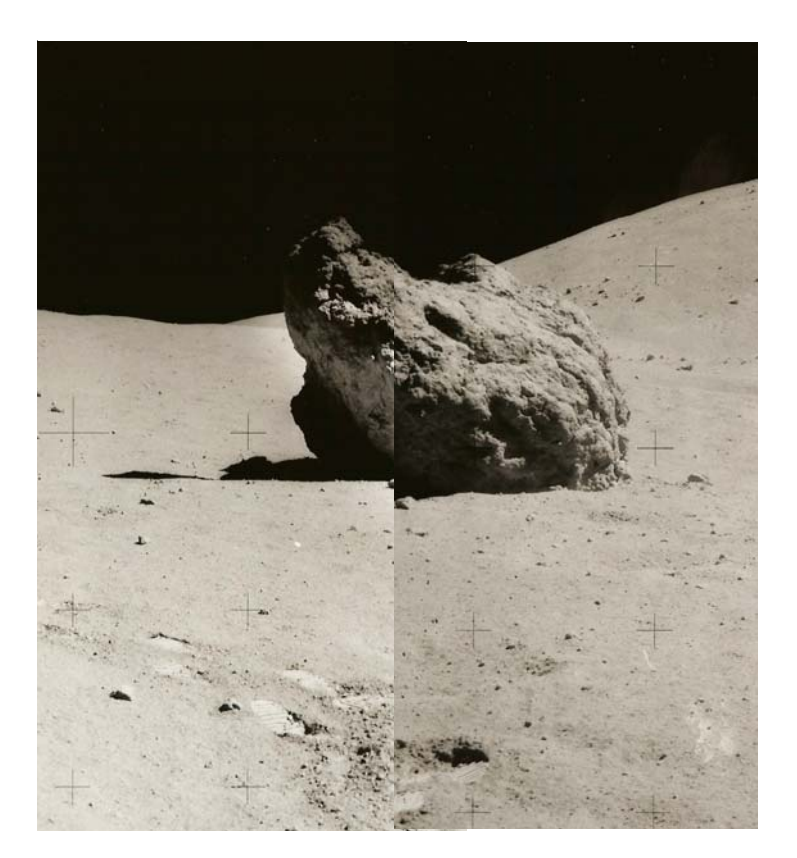
Figure 3: Shadow Rock near North Ray Crater, Apollo 16. S16-106-17392, 17394. Boulder is 5 m across.
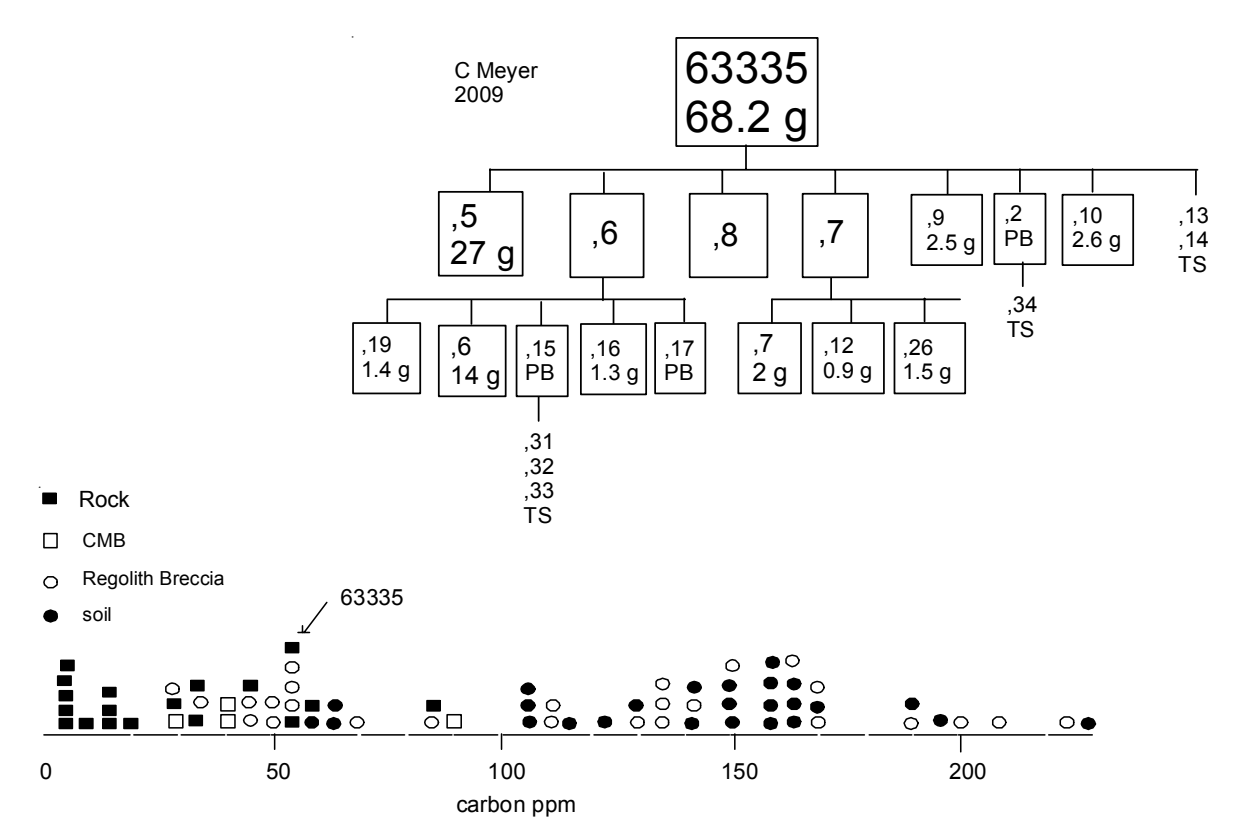
Figure 4: Carbon content of Apollo 16 samples showing 63335 (data from Moore and Lewis 1976).
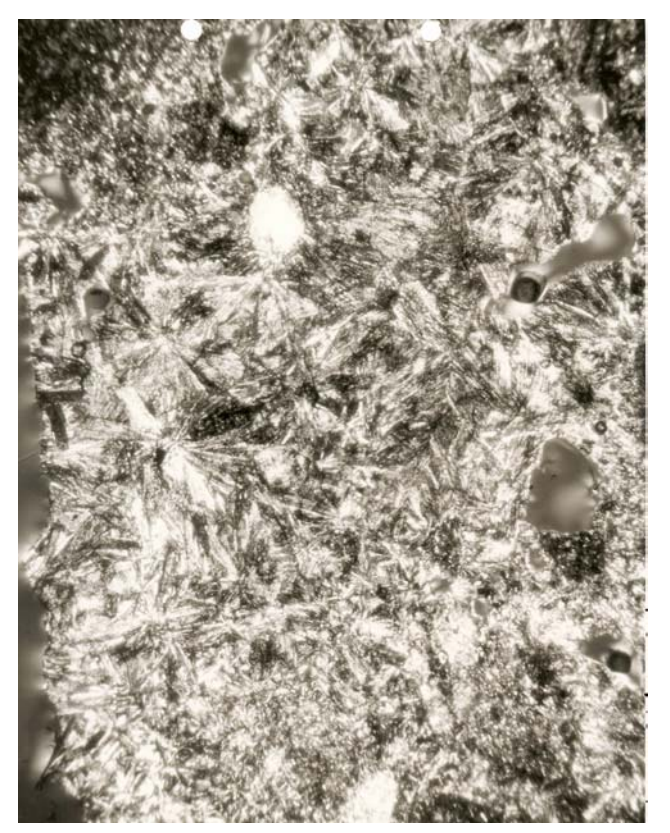
Figure 5a: Thin section photomicrograph of 63335,13 showing variolitic texture. S72-43960.
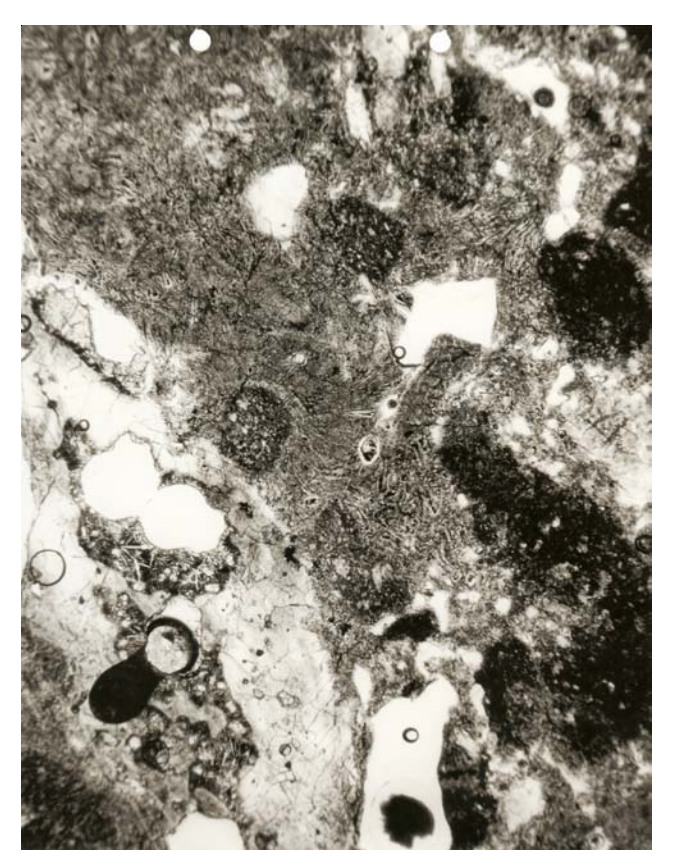
Figure 5b: Thin section photo of glass in 63335,13. S72-43957. Field of view is 3 mm.
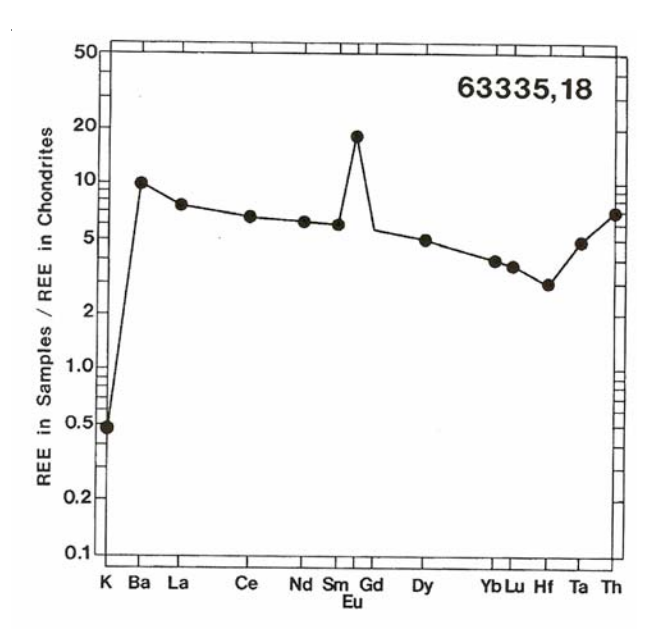
Figure 6: Noramlized rare-earth-element diagram for 63335 (data from Laul et al. 1974).
60017 (figure 6). This sample also has high $Al_2O_3$ and minor Ni, Ir and Au.
Moore and Lewis (1976) determined 49 ppm nitrogen and 53 ppm carbon in 63335 (figure 4), indicating that the precursor to this boulder was an ancient soil.
Radiogenic age dating
Section titled “Radiogenic age dating”Alexander and Kahl (1974) determined the Ar release pattern for 63335 (figure 7). No age can be obtained from this. Murthy (1978) and Nyquist et al. (1974) reported Sr isotopic analysis.
Cosmogenic isotopes and exposure ages
Section titled “Cosmogenic isotopes and exposure ages”Clark and Keith (1973) reported the natural and cosmic-ray-induced radionuclides for 63335. Alexander and Kahl (1974) determined an 38Ar exposure age of 41 +/- 8 m.y., similar to what is expected for North ray Crater, but since these samples were from the side of the boulder there must be a shielding effect.
Processing
Section titled “Processing”There are 6 thin sections of 63335.
Table 1. Chemical composition of 63335.
| weight | reference Hubbard74 Wiesman76 | Laul 74 | Ganapathy74 Clark73 | Kridelbaugh73 | |||||||
|---|---|---|---|---|---|---|---|---|---|---|---|
| SiO2 % TiO2 Al2O3 FeO MnO MgO CaO Na2O K2O P2O5 S % sum | 45.2 0.42 30.86 3.23 0.04 2.81 17.25 0.57 0.05 0.03 0.03 | (a) (a) 2 (a) (a) | (a) 0.34 (a) 31.5 (a) 2.6 (a) 0.035 (a) 17.6 (a) 0.69 (a) 0.05 | (c ) (c ) (c ) (c ) (c ) (c ) (c ) (c ) | 0.062 | 45.63 1.34 26.9 6.66 3.1 15.43 0.83 (e) 0.1 0.06 | |||||
| Sc ppm V Cr Co Ni Cu Zn Ga Ge ppb As Se Rb Sr Y Zr Nb Mo | 383 | 4.4 10 (b) 240 5 | (c ) (c ) (c ) (c ) | ||||||||
| 70 | (d) | ||||||||||
| 16.3 | (d) | ||||||||||
| 28 | (d) | ||||||||||
| 1.146 222 | (b) (b) | 24 1.2 | (d) (d) | ||||||||
| 44 | (b) | ||||||||||
| Ru Rh | |||||||||||
| Pd ppb Ag ppb | 4.9 | (d) | |||||||||
| Cd ppb In ppb | 12.4 | (d) | |||||||||
| Sn ppb Sb ppb | 3.19 | (d) | |||||||||
| Te ppb Cs ppm | 6.1 0.067 | (d) (d) | |||||||||
| Ba La Ce Pr Nd Sm Eu Gd Tb Dy Ho Er Tm Yb Lu Hf Ta | 56.2 3.15 7.76 | (b) 6 | (b) 40 (b) 2.6 | (c ) (c ) (c ) | |||||||
| 4.99 1.44 1.39 1.82 | (b) 4 (b) | (c ) | |||||||||
| (b) 1.2 (b) 1.32 | (c ) (c ) | ||||||||||
| 0.2 | (c ) | ||||||||||
| 1.96 | (b) 1.5 | (c ) | |||||||||
| 1.22 | (b) | ||||||||||
| 1.14 0.175 1.15 | (b) 1.5 (b) 0.9 (b) 0.6 0.1 | (c ) (c ) (c ) (c ) | |||||||||
| W ppb Re ppb | 0.136 | (d) | |||||||||
| Os ppb Ir ppb Pt ppb Au ppb | 2 | (c ) 1.32 | (d) | ||||||||
| 4 | (c ) 0.81 (d) | ||||||||||
| Th ppm U ppm | 0.49 0.136 | (b) 0.25 (b) 0.1 | (c ) | (c ) 0.159 | 0.24 (d) 0.072 | (e) (e) | |||||
| technique: (a) XRF, (b) IDMS, (c ) INAA, (d) RNAA, (e) radiation counting |
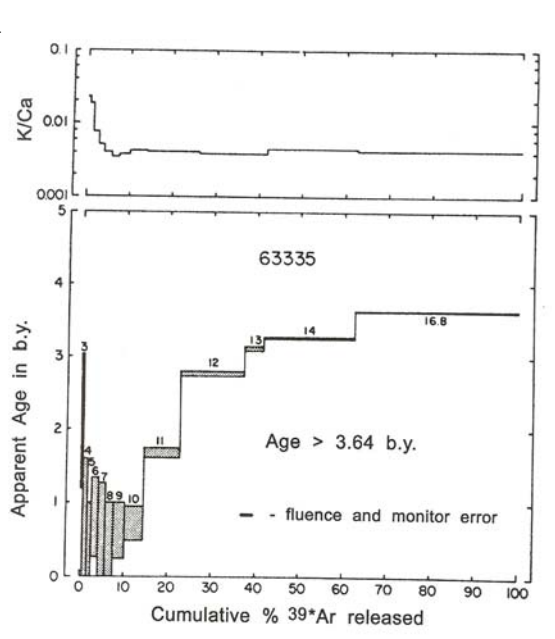
Figure 7: Ar/Ar plateau diagram for 63335 (Alexander and Kahl 1974).
References for 63335
Section titled “References for 63335”Alexander E.C. and Kahl S.B. (1974) 40Ar-39Ar studies of lunar breccias. Proc. 5th Lunar Sci. Conf. 1353-1373.
Butler P. (1972) Lunar Sample Information Catalog Apollo 16. Lunar Receiving Laboratory. MSC 03210 Curator’s Catalog. pp. 370.
Clark R.S. and Keith J.E. (1973) Determination of natural and cosmic ray induced radionuclides in Apollo 16 lunar samples. Proc. 4th Lunar Sci. Conf. 2105-2113.
Ganapathy R., Morgan J.W., Higuchi H., Anders E. and Anderson A.T. (1974) Meteoritic and volatile elements in Apollo 16 rocks and in separated phases from 14306. Proc. 5th Lunar Sci. Conf. 1659-1683.
Hubbard N.J., Rhodes J.M., Wiesmann H., Shih C.Y. and Bansal B.M. (1974) The chemical definition and interpretation of rock types from the non-mare regions of the Moon. Proc. 5th Lunar Sci. Conf. 1227-1246.
Hunter R.H. and Taylor L.A. (1981) Rust and schreibersite in Apollo 16 highland rocks: Manifestations of volatileelement mobility. Proc. 12th Lunar Planet. Sci. Conf. 253 259.
Kridelbaugh S.J., McKay G.A. and Weill D.F. (1973) Breccias from the lunar highlands: Preliminary petrographic report on Apollo 16 samples 60017 and 63335. Science 179, 71-74.
Laul J.C.. Hill D.W. and Schmitt R.A. (1974d) Chemical studies of Apollo 16 and 17 samples. Proc. 5th Lunar Sci. Conf. 1047-1066.
LSPET (1973) The Apollo 16 lunar samples: Petrographic and chemical description. Science 179, 23-34.
LSPET (1972) Preliminary examination of lunar samples. Apollo 16 Preliminary Science Report. NASA SP-315, 7 1—7-58.
Misra K.C. and Taylor L.A. (1975) Characteristics of metal particles in Apollo 16 rocks. Proc. 6th Lunar Sci. Conf. 615-639.
Moore C.B. and Lewis C.F. (1976) Total nitrogen contents of Apollo 15, 16 and 17 lunar rocks and breccias (abs). Lunar Sci. VII, 571-573. Lunar Planetary Institute, Houston.
Murthy V.R. (1978) Considerations of lunar initial strontium ratio (abs). Lunar Planet. Sci. IX, 778-780. Lunar Planetary Institute, Houston.
Nord G.L., Christie J.M., Heuer A.H. and Lally J.S. (1975) North Ray Crater breccias: An electron petrographic study. Proc. 6th Lunar Sci. Conf. 779-797.
Nyquist L.E., Bansal B.M., Wiesmann H. and Jahn B.-M. (1974a) Taurus-Littrow chronology: some constraints on early lunar crustal development. Proc. 5th Lunar Sci. Conf. 1515-1539.
Ryder G. and Norman M.D. (1980) Catalog of Apollo 16 rocks (3 vol.). Curator’s Office pub. #52, JSC #16904
Stöffler D., Ostertag R., Reimold W.U., Borchardt R., Malley J. and Rehfeldt A. (1981) Distribution and provenance of lunar highland rock types at North Ray Crater, Apollo 16. Proc. 12th Lunar Planet. Sci. Conf. 185-207.
Stöffler D., Bischoff A., Borchardt R., Burghele A., Deutsch A., Jessberger E.K., Ostertag R., Palme H., Spettel B., Reimold W.U., Wacker K. and Wanke H. (1985) Composition and evolution of the lunar crust in the Descartes highlands. Proc. 15th Lunar Planet. Sci. Conf. in J. Geophys. Res. 90, C449-C506.
Sutton R.L. (1981) Documentation of Apollo 16 samples. In Geology of the Apollo 16 area, central lunar highlands. (Ulrich et al.) U.S.G.S. Prof. Paper 1048.
Ulrich G.E. (1973) A geologic model for North Ray Crater and stratigraphic implications for the Descartes region. Proc. 4th Lunar Sci. Conf. 27-39.
Ulrich G.E., Hodges C.A. and Muehlberger W.R. (1981) Geology of the Apollo 16 Area, Central Lunar Highlands. U.S. Geol. Survey Prof. Paper 1048
Wiesmann H. and Hubbard N.J. (1975) A compilation of the Lunar Sample Data Generated by the Gast, Nyquist and Hubbard Lunar Sample PI-Ships. Unpublished. JSC