Sample 63355
63355 Poikilitic Impact Melt Breccia 68.24 grams
Section titled “63355 Poikilitic Impact Melt Breccia 68.24 grams”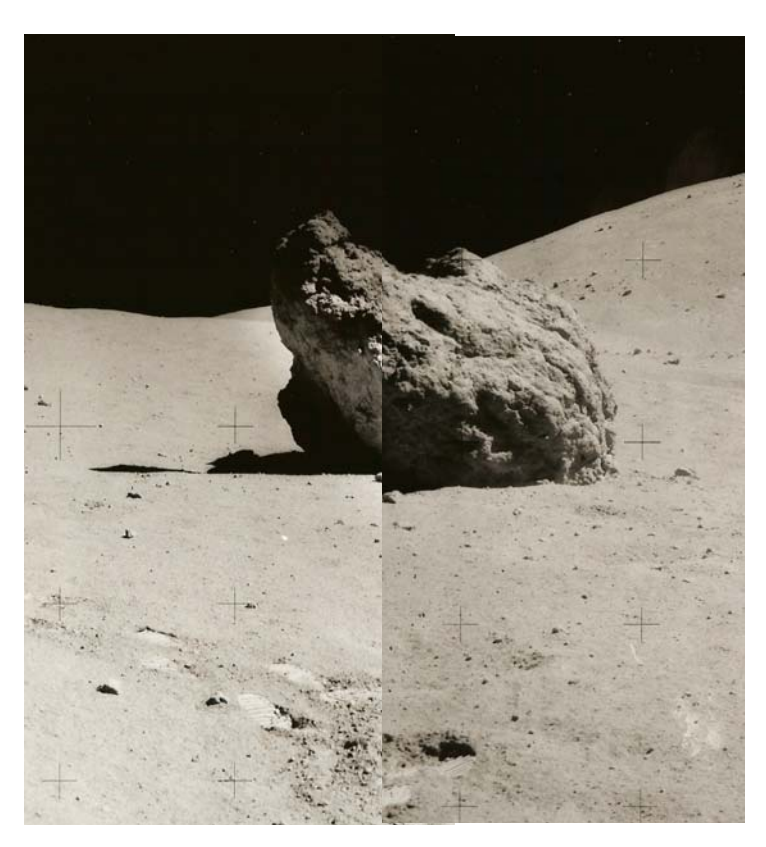
Figure 1: Shadow Rock near North Ray Crater, Apollo 16. S16-106-17392, 17394. Boulder is 5 m wide.
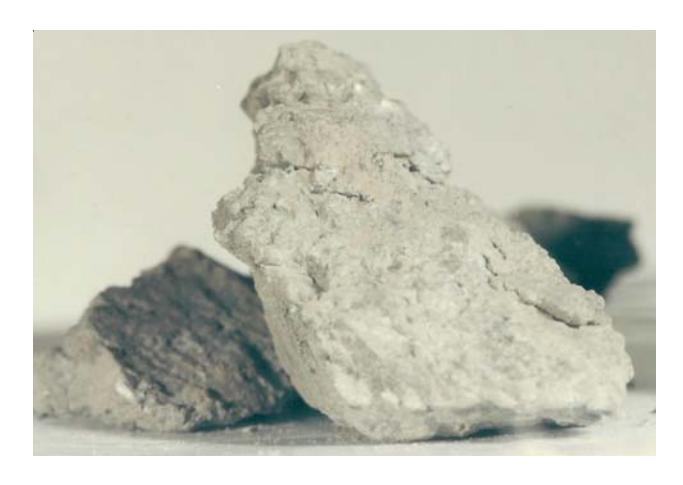
Figure 3: Photo of 63355. Sample is 3 cm across. S72-37962.
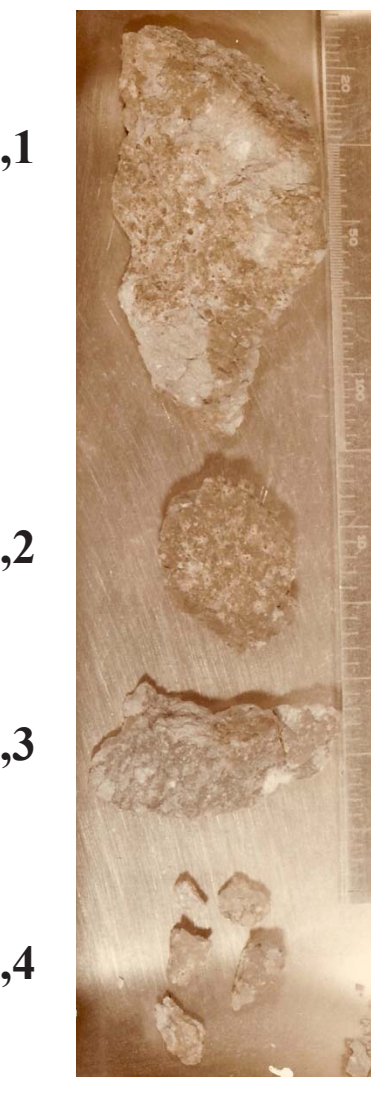
Figure 2: 63355 was actually several pieces of rock collected from the regolith beneath where the chipping of the boulder occured.
Introduction
Section titled “Introduction”63355 was collected from the chips off of Shadow Rock (see also 60017 and 63335). It is in several pieces and since they were picked from the soil, they may not all be from the boulder (see transcript in 60017). In any case, the chemical composition of 63355 is different from the other samples of Shadow Rock. Pieces of 63355 have patina and micrometeorite craters (figure 2).
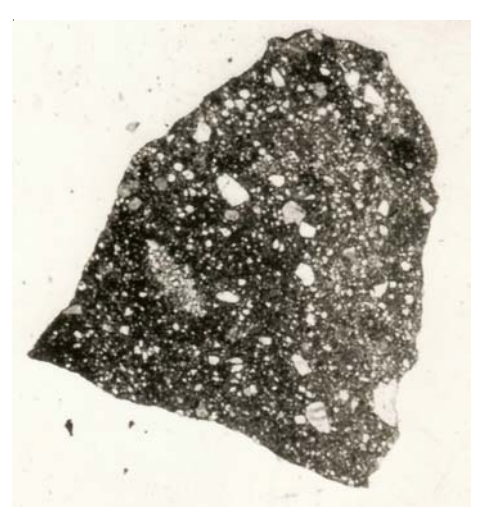
Figure 4a: Thin section photomicrograph of 63355,48. S72-49934. Field of view about 1 cm. Compare with thin section shown in Nord et al. (1975).
Petrography
Section titled “Petrography”Nord et al. (1975) report that 63355,7 is a dark matrix breccia with a clast population of angular noritic and anorthositic fragments. Nord et al. (1975) found that plagioclase in 63355 was shocked with many deformation features from an HV electron microscope petrographic study. They found that the matrix contains glass and there is no evidence of flow, as there is in 60017.
Ryder and Norman (1980) found that thin section 63355,48 is a poikilitic impact melt containing clasts and schieren of cataclastic plagioclase. The matrix has small orthopyroxene oikiocrysts with irregularly shaped plagioclase inclusions. There is ilmenite and glass between the oikiocrysts (see figure 4b, just for fun).
Misra and Taylor (1975) studied the metal particles (figure 6). Hunter and Taylor (1981) reported rust (which was not the case for 60017 nor 63335).
Chemistry
Section titled “Chemistry”63355 has high Fe and Mg, and only moderate Al (table). The trace element content is also high, and not like that of the other samples of this boulder (table, figure 5). Ni, Ir and Au are very high.
Radiogenic age dating
Section titled “Radiogenic age dating”none
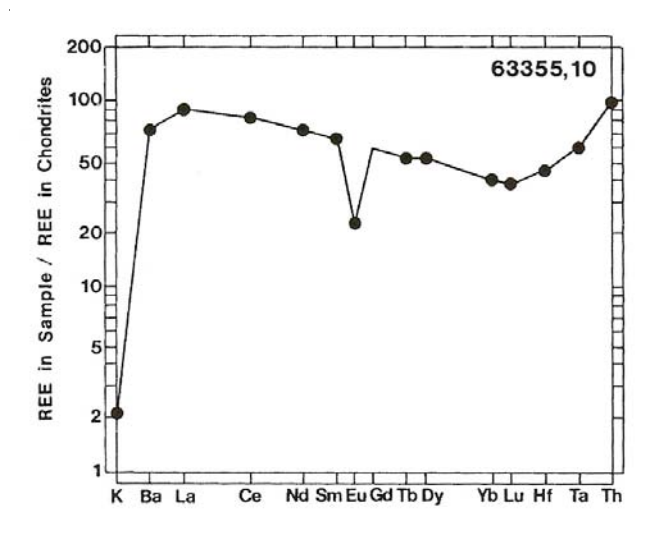
Figure 5: Normalized rare-earth-element diagram for 63355 (data from Laul et al. 1974).
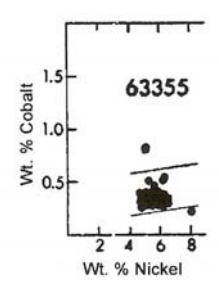
Figure 6: Chemical composition of metal grains in 63355 (Misra and Taylor 1975).
Cosmogenic isotopes and exposure ages
Section titled “Cosmogenic isotopes and exposure ages”Clark and Keith (1973) determined the abundance of natural and cosmic ray induced radionuclides in Apollo 16 lunar samples. They reported 26Al = 98 dpm/kg, 22Na = 48 dpm/kg and 54Mn = 25 dpm/kg for 63355,1.
Processing
Section titled “Processing”63355 was collected as several pieces (figure 2). There are three thin sections.
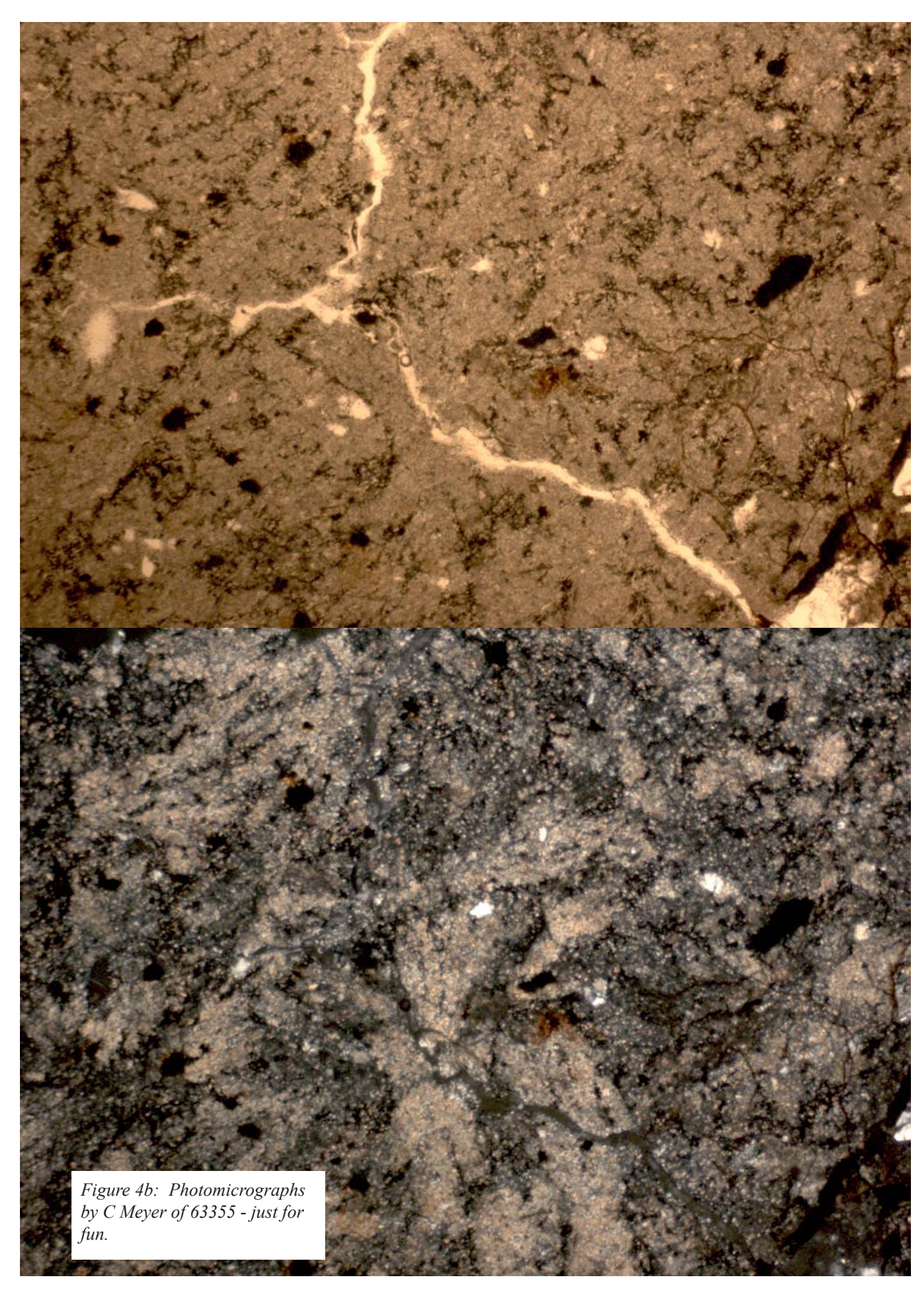
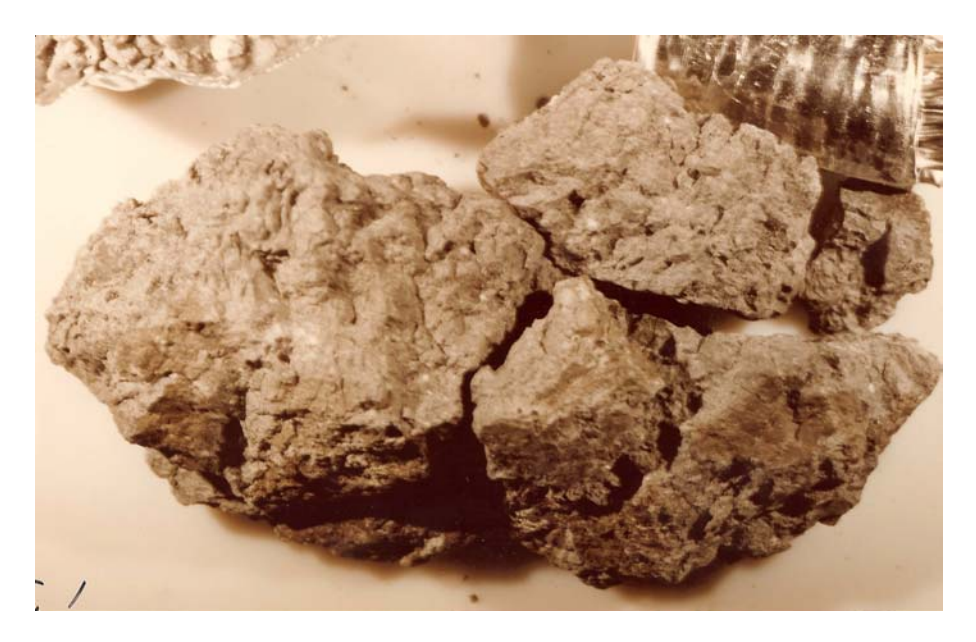
Figure 7: 63355,1. S79-36145.
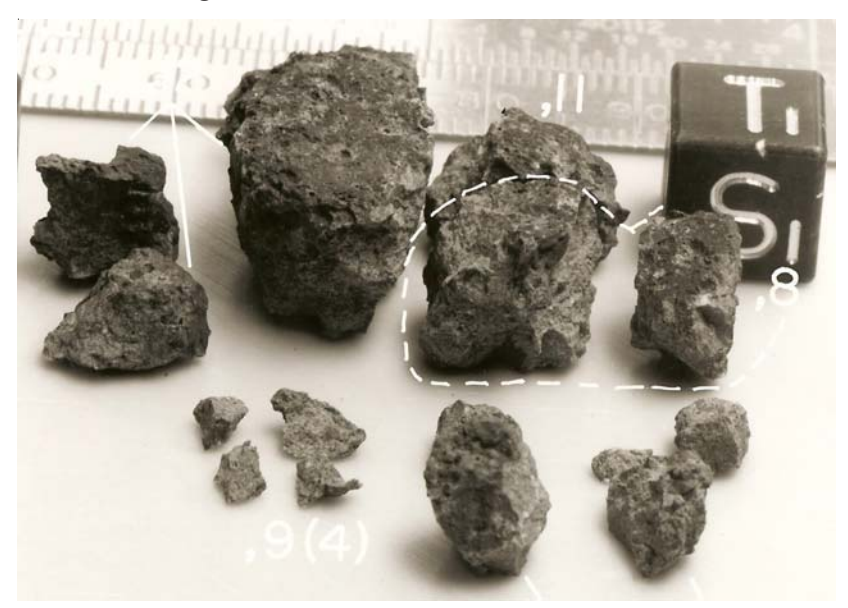
Figure 8: 63355,2 (7-12). Note zap pits. Cube is 1 cm. S73-28681
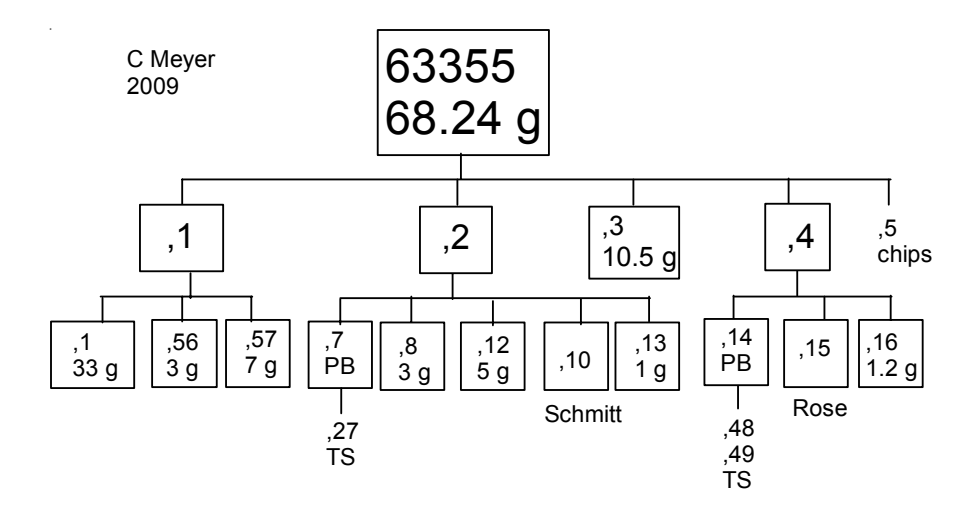
Table 1. Chemical composition of 63355.
| reference Laul74 weight SiO2 % TiO2 Al2O3 FeO MnO MgO CaO Na2O K2O P2O5 S % sum | Ganapathy74 | Clark74 | ||||
|---|---|---|---|---|---|---|
| 0.88 21.5 8.3 0.09 8 12 0.5 0.22 | (a) (a) (a) (a) (a) (a) (a) (a) | 0.24 | (c ) | |||
| Sc ppm V Cr Co Ni Cu Zn Ga Ge ppb | 12 35 1156 62 940 | (a) (a) (a) (a) | (a) 800 | (b) | ||
| 5.2 | (b) | |||||
| 1910 | (b) | |||||
| As Se | 340 | (b) | ||||
| Rb Sr | 6.5 | (b) | ||||
| Y Zr | 280 | |||||
| Nb | (a) | |||||
| Mo Ru | ||||||
| Rh Pd ppb | ||||||
| Ag ppb Cd ppb | 2.3 5.7 | (b) (b) | ||||
| In ppb Sn ppb | ||||||
| Sb ppb Te ppb | 5.87 38 | (b) (b) | ||||
| Cs ppm | 0.3 | (b) | ||||
| Ba La | 280 30 | (a) (a) | ||||
| Ce Pr | 74 | (a) | ||||
| Nd Sm | 47 12 | (a) (a) | ||||
| Eu | 1.51 | (a) | ||||
| Gd Tb | 2.5 | (a) (a) | ||||
| Dy Ho | 16 | (a) | ||||
| Er Tm | ||||||
| Yb Lu | 8.8 1.3 | (a) (a) | ||||
| Hf | 8.9 | (a) | ||||
| Ta W ppb | 1.2 | (a) | ||||
| Re ppb Os ppb | 2.27 | (b) | ||||
| Ir ppb Pt ppb | 24 | (a) 16.6 | (b) | |||
| Au ppb Th ppm | 16 4.2 | (a) | (a) 18.4 | (b) | 4.85 | (c ) |
| U ppm | 1.2 | (a) 0.98 | (b) 1.31 | (c ) | ||
| technique: (a) INAA, (b) RNAA, (c ) radiation counting |
References for 63355
Section titled “References for 63355”Butler P. (1972) Lunar Sample Information Catalog Apollo 16. Lunar Receiving Laboratory. MSC 03210 Curator’s Catalog. pp. 370.
Clark R.S. and Keith J.E. (1973) Determination of natural and cosmic ray induced radionuclides in Apollo 16 lunar samples. Proc. 4th Lunar Sci. Conf. 2105-2113.
Ganapathy R., Morgan J.W., Higuchi H., Anders E. and Anderson A.T. (1974) Meteoritic and volatile elements in Apollo 16 rocks and in separated phases from 14306. Proc. 5th Lunar Sci. Conf. 1659-1683.
Hunter R.H. and Taylor L.A. (1981) Rust and schreibersite in Apollo 16 highland rocks: Manifestations of volatileelement mobility. Proc. 12th Lunar Planet. Sci. Conf. 253 259.
Laul J.C.. Hill D.W. and Schmitt R.A. (1974d) Chemical studies of Apollo 16 and 17 samples. Proc. 5th Lunar Sci. Conf. 1047-1066.
LSPET (1973) The Apollo 16 lunar samples: Petrographic and chemical description. Science 179, 23-34.
LSPET (1972) Preliminary examination of lunar samples. Apollo 16 Preliminary Science Report. NASA SP-315, 7 1—7-58.
Misra K.C. and Taylor L.A. (1975) Characteristics of metal particles in Apollo 16 rocks. Proc. 6th Lunar Sci. Conf. 615-639.
Nord G.L., Christie J.M., Heuer A.H. and Lally J.S. (1975) North Ray Crater breccias: An electron petrographic study. Proc. 6th Lunar Sci. Conf. 779-797.
Pearce G.W. and Simonds C.H. (1974) Magnetic properties of Apollo 16 samples and implications for their mode of formation*. J. Geophys. Res*. 79, 2953-2959.
Phinney W. and Lofgren G. (1973) Description, classification and inventory of Apollo 16 rake samples from stations 1, 4 and 13. Curators Office. JSC
Ryder G. and Norman M.D. (1980) Catalog of Apollo 16 rocks (3 vol.). Curator’s Office pub. #52, JSC #16904
Stöffler D., Ostertag R., Reimold W.U., Borchardt R., Malley J. and Rehfeldt A. (1981) Distribution and provenance of lunar highland rock types at North Ray Crater, Apollo 16. Proc. 12th Lunar Planet. Sci. Conf. 185-207.
Stöffler D., Bischoff A., Borchardt R., Burghele A., Deutsch A., Jessberger E.K., Ostertag R., Palme H., Spettel B., Reimold W.U., Wacker K. and Wanke H. (1985) Composition and evolution of the lunar crust in the Descartes highlands. Proc. 15th Lunar Planet. Sci. Conf. in J. Geophys. Res. 90, C449-C506.
Sutton R.L. (1981) Documentation of Apollo 16 samples. In Geology of the Apollo 16 area, central lunar highlands. (Ulrich et al.) U.S.G.S. Prof. Paper 1048.
Ulrich G.E. (1973) A geologic model for North Ray Crater and stratigraphic implications for the Descartes region. Proc. 4th Lunar Sci. Conf. 27-39.
Ulrich G.E., Hodges C.A. and Muehlberger W.R. (1981) Geology of the Apollo 16 Area, Central Lunar Highlands. U.S. Geol. Survey Prof. Paper 1048
Warner J.L., Simonds C.H. and Phinney W.C. (1973b) Apollo 16 rocks: Classification and petrogenetic model. Proc. 4th Lunar Sci. Conf. 481-504.