Sample 68415
68415 and 68416
Section titled “68415 and 68416”Basaltic Impact Melt 371.2 and 179 grams
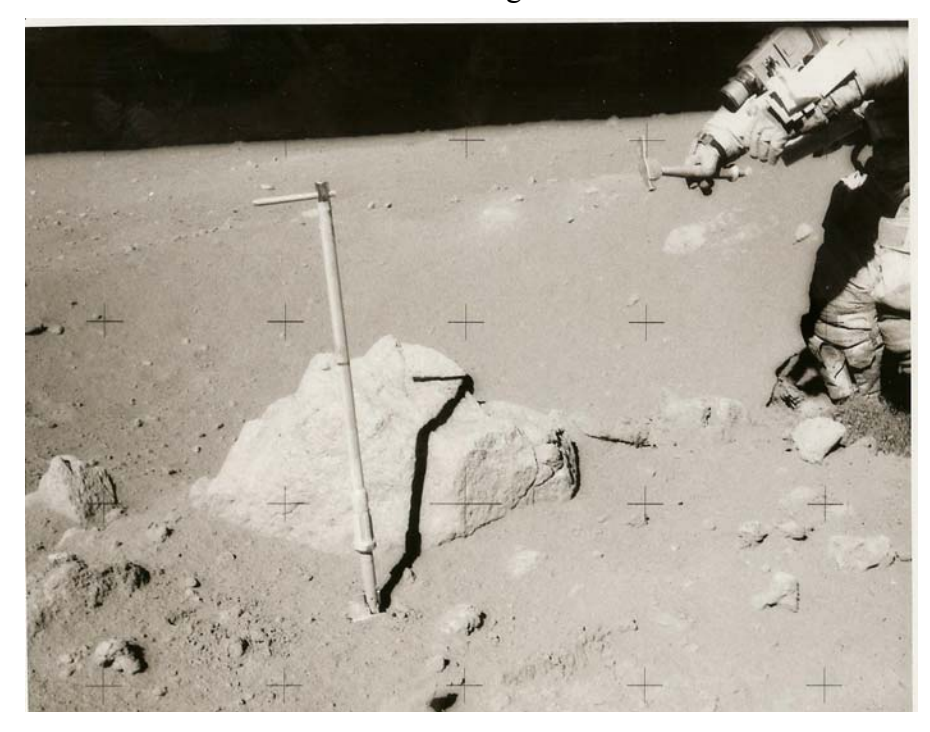
Figure 1: 68415 was chipped from top of small boulder or rim of small crater. AS16-108-17697.
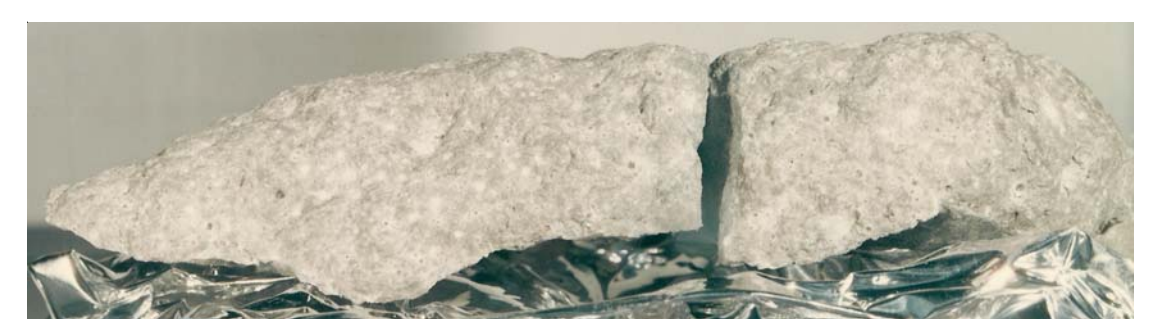
Figure 2: Photo of 68415. Sample is 15 cm long. S72-37351.
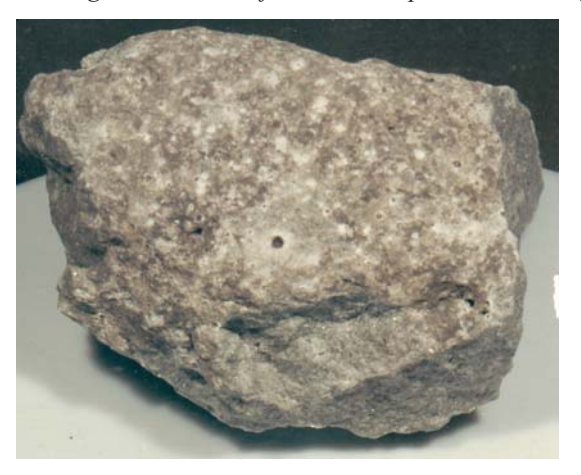
Figure 3: Photo of 68416. Sample is 7 cm across. S72-41612.
Introduction
Section titled “Introduction”Both 68415 and 68416 were chipped off the top of a 0.5 m boulder on the rim of a 5 m crater within a ray from South Ray Crater (figure 1). These samples were collected adjacent to each other and are found to have similar lithology and composition. The astronauts observed that additional fragments of the same material were present in the immediate area (see transcript).
These samples are highly aluminous ( $Al_2O_3 = 28%$ ), with basaltic intersertal texture, contain high abundance of meteoritic siderophiles (Ir = 4-5 ppb) and are most likey crystallized impact melt. These rocks have relatively
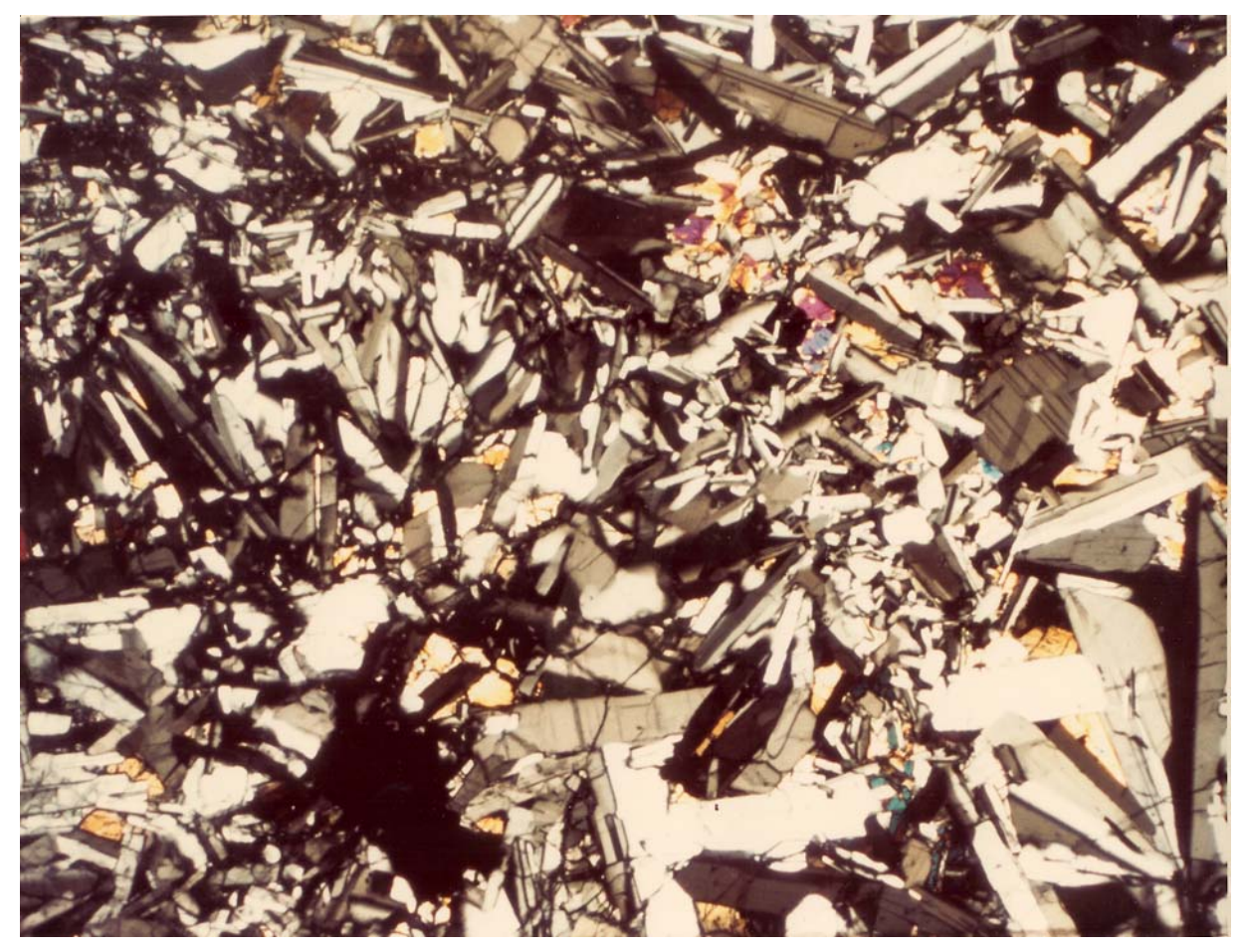
Figure 4: Photomicrograph of thin section of 68415 (crossed polarizers). S72-37351. Scale is unknown. (see also appendix)
low trace element content (Th = 1.2 ppm, Rb = 2 ppm) and very low initial Sr87/86 ratio.
The crystallization age of 68415 is 3.76 b.y. (corrected), making it one of the youngest highland rocks dated. It has an exposure age of about 95 m.y., which is too old for it to be from South Ray Crater.
Petrography
Section titled “Petrography”Lunar samples 68415 and 68416 have an igneous intersertal texture characterized by a “fret work” of plagioclase laths with interstitial olivine and pyroxene and minor occurances of opaques, phosphates, residual glass and other minerals (Helz and Appleman 1973, Gancarz et al. 1972, Walker et al. 1973, Juan et al. 1973, Brown et al. 1973 and McGee et al. 1977). Figures 2 and 3 show the rock samples, while figure 4 and 5 show the internal texture.
Although the rock appeared at first to be a “holocrystalline igneous rock” (LSPET 1972), or as recrystallized melt, it was reported to have relic xenocrysts of plagioclase (Wilshire et al. 1973) and zones of vesicular material (figure 20). The apparent plagioclase xenocrysts have undulatory extinction, anhedral shape and are Ca-rich (Helz and Appleman 1973). Thus, McGee et al. (1977) classify it as a breccia, while Ryder and Norman (1980) classify it as an impact melt.
Vaniman and Papike (1980) find that 68416 is more coarse-grained than 68415 and has slightly different pyroxene composition and zoning. Irving (1975) reported a difference in the Ni and Co content of metal grains, which are larger in size and more disperse in 68416.
Mineralogy
Section titled “Mineralogy”Plagioclase: The plagioclase in 68415 is nicely twinned and typically normally-zoned An98-71. It forms a “fret work” of anhedral to euhdral laths ranging from 0.1 to several mm in length (average 0.3 mm). Rarely, large anhedral grains of Ca-rich plagiolcase xenocrysts
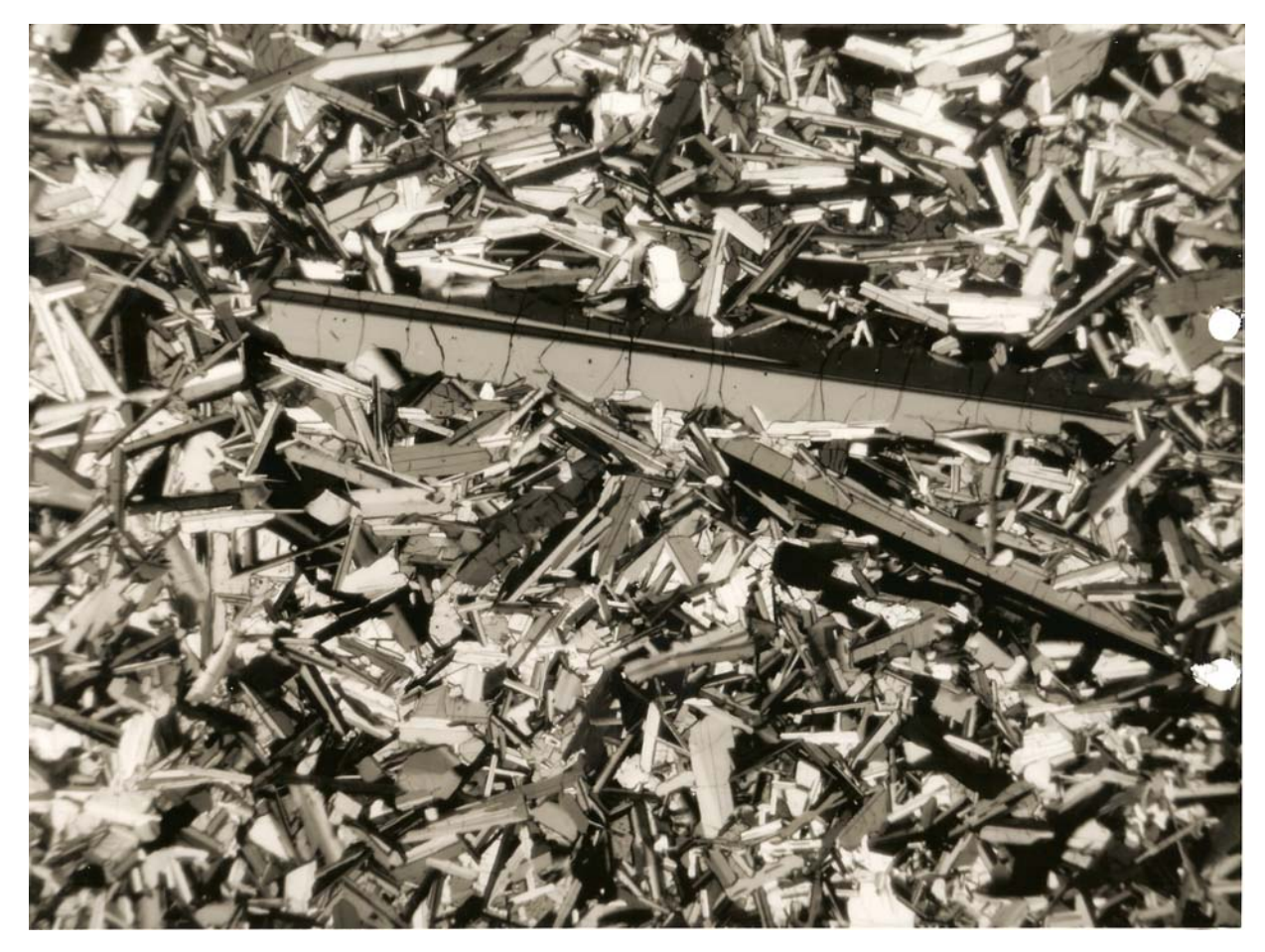
Figure 5: Photomicrograph of thin section of 68416,6 (crossed polarizers). S72-43652. Scale is unknown.
are found with poorly-developed twinning, with offset fracturing (Helz and Appleman 1973).
Crystallographic phenomena of anorthite in 68415 were investigated by Wenk et al. (1973) and Jagodzinski and Korekawa (1973). Meyer et al. (1974) studied the trace elements in plagioclase.
Pyroxene: Pyroxene in 68415, 68416 is found as small anhedral grains in between the feldspar laths. The chemical composition is plotted in figures 6 and 7. Sample 68416 contains orthopyroxene, while 68415 does not. Brown et al. (1973) reported more high-Ca pyroxene than low-Ca pryoxene.in 68416. Takeda (1973) reported on the lack of inverted pigeonite in 68415. Fe-rich pyroxene is found in the residual glass.
Olivine: Olivine (Fo70) makes up about 2 – 5 % of the mode of 68415. It is found, along with pyroxene, in the interstitual areas.
Residual glass: Minor amounts of residual glass are found in the mesostasis between plagioclase and CDR Now, how about that rock over yonder?
LMP That’s the one I’m going for - - - look at that beauty, John! That is a crystalline rock, no breccia.
CDR A no-breccia, crystalline rock, huh?
LMP And it’s whitish to gray, with a lot of zap pits
in it.
CDR It even has what look to be – no, those are zap pits, aren’t they?
LMP Yeah. In fact, the whole area – there’s a lot of the rock here, scatter all over – scattered around.
CDR Where do you want a sample from?
LMP See that sharp corner? Right up at the top there?
CDR Well, if that ain’t pure plag, I never seen it.
LMP Don’t that look like pue plag to you?
CDR I don’t know what it is, though.
LMP It’s pure feldspar, looks like -
CDR Pure feldspar. Don’t it look like it’s been – it’s so sandy looking, it could have been reworked or something.
LMP Maybe partially shocked.
CDR Shocked, yeah.
LMP But it’s pure plag – it’s plag, Tony. And it’s in 341. Whack off – another piece right here, John. This rock is pretty predominant.
LMP The other piece of that rock is going in 342. I see at least 10 other rocks around here that have that same appearance, so it’s not completely anomalous rock.
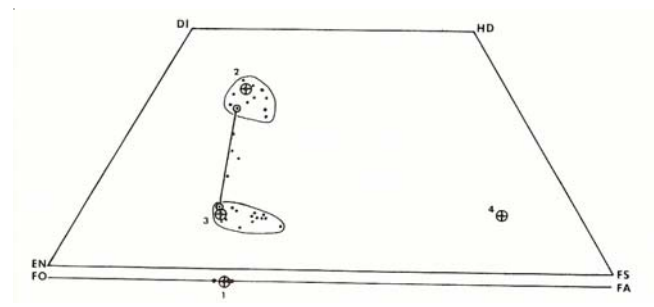
Figure 6: Pyroxene and olivine composition of 68415 (from Helz and Appleman 1973).
pyroxene. It is this residual glass that allows Rb/Sr dating. It is Si-rich, but not especially K-rich (Gancarz et al. 1973). A variety of minor phases are found in this residual glass including chromite, cristobalite, troilite, phosphates, armalcolite and an unidentified Y-Zr-rich phase.
Ilmenite: Ilmenite is the main opaque phase (~1%) and occurs as irregularly-shaped grains in association with the residual glass phase.
Metallic iron: Misra and Taylor (1975) and Pearce et al. (1976) found a wide range in Ni and Co content in iron grains in 68415 (figure 8). Hewins and Goldstein (1975) explained this wide range with a fractional crystallization model (figure 9). Irving (1975) showed that the range of Ni and Co content is much wider for 68415 than 68416, probably because the iron grains in 68416 are larger. Hunter and Taylor (1981) reported no rust and only minor amounts of schreibersite in this dense, coherent rock.
Chemistry
Section titled “Chemistry”Perhaps the most telling attribute of 68415 and 68416 is that they contain significant amounts of meteoritic siderophiles (Ni = 150, Ir = 4, Au = 13), which probably means that these rocks are impact melt rocks, rather than true volcanic liquids from the lunar interior. It is also noteworthy that these rocks are very aluminous
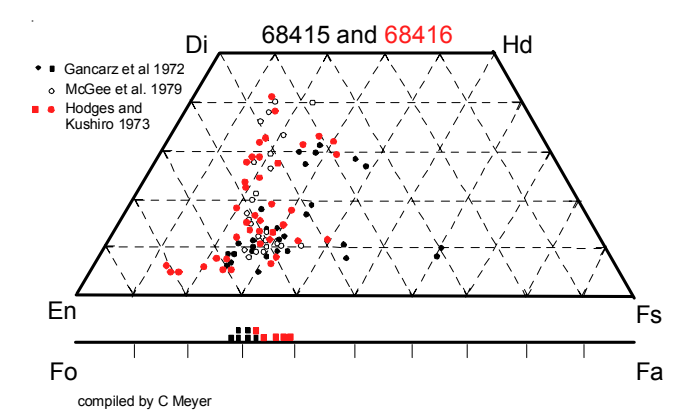
Figure 7: Pyroxene and olivine composition of 68415 (politely lifted from Gancarz, Hodges and Kushiro and McGee).
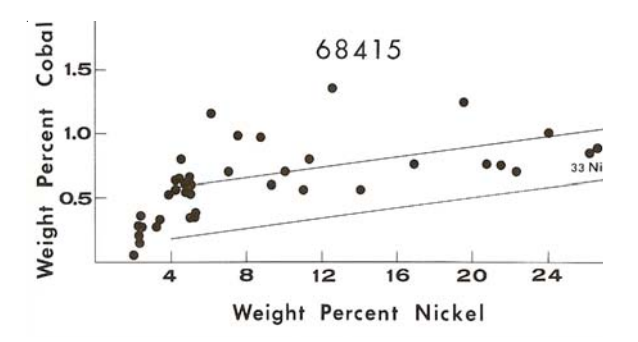
Figure 8: Composition of metallic iron in 68415 (Pearce et al. 1976).
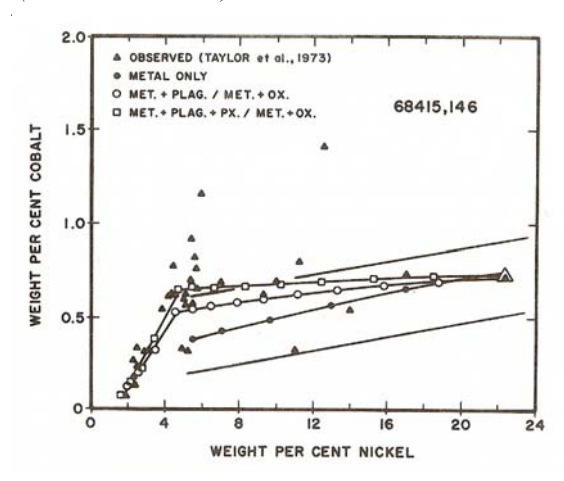
Figure 9: Crystallization path for iron grains in 68415 (Hewins and Goldstein 1975).
| Gancarz et | Juan et | Helz and | Brown et | Vaniman and | |||
|---|---|---|---|---|---|---|---|
| al. 1972 | al. 1973 | and Appleman | al. 1973 | Papike 1980 | |||
| Plagioclase | 82% | 79 | 79.3 | 73 | 75.5 | ||
| Pyroxene | 12 | 16 | 14.7 | 20 | 16 | ||
| Olivine | 3 | 2 | 4.8 | 4.5 | 6.7 | ||
| Ilmenite | 0.1 | 2 | 2 | 0.1 | |||
| Mesostasis | 2.1 | 1 | 1 | 1.9 | |||
| Metal | 0.2 |
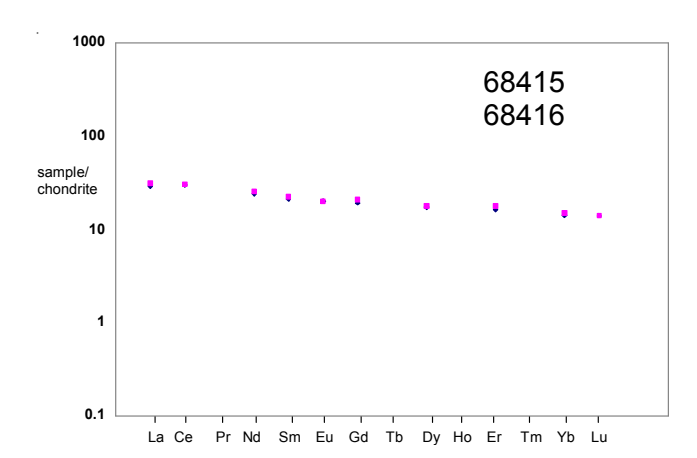
Figure 10: Normalized rare-earth-element diagram of 68415 and 68416 (data by isotope dilution mass spectroscopy, Hubbard et al. 1974).
$(Al_2O_3 = 28%)$ , and relatively low in Th (1.2 ppm) and REE (figure 10).
Rancitelli et al. (1973) determined the K, U and Th for the bulk sample (Table 1). Nava (1974), Hubbard et al. (1973), Philpotts et al. (1973), Rose et al. (1973) and Juan et al. (1973) all found consistent results (Tables 1 and 2). Krahenbuhl et al. (1973 and Wasson et al. (1975) also found reasonably consistent results. Jovanovic and Reed (1976) reported analyses for Ru and Os.
Radiogenic age dating
Section titled “Radiogenic age dating”Sample 68415 has been precisely dated at $3.84 \pm 0.01$ b.y. by the internal Rb/Sr (lamdaRb = $1.39 \times 10^{-11} , \text{yr}^{-1}$ ) isochron technique (Papanastassiou and Wasserburg 1972) and this has been confirmed by a variety of labs (figures 11-16). The initial Sr87/86 is extremely low (0.6992).
Reimold et al. (1985) also reported Rb, Sr and Sr isotopes for 68415 and 68416 and dated another sample (67559) of basaltic impact melt at 3.76 b.y. (lamdaRb = $1.42 \times 10^{-11} \text{ yr}^{-1}$ ).
Nunes et al. (1973) and Tera et al. (1973 and 1974) reported U, Th and Pb isotope data (figure 16). The rock contains initial Pb as well as meteoritical Pb in addition to the radiogenic Pb, making interpretation difficult.
Nyquist (1977) discusses the origin of this rock, based on available dating. Maurer et al. (1978) and Norman et al. (2006) dated numerous other Apollo 16 rocks
and find correlations of ages with chemistry. If the new decay constant is used (lamdaRb = $1.42 \times 10^{-11} \text{ yr}^{-1}$ ), the age of 68415 is 3.76 b.y., which makes it one of the youngest rocks from the lunar highlands (figure 17)!
The Ar data for plagioclase from 68415 (figure 11) give an older age for two reasons; (a) the plagioclase separate probably included some plagioclase xenocrysts, and (b) recoil effects from adjacent K-rich phases.
Modern ion microprobe analyses of U-rich phases, at high mass resolution, and/or energy filtering should improve on the early results by Anderson and Hinthorne (1973).
Cosmogenic isotopes and exposure ages
Section titled “Cosmogenic isotopes and exposure ages”Kirsten et al. (1973), Huneke et al. (1973) and Stettler et al. (1973) determined the cosmic ray exposure age by the $^{38}$ Ar method as 88 m.y, 105 m.y. and 90 m.y. respectively. Drozd et al. (1974) determined the cosmic ray exposure age by $^{81}$ Kr method as $92.5 \pm 5.9$ m.y.
Rancitelli et al. (1973) determined the cosmic-rayinduced activity of both 68415 and 68416 as 22Na = 46, or 41 dpm/kg; and 27Al = 156, or 160 dpm/kg, respectively, and is considered “saturated”.
Other Studies
Section titled “Other Studies”Walker et al. (1973), Ford et al. (1974) and Muan et al. (1974) reported on experiments with 68415 composition and Walker et al. produced a “phase diagram” (figure 18). The low-pressure liquidus is above 1400 deg C. But since this rock in not a true volcanic liquid, the high pressure experiments seem to have no application.
Morrison et al. (1973) and Neukum et al. (1973) reported on the density distribution of micrometeorite craters (zap pits) as function of crater size on surfaces of 68415 (figure 23). Behrmann et al. (1973) reported cosmic ray track data.
Mossbauer spectra were presented by Huffman et al. (1974), Schwerer et al. (1973) and Abu-Eid et al. (1973).
Clayton et al. (1973) reported oxygen isotopes in bulk rock and mineral seperates.
Table 1. Chemical composition of 68415.
| reference LSPET73 | Bansal 72 Rose73 | Philpotts73 | Nava74 | Krahenbuhl73 Wasson75 Rancitelli73 | |||||||||||||
|---|---|---|---|---|---|---|---|---|---|---|---|---|---|---|---|---|---|
| weight SiO2 % TiO2 Al2O3 FeO MnO MgO CaO Na2O K2O P2O5 S % sum | 45.4 0.32 28.63 4.25 0.06 4.38 16.39 0.41 0.068 | Hubbard74 (a) 45.4 (a) 0.32 (a) 28.63 (a) 4.25 (a) 0.06 (a) 4.38 (a) 16.39 (a) 0.41 (a) 0.068 0.04 | (a) 45.3 (a) 0.29 (a) 28.7 (a) 4.12 0.05 (a) 4.35 (a) 16.2 (b) 0.5 (b) 0.09 0.06 | (d) (d) (d) (d) (d) (d) (d) (d) (d) | (d) 0.06 | 0.06 | 45.9 0.28 28.19 4.01 0.048 4.41 16.39 0.47 (b) 0.06 0.072 | (f) (f) (f) (f) (f) (f) (f) (f) (f) (f) | 0.11 | (e) | |||||||
| Sc ppm V | 8.2 20 | (d) (d) | |||||||||||||||
| Cr Co | 710 | (a) | 11 | (d) | 479 | (f) | |||||||||||
| Ni Cu | 49 | (a) | 184 12 | (d) (d) | 165 | (c ) 140 | (c ) | ||||||||||
| Zn Ga | 4 2 | (d) (d) | 4.8 | (c ) 1.47 2.99 | (c ) (c ) | ||||||||||||
| Ge ppb As | 73 | (c ) 98 | (c ) | ||||||||||||||
| Se Rb | 2.1 | (a) 1.7 | (b) 1.9 | (d) 1.47 | 1.5 | (b) | 98 1.1 | (c ) (c ) | |||||||||
| Sr Y | 185 23 | (a) | (a) 182 | (b) 140 21 | (d) | (d) 180 | 180 | (b) | |||||||||
| Zr Nb | 98 5.6 | (a) | (a) 97.5 | (b) 72 | (d) | 94.5 | (b) | ||||||||||
| Mo Ru | |||||||||||||||||
| Rh Pd ppb | |||||||||||||||||
| Ag ppb Cd ppb | 4.8 2.75 | (c ) (c ) 1 | (c ) | ||||||||||||||
| In ppb Sn ppb | 11 | (c ) | |||||||||||||||
| Sb ppb Te ppb | 0.53 13.5 | (c ) (c ) | |||||||||||||||
| Cs ppm Ba | 76.2 | (b) 70 | (d) 71.6 | 73.4 | (b) | 0.051 | (c ) | ||||||||||
| La Ce | 6.81 18.3 | (b) (b) | 16.3 | 15.7 | (b) | ||||||||||||
| Pr Nd | 10.9 | (b) | 9.92 | 10 | (b) | ||||||||||||
| Sm Eu | 3.08 1.11 | (b) (b) | 2.88 1.13 | 2.84 1.13 | (b) (b) | ||||||||||||
| Gd Tb | 3.78 | (b) | 3.27 | (b) | |||||||||||||
| Dy Ho | 4.18 | (b) | 3.62 | 3.81 | (b) | ||||||||||||
| Er Tm | 2.57 | (b) | 2.18 | 2.08 | (b) | ||||||||||||
| Yb Lu | 2.29 0.34 | (b) 2 (b) | (d) 2.02 0.33 | 1.97 | (b) (b) | ||||||||||||
| Hf Ta | 2.4 | (b) | |||||||||||||||
| W ppb Re ppb | 0.434 | (c ) | |||||||||||||||
| Os ppb Ir ppb | 4.58 | (c ) 5.6 | (c ) | ||||||||||||||
| Pt ppb Au ppb | 2.65 | (c ) 2.8 | (c ) | ||||||||||||||
| Th ppm U ppm | 2.2 | (a) 1.26 0.32 | (b) (b) | 0.175 | (c ) | 1.29 0.32 | (e) (e) | ||||||||||
| technique: (a) XRF, (b) IDMS, (c ) RNAA, (d) ‘microchemical’, (e) radiation counting, (f) AA and colormetric |
Table 2. Chemical composition of 68416.
| reference Hubbard74 | Rose73 | Rancitelli73 | Juan 73 | 68415 | |||||||
|---|---|---|---|---|---|---|---|---|---|---|---|
| weight SiO2 % TiO2 Al2O3 FeO MnO MgO CaO Na2O K2O P2O5 S % sum | Wiesmann76 45.04 0.33 28.75 4.27 0.07 4.49 16.31 0.34 0.08 0.08 0.05 | (a) | (a) 45.6 (a) 0.3 (a) 28.4 (a) 4.22 (a) 0.06 (a) 4.64 (a) 16.32 (a) 0.44 (a) 0.08 (a) 0.07 | (b) (b) (b) (b) (b) (b) (b) (b) (b) | (b) 0.096 | 45.1 0.31 28.5 4.4 0.06 4.6 16 0.48 (c ) 0.071 | (d) (d) (d) (d) (d) (d) (d) (d) (d) | other | |||
| Sc ppm V Cr Co Ni Cu Zn | 683 | (d) | 9.2 21 10 205 14 | (b) (b) (b) (b) (b) | 750 40 147 7 30 | (d) (d) (d) (d) (d) | |||||
| Ga Ge ppb | 1.7 | (b) | |||||||||
| As Se Rb Sr Y Zr Nb | 1.7 | (d) | 170 21 80 10 | (b) (b) (b) (b) | 2.4 190 | Compston77 (d) 1.61 (d) 166 | 1.43 147 | ||||
| Mo Ru Rh Pd ppb Ag ppb Cd ppb In ppb Sn ppb Sb ppb Te ppb Cs ppm | Jovanovic76 10 | ||||||||||
| Ba La Ce | 78.2 7.24 18.4 | (d) (d) | (d) 76 | (b) | |||||||
| Pr Nd Sm Eu Gd Tb | 11.5 3.28 1.11 4.07 | (d) (d) (d) (d) | |||||||||
| Dy Ho | 4.29 | (d) | |||||||||
| Er | 2.86 | (d) | |||||||||
| Tm Yb Lu Hf Ta W ppb Re ppb Os ppb Ir ppb Pt ppb | 2.42 | (d) 1.8 | (b) | Jovanovic76 2.8 | |||||||
| Au ppb Th ppm | 1.24 | (c ) | Nunes73 1.26 | 1.18 | |||||||
| U ppm | 0.34 | (d) | 0.34 | (c ) | 0.356 technique: (a) XRF, (b) ‘microchemical’, (c ) radiation counting, (d) AA and colormetric, (e) IDMS | 0.345 |
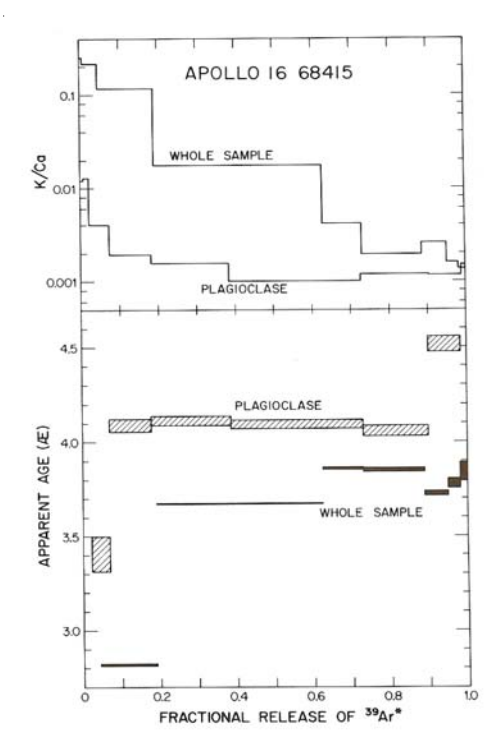
Figure 11: Ar/Ar plateau diagram for 68415 (Huenke et al. 1973).
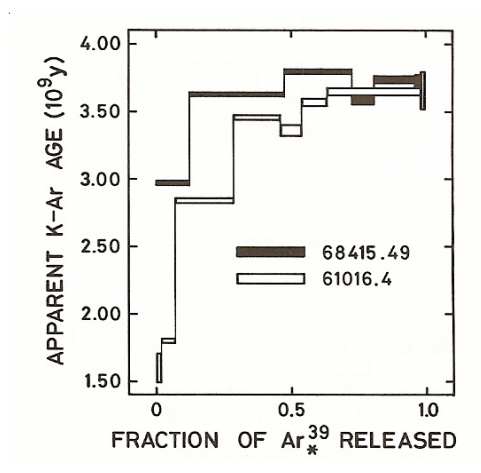
Figure 12: Ar release diagram for Apollo 16 rocks (Stettler et al. 1973).
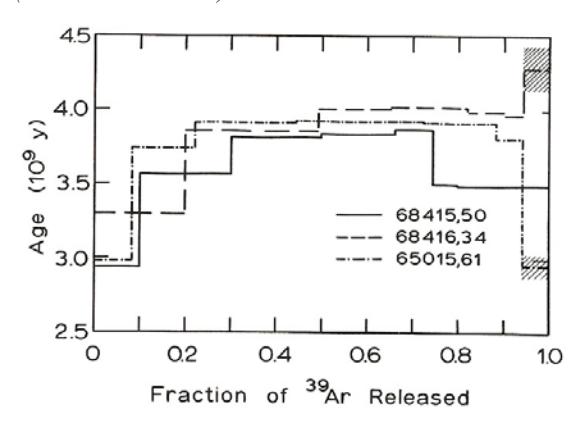
Figure 13: Ar release diagram of Apollo 16 samples Figure 16: Internal U/Pb isochron diagram for (Kirsten et al. 1973). 68415 (Tera et al. 1973).
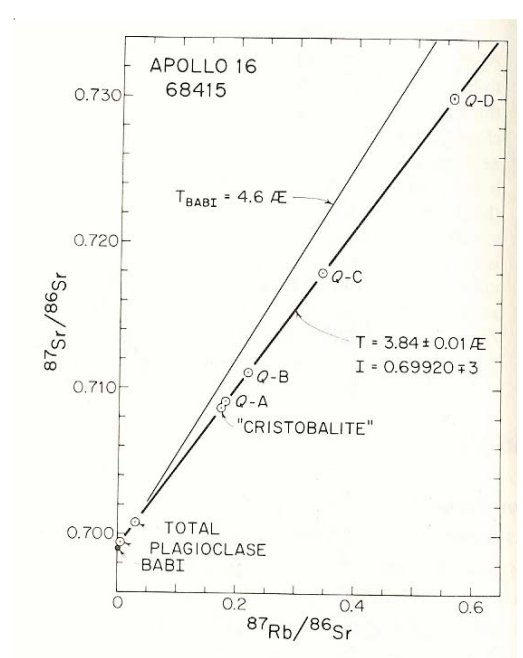
Figure 14: Internal Rb/Sr isochron diagram for 68415 (Papanastassiou and Wasserburg 1972).
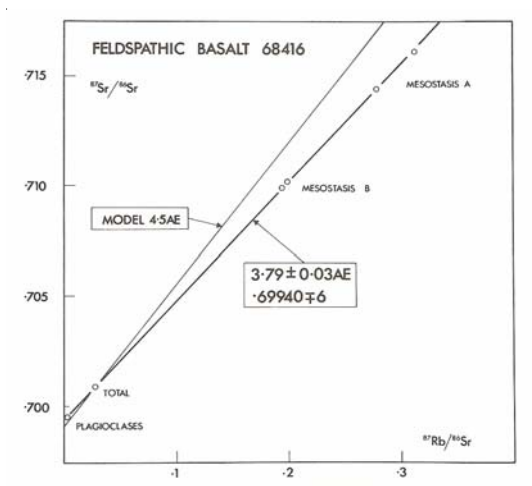
Figure 15: Internal Rb/Sr isochron diagram for 68416 (Compston et al. 1977).
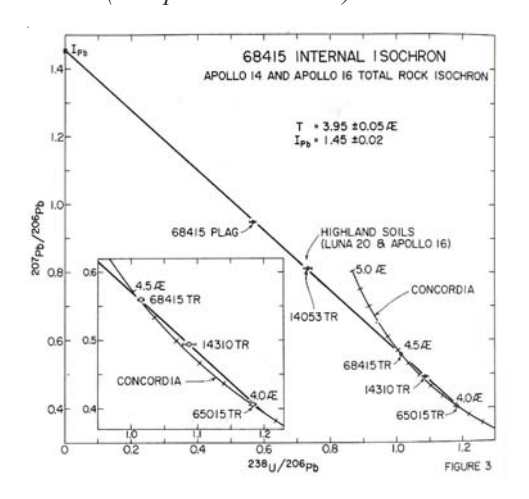
Summary of Age Data for 68415 and 68416 Ar/Ar Rb/Sr U/Pb Pb/Pb Huneke et al. 1973 3.85 ± 0.04 b.y. Huneke et al. 1973 (plag) 4.09 Kirsten et al. 1973 3.85 ± 0.06 Stettler et al. 1973 3.80 ± 0.04 Papanastassiou and Wasserburg 1972 3.84 ± 0.01 Tera et al. 1973 3.95 ± 0.05 Anderson and Hinthorne 1973 phosphate 3.96 ± 0.18 Zr-phase 3.96 ± 0.28 Caution: Beware change in decay constants.
Section titled “Summary of Age Data for 68415 and 68416 Ar/Ar Rb/Sr U/Pb Pb/Pb Huneke et al. 1973 3.85 ± 0.04 b.y. Huneke et al. 1973 (plag) 4.09 Kirsten et al. 1973 3.85 ± 0.06 Stettler et al. 1973 3.80 ± 0.04 Papanastassiou and Wasserburg 1972 3.84 ± 0.01 Tera et al. 1973 3.95 ± 0.05 Anderson and Hinthorne 1973 phosphate 3.96 ± 0.18 Zr-phase 3.96 ± 0.28 Caution: Beware change in decay constants.”magnetism.
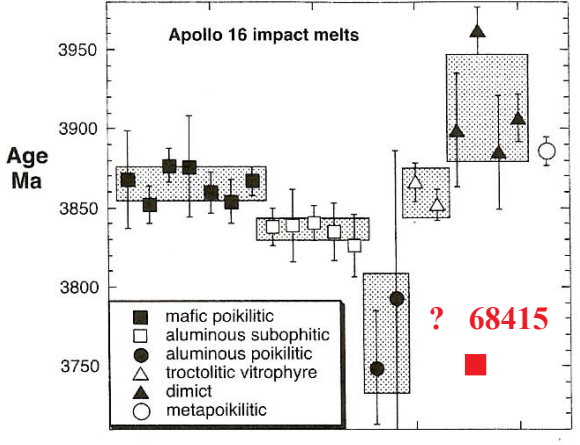
Figure 17: Age of 68415 plotted on summary diagram of Norman et al. 2006 (68415 corrected for modern decay constants)..
(Walker et al. 1973). Collinson et al. (1973), Nagata et al. (1973), Pearce et
al. (1973), Stephenson et al. (1974) and Brecker (1977) reported on magnetic experiments and remanent
Figure 18: Experimental phase diagram for 68415
Todd et al. (1973) and Wang et al. (1973) studied the sound velocity and importance of microcracks.
Tsay and Live (1976) and Tsay and Bauman (1977) used electron spin resonance to identify Fe3+ in plagioclase.
Lunar Sample Compendium C Meyer 2010
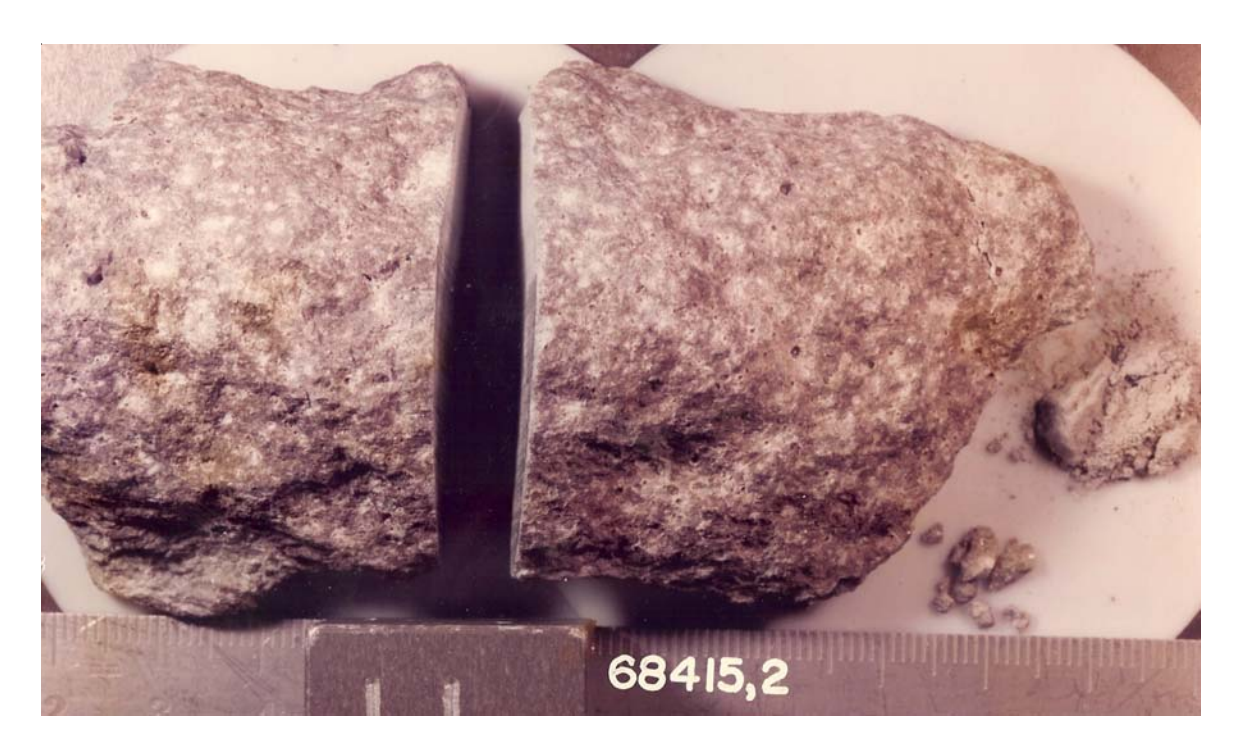
Figure 19: Location of saw cut in 68415,2. S75-32781. Cube is 1 inch.
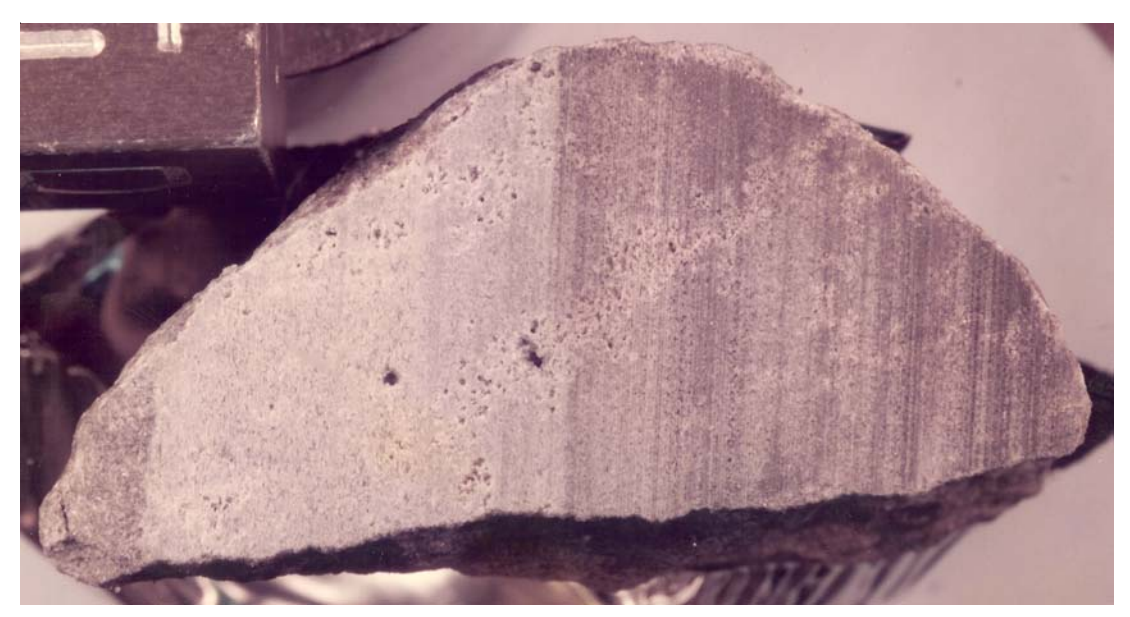
Figure 20: Sawn surface of 68415,2. S75-32778. Sample is about 5 cm across.
Processing
Section titled “Processing”Although the lunar orientation of these samples is well known by surface photography, they have apparently not be used for cosmic ray depth profiles (they aren’t very thick).
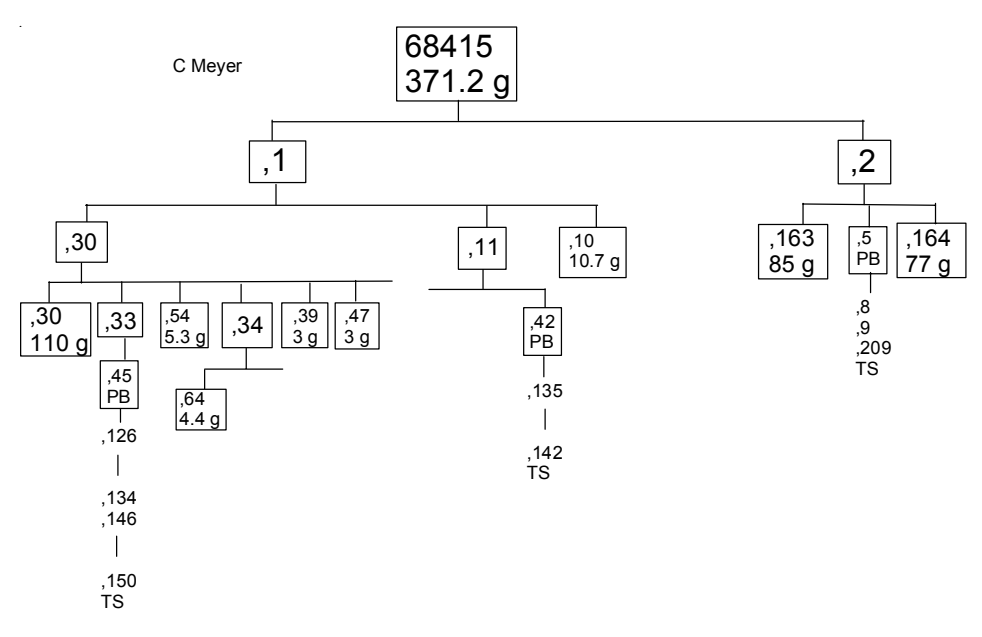
68415 was returned as two pieces (figure 2). Part 1 of 68415 was cut into columns, while part 2 was cut in half (figures 19 and 20). 68416 was also sawn in half and one half (,9) was broken into many pieces (figure 21). There are 26 thin sections of 68415 and 13 sections of 68416.
Ryder and Norman (1980) and Taylor et al. (1991) give lenghty reviews of all the data on 68415 and 68416 (not a lot of work has been done since). Four large pieces, each about 100 grams, and numerous small pieces, are still available for research. Additional samples of other highly aluminous impact melt are also available.
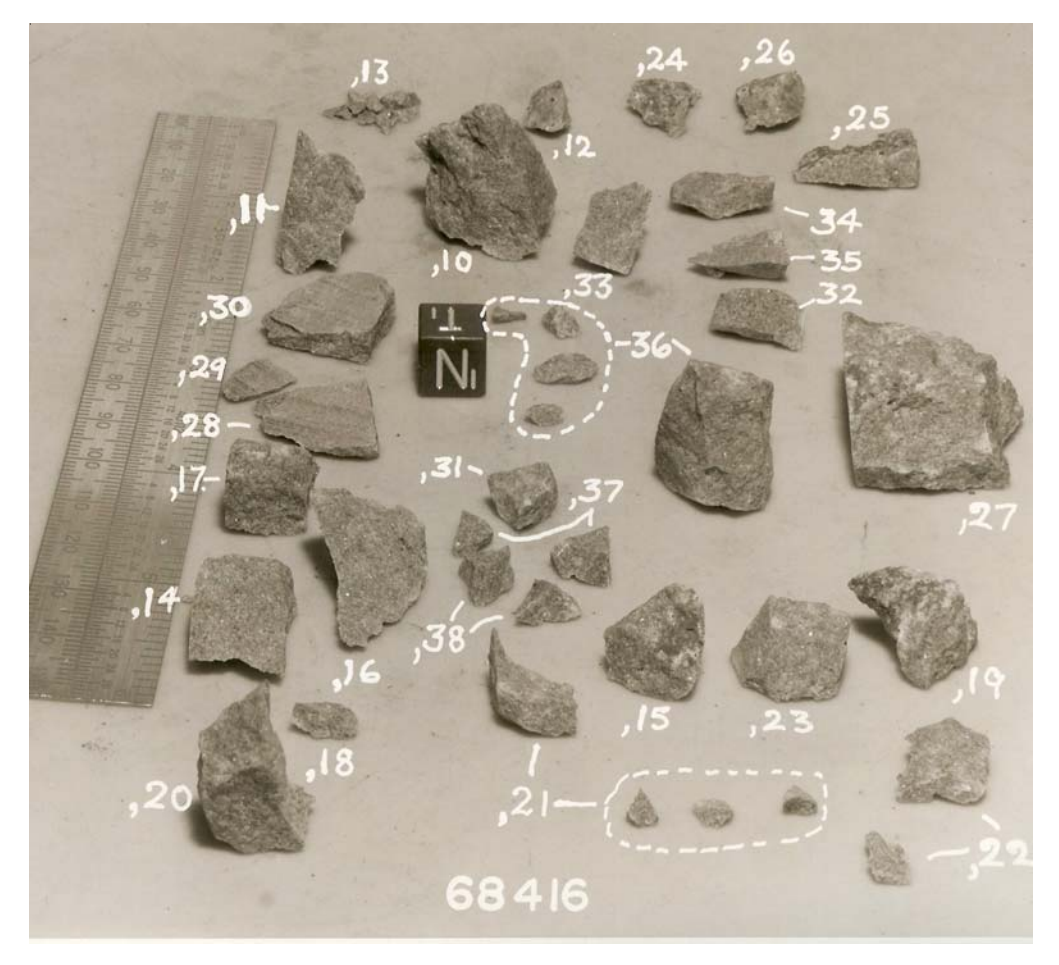
Figure 21: Exploded parts diagram for 68416,9. NASA S72-53520. Cube is 1 cm.
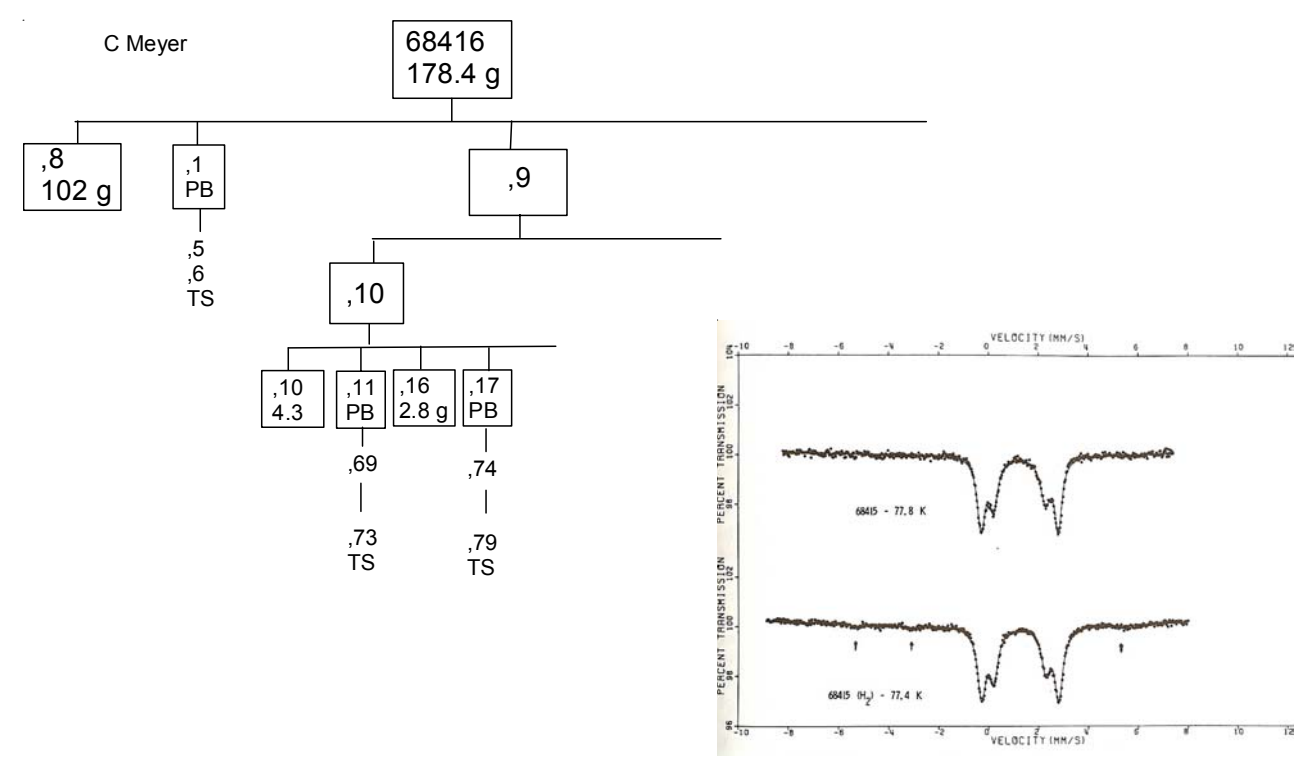
Figure 22: Mossbauer spectra of 68415 (from Schwerer et al. 1973).
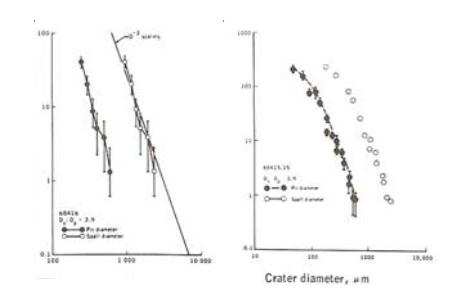
Figure 23: Crater density curves for zap pits on 68416 and 68415 (Morrison et al. 1973).
References for 68415 and 68416
Section titled “References for 68415 and 68416”Abu-Eid R.M., Vaughan D.J., Whitner M, Burns R.G. and Morawski A. (1973) Spectral data bearing on the oxidation states of Fe, Ti, and Cr in Apollo 15 and Apollo 16 samples (abs). Lunar Sci. IV, 1-3. Lunar Planetary Institute, Houston.
Andersen C.A. and Hinthorne J.R. (1973) 207Pb/206Pb ages and REE abundances in returned lunar materials by ion microprobe mass analysis (abs). Lunar Sci. IV, 37-42. Lunar Planetary Institute, Houston.
Bansal B.M., Church S.E., Gast P.W., Hubbard N.J., Rhodes J.M. and Weismann H. (1972) The chemical composition of soil from the Apollo 16 and Luna 20 sites. Earth Planet. Sci. Lett. 17, 29-35.
Behrmann C.J., Crozaz G., Drozd R., Hohenberg C., Ralston C., Walker R. and Yuhas D. (1973) Cosmic-ray exposure history of North Ray and South Ray material. Proc. 4th Lunar Sci. Conf. 1957-1974.
Brecher A. (1977a) Interrelationships between magnetization directions, magnetic fabric and oriented petrographic features in lunar rocks. Proc. 8th Lunar Sci. Conf. 703-723.
Brown G.M., Peckett A., Phillips R. and Emeleus C.H. (1973) Mineral-chemical variations in the Apollo 16 magnesiofeldspathic highland rocks. Proc. 4th Lunar Sci. Conf. 505 518.
Butler P. (1972) Lunar Sample Information Catalog Apollo 16. Lunar Receiving Laboratory. MSC 03210 Curator’s Catalog. pp. 370.
Cisowski S.M., Collinson D.W., Runcom S.K., Stephenson A. and Fuller M. (1983) A review of lunar paleointensity data and implications for the origin of lunar magnetism. Proc. 13th Lunar Planet. Sci. Conf. A691-A704.
Compston W., Foster J.J. and Gray C.M. (1977a) Rb-Sr systematics in clasts and aphanites from consortium breccia 73215. Proc. 8th Lunar Sci. Conf. 2525-2549.
Collinson D.W., Stephenson A. and Runcom S.K. (1973) Magnetic properties of Apollo 15 and 16 rocks. Proc. 4th Lunar Sci. Conf. 2963-2976.
Clayton R.N., Hurd J.M. and Mayeda T.K. (1973) Oxygen isotope compositions of Apollo 15, 16 and 17 samples, and their bearing on lunar origin and petrogenesis. Proc. 4th Lunar Sci. Conf. 1535-1542.
Crozaz G., Drozd R., Hohenberg C., Morgan C., Ralston C., Walker R. and Yuhas D. (1974) Lunar surface dynamics: Some general conclusions and new results from Apollo 16 and 17. Proc. 5th Lunar Sci. Conf. 2475-2499.
Drozd R.J., Hohenberg C.M., Morgan C.J. and Ralston C.E. (1974) Cosmic-ray exposure history at the Apollo 16 and other lunar sites: lunar surface dynamics. Geochim. Cosmochim. Acta 38, 1625-1642.
Engelhardt W. von (1979) Ilmenite in the crystallization sequence of lunar rocks. Proc. 10th Lunar Planet. Sci. Conf. 677-694.
Ford C.E., Biggar G.M., O’Hara M.J., Humphries D.J. and Spencer P.M. (1974) Origin of the lunar highlands (abs). Lunar Sci. V, 239-241. Lunar Planetary Institute, Houston.
Gancarz A.J., Albee A.L. and Chodos A.A. (1972) Comparative petrology of Apollo 16 sample 68415 and Apollo 14 samples 14276 and 14310. Earth Planet. Sci. Lett. 16, 307-330.
Helz R.T. and Appleman D.E. (1973) Mineralogy, petrology and crystallization history of Apollo 16 rock 68415. Proc. 4th Lunar Sci. Conf. 643-659.
Hewins R.H. and Goldstein J.I. (1975) The provenance of metal in anorthositic rocks. Proc. 6th Lunar Sci. Conf. 343 362.
Hodges F.N. and Kushiro I. (1973) Petrology of Apollo 16 lunar highland rocks. Proc. 4th Lunar Sci. Conf. 1033-1048.
Hubbard N.J., Rhodes J.M. and Gast P.W. (1973a) Chemistry of lunar basalts with very high alumina contents. Science 181, 339-342.
Hubbard N.J., Rhodes J.M., Gast P.W., Bansal B.M., Shih C.-Y., Wiesmann H. and Nyquist L.E. (1973b) Lunar rock types: The role of plagioclase in non-mare and highland rock types. Proc. 4th Lunar Sci. Conf. 1297-1312.
Hubbard N.J., Rhodes J.M., Wiesmann H., Shih C.Y. and Bansal B.M. (1974) The chemical definition and interpretation of rock types from the non-mare regions of the Moon. Proc. 5th Lunar Sci. Conf. 1227-1246.
Huneke J.C., Jessberger E.K., Podosek F.A. and Wasserburg G.J. (1973) 40Ar/39Ar measurements in Apollo 16 and 17 samples and the chronology of metamorphic and volcanic activity in the Taurus-Littrow region. Proc. 4th Lunar Sci. Conf. 1725-1756.
Hunter R.H. and Taylor L.A. (1981) Rust and schreibersite in Apollo 16 highland rocks: Manifestations of volatileelement mobility. Proc. 12th Lunar Planet. Sci. Conf. 253 259.
Irving A.J. (1975) Chemical, mineralogical, and textural systematics of non-mare melt rocks: implications for lunar impact and volcanic processes. Proc. 6th Lunar Sci. Conf. 363-394.
Jagodzinski H. and Korekawa M. (1973) Diffuse x-ray scattering by lunar materials. Proc. 4th Lunar Sci. Conf. 933-951.
James O.B. (1981) Petrologic and age relations of the Apollo 16 rocks: Implications for subsurface geology and the age of the Nectaris Basin. Proc. 12th Lunar Planet. Sci. Conf. 209-233.
Jovanovic S. and Reed G.W. (1973b) Volatile trace elements and the characterization of the Cayley formation and the primitive lunar crust. Proc. 4th Lunar Sci. Conf. 1313-1324.
Jovanovic S. and Reed G.W. (1976a) Chemical fractionation of Ru and Os in the Moon. Proc. 7th Lunar Sci. Conf. 3437 3446.
Juan V.C., Chen J.C., Huang C.K., Chen P.Y. and Wang Lee C.M. (1973) Petrology and chemistry of Apollo 16 gabbroic anorthosite 68416 (abs). Lunar Sci. IV, 421-423. Lunar Planetary Institute, Houston.
Juan V.C., Chen J.C., Huang C.K., Chen P.Y. and Wang Lee C.M. (1974) Petrology and chemistry of some Apollo 16 lunar samples (abs). Lunar Sci. V, 394-396. Lunar Planetary Institute, Houston.
Kirsten T., Horn P. and Kiko J. (1973a) 39Ar/40Ar dating and rare gas analysis of Apollo 16 rocks and soils. Proc. 4th Lunar Sci. Conf. 1757-1784.
Korotev R.L. (1994) Compositional variation in Apollo 16 impact melt breccias and inferences for the geology and bombardment history of the central hihglands of the Moon. Geochim. Cosmochim. Acta 58, 3931-3969.
Krahenbuhl U., Ganapathy R., Morgan J.W. and Anders E. (1973a) Volatile elements in Apollo 16 samples: Possible evidence for outgassing of the Moon. Science 180, 858 861.
Krahenbuhl U., Ganapathy R., Morgan J.W. and Anders E. (1973b) Volatile elements in Apollo 16 samples: Implications for highland volcanism and accretion history of the moon. Proc. 4th Lunar Sci. Conf. 1325-1348.
LSPET (1973) The Apollo 16 lunar samples: Petrographic and chemical description. Science 179, 23-34.
Maurer P., Eberhardt P., Geiss J., Grogler N., Stettler A., Brown G.M., Peckett A. and Krahenbuhl U. (1978) Pre-Imbrium craters and basins: ages, compositions and excavation depths of Apollo 16 breccias. Geochim. Cosmochim. Acta 42, 1687-1720.
McGee P.E., Warner J.L., Simonds C.E. and Phinney W.C. (1979) Introduction to the Apollo collections. Part II: Lunar Breccias. Curator’s Office. JSC
Misra K.C. and Taylor L.A. (1975) Characteristics of metal particles in Apollo 16 rocks. Proc. 6th Lunar Sci. Conf. 615-639.
Meyer C., Anderson D.H. and Bradley J.G. (1974) Ion microprobe mass analysis of plagioclase from “non-mare” lunar samples. Proc. 5th Lunar Sci. Conf. 685-706.
Morrison D.A., McKay D.S., Fruland R.M. and Moore H.J. (1973) Microcraters on Apollo 15 and 16 rocks. Proc. 4th Lunar Sci. Conf. 3235-3253.
Muan A., Lofall T. and Ma C.-B. (1974) Liquid-solid equilibria in lunar rocks from Apollo 15, 16 and 17, and phase relations in parts of the system CaMgSi206 CaFeSi206-Fe2SiO4-CaAl2Si208 (abs). Lunar Sci. V, 529 530. Lunar Planetary Institute, Houston.
Nagata T., Fischer R.M., Schwerer F.C., Fuller M.D. and Dunn J.R. (1973) Magnetic properties and natural remanent magnetization of Apollo 15 and 16 lunar materials. Proc. 4th Lunar Sci. Conf. 3019-3043.
Nagata T., Fisher R.M., Schwerer F.C., Fuller M.D. and Dunn J.R. (1975) Effects of meteorite impact on magnetic properties of Apollo lunar materials. Proc. 6th Lunar Sci. Conf. 3111-3122.
Nava D.F. (1974a) Chemical compositions of some soils and rock types from the Apollo 15, 16, and 17 lunar sites. Proc. 5th Lunar Sci. Conf. 1087-1096.
Neukum G., Horz F., Morrison D.A. and Hartung J.B. (1973) Crater populations on lunar rocks. Proc. 4th Lunar Sci. Conf. Nord G.L., Lally J.S., Heuer A.H., Christie J.M., Radcliffe S.V., Griggs D.T. and Fisher R.M. (1973) Petrologic study of igneous and metaigneous rocks from Apollo 15 and 16 using high voltage transmission electron microscopy. Proc. 4th Lunar Sci. Conf. 953-970.
Norman M.D., Duncan R.A. and Huard J.J. (2006) Identifing impact events within the lunar catalysm from 40Ar-39Ar ages and compositions of Apollo 16 impact melt rocks. Geochim. Cosmochim. Acta 70, 6032-6049.
Nunes P.D., Tatsumoto M., Knight R.J., Unruh D.M. and Doe B.R. (1973b) U-Th-Pb systematics of some Apollo 16 lunar samples. Proc. 4th Lunar Sci. Conf. 1797-1822.
Nyquist L.E. (1977) Lunar Rb-Sr chronology. Phys. Chem. Earth 10, 103-142.
Nyquist L.E., Hubbard N.J., Gast P.W., Bansal B.M., Wiesmann H. and Jahn B-M. (1973) Rb-Sr systematics for chemically defined Apollo 15 and 16 materials. Proc. 4th Lunar Sci. Conf. 1823-1846.
Papanastassiou D.A. and Wasserburg G.J. (1972b) Rb-Sr age of a crystalline rock from Apollo 16. Earth Planet. Sci. Lett. 16, 289-298.
Papanastassiou D.A. and Wasserburg G.J. (1975b) A Rb-Sr study of Apollo 17 boulder 3: Dunite clast, microclasts, and matrix (abs). Lunar Sci. VI, 631-633. Lunar Planetary Institute, Houston
Papike J.J., Ryder G. and Schearer C.K. (1998) Lunar Samples. In Planetary Materials. (ed. Papike) Reviews in Mineralogy, vol 36. 5-01-5-189. Min. Soc. Am.
Pearce G.W., Gose W.A. and Strangway D.W. (1973) Magnetic studies on Apollo 15 and 16 lunar samples. Proc. 4th Lunar Sci. Conf. 3045-3076.
Pearce G.W. and Simonds C.H. (1974) Magnetic properties of Apollo 16 samples and implications for their mode of formation. J. Geophys. Res. 79, 2953-2959.
Pearce G.W., Strangway D.W. and Gose W.A. (1974a) Magnetic properties of Apollo samples and implications for regolith formation. Proc. 5th Lunar Sci. Conf. 2815-2826.
Pearce G.W., Hoye G.S., Strangway D.W., Walker B.M. and Taylor L.A. (1976) Some complexities in the determination of lunar paleointensities. Proc. 7th Lunar Sci. Conf. 3271 3297.
Philpotts J.A., Schumann S., Kouns C.W., Lum-Staab R.K.L. and Schnetzler C.C. (1973b) Apollo 16 returned lunar samples – lithophile trace-element abundances. Proc. 4th Lunar Sci. Conf. 1427-1436.
Rancitelli L.A., Perkins R.W., Felix W.D. and Wogman N.A. (1973a) Preliminary analysis of cosmogenic and primordial radionuclides in Apollo 17 samples (abs). Lunar Sci. IV, 609-614. Lunar Planetary Institute, Houston.
Rancitelli L.A., Perkins R.W., Felix W.D. and Wogman N.A. (1973b) Primordial radiouclides in soils and rocks from the Apollo 16 site (abs). Lunar Sci. IV, 615-617. Lunar Planetary Institute, Houston.
Reimold W.U. and Reimold J.N. (1984) The mineralogical, chemical and chronological characteristics of the crystalline Apollo 16 impact melt rocks. Forschr. Mineral. 62, 269 301.
Reimold W.U., Nyquist L.E., Bansal B.M., Wooden J.L., Shih C.-Y., Wiesmann H. and Mackinnnon I.D.R. (1985) Isotope analysis of crystalline impact-melt rocks from Apollo 16 stations 11 and 13. North Ray Crater. Proc. 15th Lunar Planet. Sci. Conf. in J. Geophys. Res. 90, C597-C612.
Ridley W.I. and Adams M.-L. (1976) Petrologic studies of poikiloblastic textured rocks (abs). Lunar Sci. VII, 739 740. Lunar Planetary Institute, Houston..
Rose H.J., Cuttitta F., Berman S., Carron M.K., Christian R.P., Dwornik E.J., Greenland L.P. and Ligon D.T. (1973) Compositional data for twenty-two Apollo 16 samples. Proc. 4th Lunar Sci. Conf. 1149-1158.
Ryder G. and Norman M.D. (1980) Catalog of Apollo 16 rocks (3 vol.). Curator’s Office pub. #52, JSC #16904
Schwerer F.C., Huffman G.P., Fisher R.M. and Nagata T. (1973) Electrical conductivity of lunar surface rocks at elevated temperatures. Proc. 4th Lunar Sci. Conf. 3151 3166.
Schwerer F.C., Huffman G.P., Fisher R.M. and Nagata T. (1974) Electrical conductivity of lunar surface rocks: Laboratory measurements and implications for lunar interior temperatures. Proc. 5th Lunar Sci. Conf. 2673-2687.
Schwerer F.C. and Nagata T. (1976) Ferromagneticsuperparamagnetic granulometry of lunar surface materials. Proc. 7th Lunar Sci. Conf. 759-778.
Stettler A., Eberhardt P., Geiss J., Grogler N. and Maurer P. (1973) Ar39-Ar40 ages and Ar37-Ar38 exposure ages of lunar rocks. Proc. 4th Lunar Sci. Conf. 1865-1888.
Stephenson A., Collinson D.W. and Runcorn S.K. (1974) Lunar magnetic field paleointensity determinations on Apollo 11, 16, and 17 rocks. Proc. 5th Lunar Sci. Conf. 2859-2871. Stöffler D. and Ryder G. (2001) Stratigraphy and isotopic ages of lunar geologic units: Chronological standard for the inner solar system. Space Science Rev. 96, 9-54.
Takeda H. (1973) Inverted pigeonites from a clast of rock 15459 and basaltic achondrites. Proc. 4th Lunar Sci. Conf. 875-885.
Taylor G.J., Warren P., Ryder G., Delano J., Pieters C. and Lofgren G. (1991) Lunar Rocks. In Lunar Sourcebook: a users guide to the moon. (eds. Heiken et al. ) Cambridge Univ. Press.
Taylor H.P. and Epstein S. (1973) O18/O16 and Si30/Si28 studies of some Apollo 15, 16 and 17 samples. Proc. 4th Lunar Sci. Conf. 1657-1679.
Tera F., Papanastassiou D.A. and Wasserburg G.J. (1973) A lunar cataclysm at 3.95 AE and the structure of the lunar crust (abs). Lunar Sci. IV, 723-725. Lunar Planetary Institute, Houston.
Todd T., Richter D.A., Simmons G. and Wang H. (1973) Unique characterization of lunar samples by physical properties. Proc. 4th Lunar Sci. Conf. 2639-2662.
Tsay F.D. and Live D.H. (1976) Detection of paramagnetic Fe3+ and radiation damage centers in lunar soils (abs). Lunar Sci. VII, 870-872. Lunar Sci. Institute, Houston.
Tsay F.D. and Bauman A.J. (1977) Implication on the occurance of Fe3+ and Feo in lunar samples (abs). Lunar Sci. VIII, 943-945. Lunar Sci. Institute, Houston.
Vaniman D.T. and Papike J.J. (1978) The lunar highland melt-rock suite. Geophys. Res. Lett. 5, 429-432.
Vaniman D.T. and Papike J.J. (1980) Lunar highland melt rocks: Chemistry, petrology and silicate mineralogy. Proc. Conf. Lunar Highlands Crust (Papike J.J. and Merrill R.B., eds.) 271-337. Pergamon. Lunar Planetary Institute, Houston.
Walker D., Longhi J., Grove T., Stolper E. and Hays J.F. (1973) Experimental petrology and origin of rocks from the Descartes Hihglands. Proc. 4th Lunar Sci. Conf. 1013 1032.
Wang H., Todd T., Richter D. and Simmons G. (1973) Elastic properties of plagioclase aggregtes and seismic velocities in the Moon. Proc. 4th Lunar Sci. Conf. 2663-2671.
Wasson J.T., Chou C.L., Robinson K.L. and Baedecker P.A. (1975) Siderophiles and volatiles in Apollo 16 rocks and soils. Geochim. Cosmochim. Acta 39, 1475-1485.
Wenk H.R., Muller W.F. and Thomas G. (1973) Antiphase domains in lunar plagioclase. Proc. 4th Lunar Sci. Conf. 909-923.
Wiesmann H. and Hubbard N.J. (1975) A compilation of the Lunar Sample Data Generated by the Gast, Nyquist and Hubbard Lunar Sample PI-Ships. Unpublished. JSC
Wilshire H.G., Stuart-Alexander D.E. and Jackson E.D. (1973) Apollo 16 rocks – Petrology and classification. J. Geophys. Res. 78, 2379-2391.
Wilshire H.G., Stuart-Alexander D.E. and Schwarzman E.C. (1981) Petrology and distribution of returned samples, Apollo 16. in Geology of the Apollo 16 Area, Central Lunar Highlands. U.S. Geol. Survey Rpt 1048.
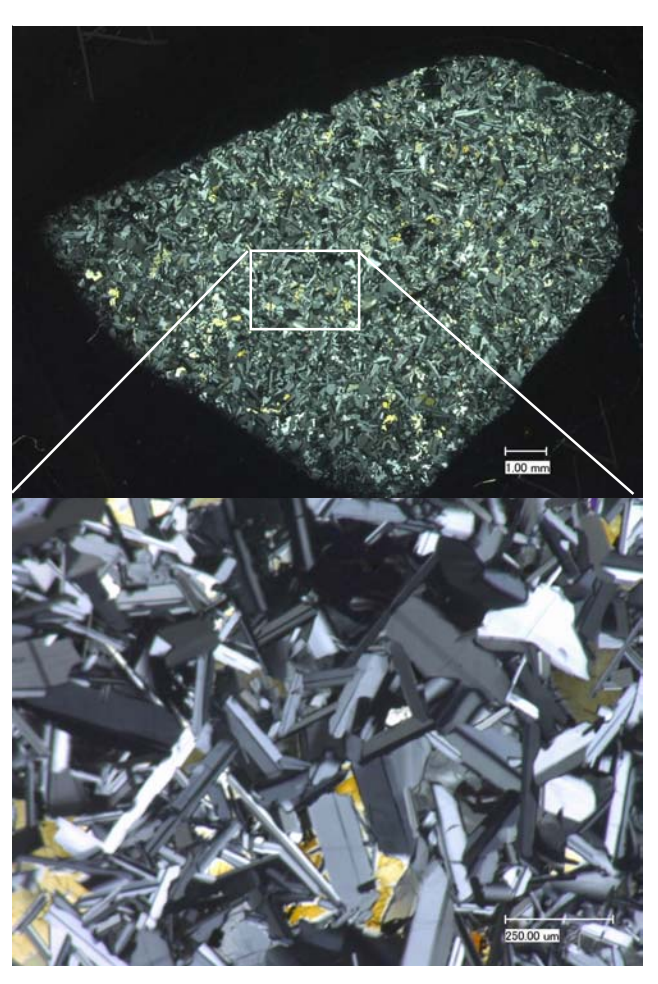
Apendix: Photomicrographs with cross nicols of thin section 68415,127 takne by C Meyer @20x and 200x.