Sample 70315
Ilmenite Basalt 148.6 grams
Section titled “Ilmenite Basalt 148.6 grams”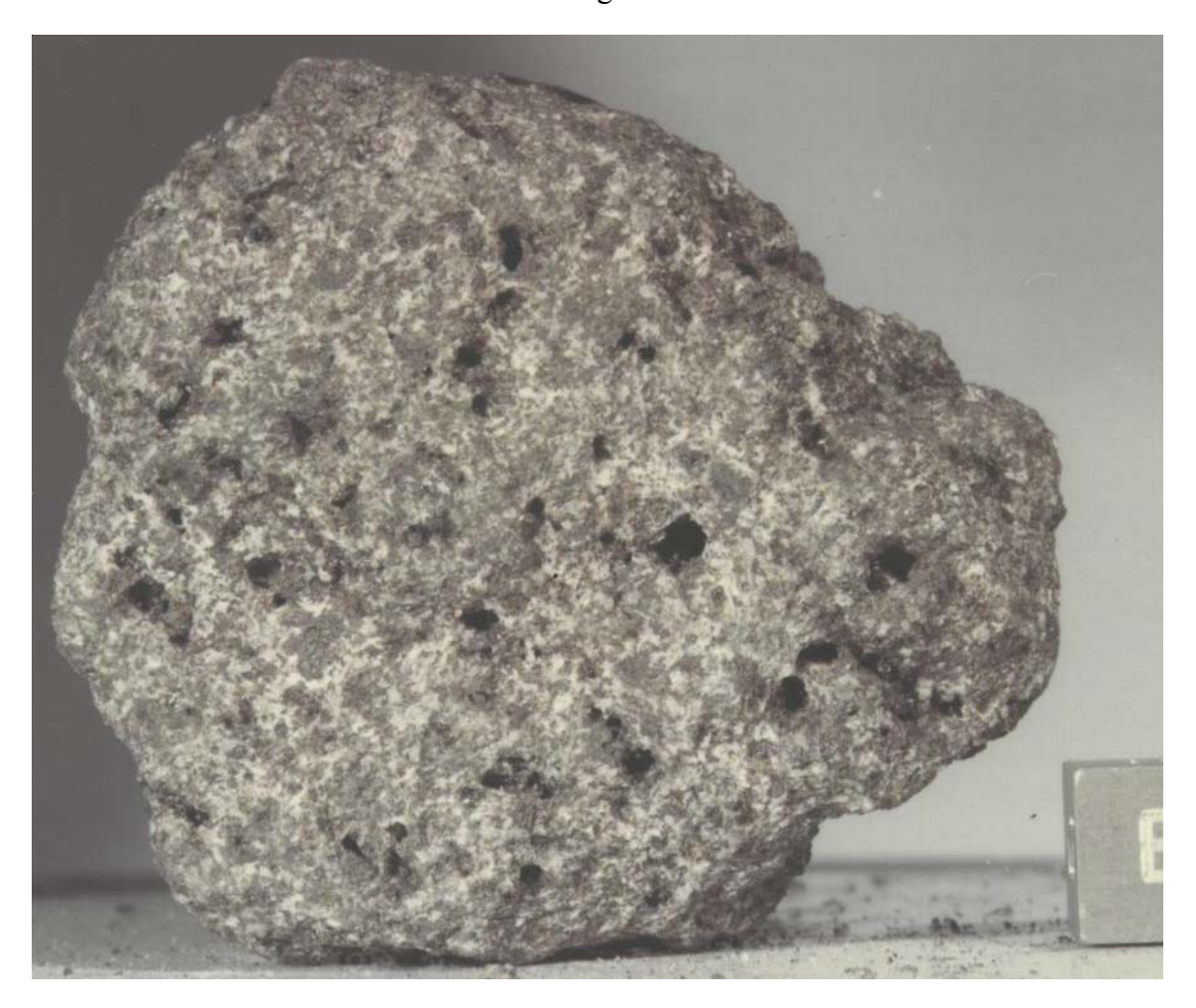
Figure 1: Photo of 70315. NASA S73-15453. Cube is 1 cm.
Introduction
Section titled “Introduction”70315 is a coarse-grained, vesicular basalt that has been rounded on all sides by micrometeorite bombardment (figure 1). It has not been well studied and no age is available.
Petrography
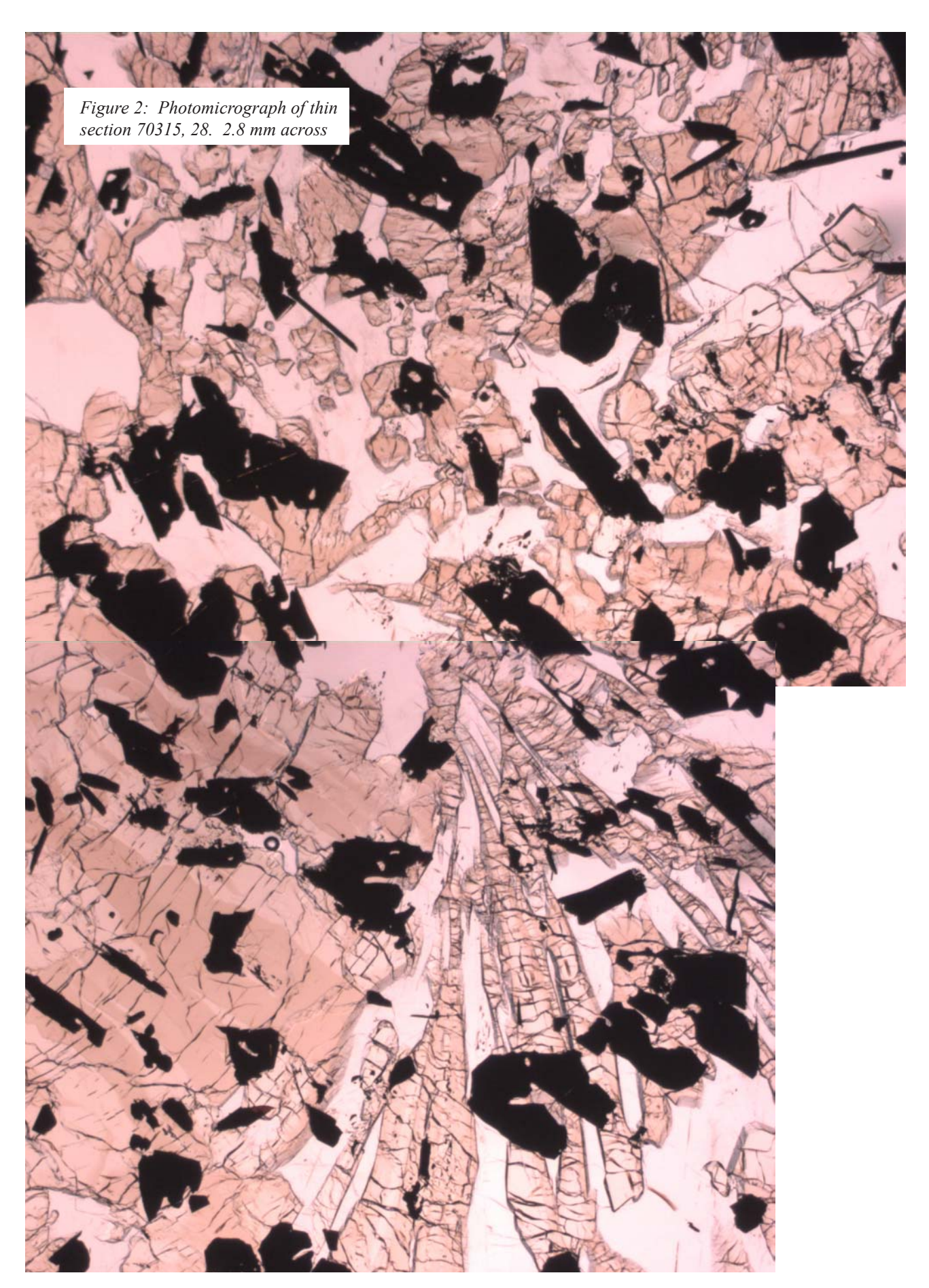
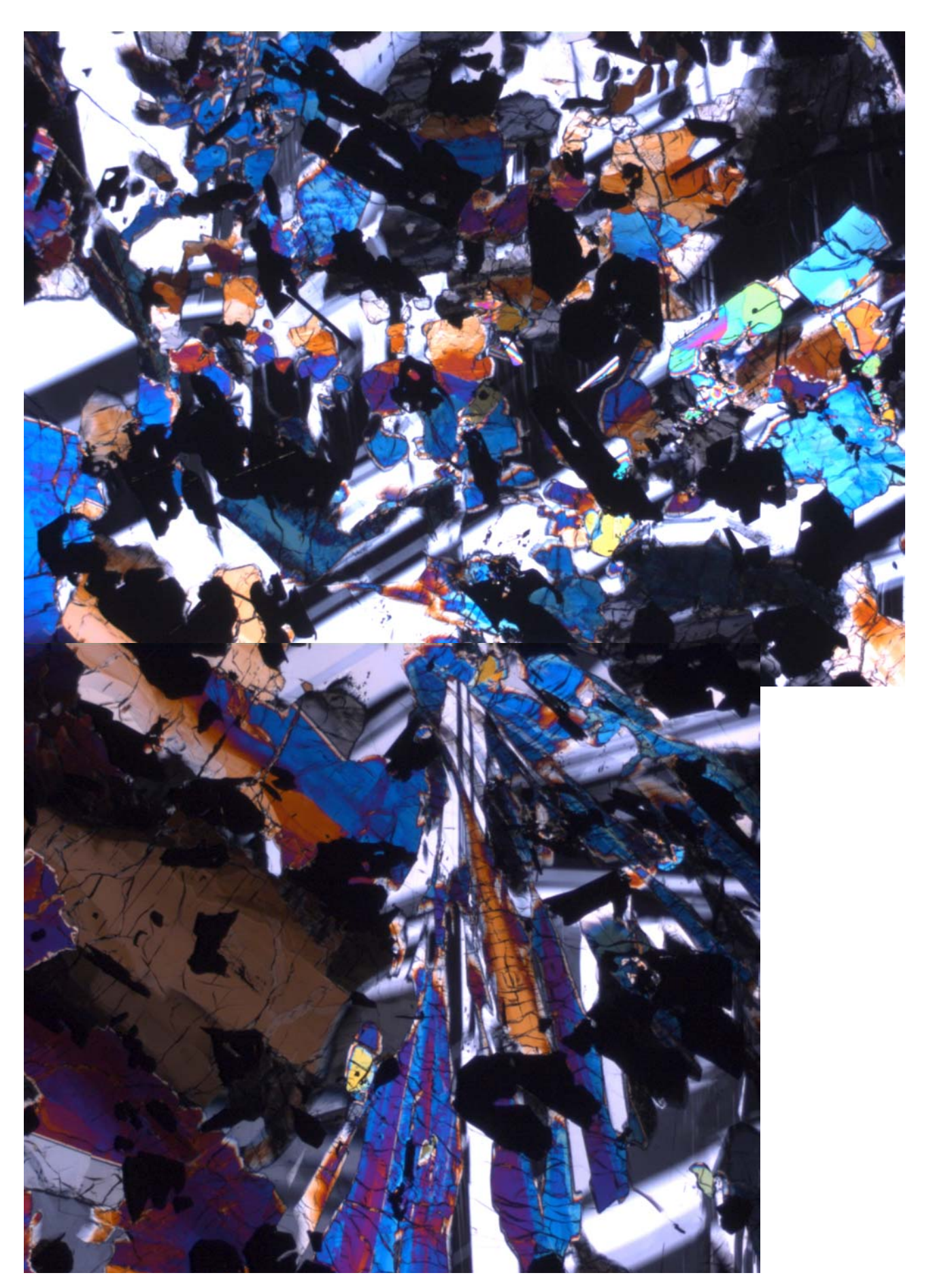
Section titled “Petrography”Neal and Taylor (1993) give the only description of 70315, although a mineral mode is found in Brown et al. (1975). Large pyroxene grains poikilitically enclose plagioclase and ilmenite (figure 2).
Chemistry
Section titled “Chemistry”Warner et al. (1979) classified 70315 as type U (for unclassified!). Neal (2001) found that 70315 had low Rb content, but had a REE pattern similar to other
Mineralogical Mode of 70315
Section titled “Mineralogical Mode of 70315”| Brown et | |
|---|---|
| al. 1975 | |
| Olivine | 0.7 |
| Pyroxene | 50.6 |
| Plagioclase | 22 |
| Opaques | 25.5 |
| Silica | 0.6 |
| Meostasis | 0.6 |
Apollo 17 basalts (figure 5). Thus it remains “unclassified”.
Radiogenic age dating
Section titled “Radiogenic age dating”Note: Apollo 17 mare basalts are generally considered 3.72 ± 0.04 b.y. old (see Paces et al. 1991).
Lunar Sample Compendium C Meyer 2011
Table 1. Chemical composition of 70315.
Section titled “Table 1. Chemical composition of 70315.”| reference weight SiO2 % TiO2 Al2O3 FeO MnO MgO CaO Na2O K2O P2O5 S % sum | Eldridge75 | Warner79 | Neal2001 | Garg76 | |||
|---|---|---|---|---|---|---|---|
| 0.048 (a) | 13.1 9.3 17.9 0.24 10 10.2 0.387 0.039 | (b) (b) (b) (b) (b) (b) | |||||
| Sc ppm V Cr Co Ni Cu Zn Ga Ge ppb As | 81 148 3742 20 | (b) (b) (b) (b) | 2790 | (c) (c) (c) (c) (c) (c) | |||
| Se Rb Sr Y Zr Nb Mo Ru Rh Pd ppb Ag ppb Cd ppb In ppb Sn ppb Sb ppb | 0.24 163 66 197 21 | (c) (c) (c) (c) | 204 | (b) | |||
| Te ppb Cs ppm Ba La Ce Pr Nd Sm Eu Gd Tb Dy Ho Er Tm Yb Lu Hf Ta W ppb Re ppb | 3.2 13 14 5.8 1.4 1.4 10 5.6 0.81 5.7 1.3 | (b) (b) (b) (b) (b) (b) (b) (b) | 16.2 2.74 17.7 7.48 1.6 9.73 1.99 13.8 2.68 7.76 1.05 7.88 1.06 6.39 | (c) (c) (c) (c) (c) (c) (c) (c) (c) (c) | 8.1 | (b) | |
| Os ppb Ir ppb Pt ppb Au ppb Th ppm U ppm | 0.27 (a) 0.1 (a) (a) radiatio | ı, (b | 0.23 0.07 ) INAA, | (c) (c) | ICP-MS |
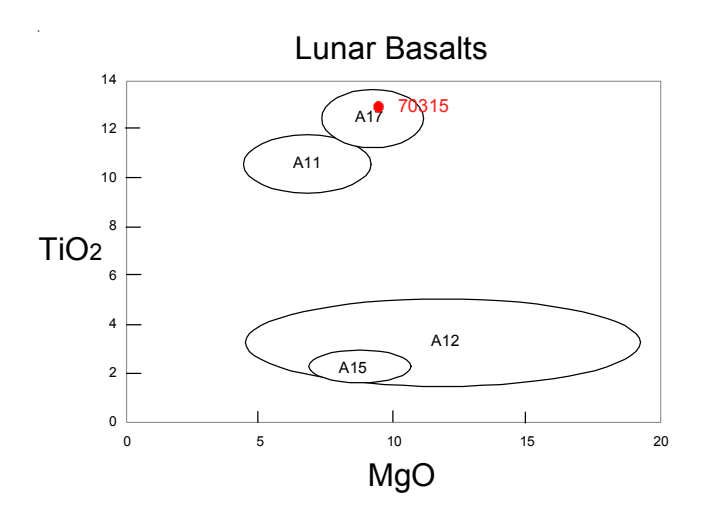
Figure 3: Composition of 70315 compared with other Apollo basalts.
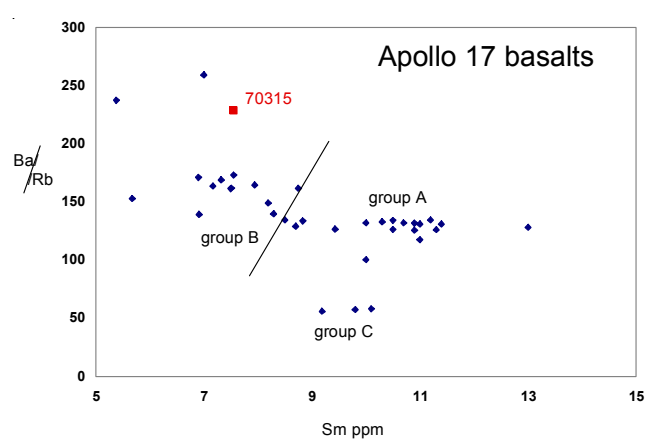
Figure 4: Trace element diagram used to classify Apollo 17 basalts.
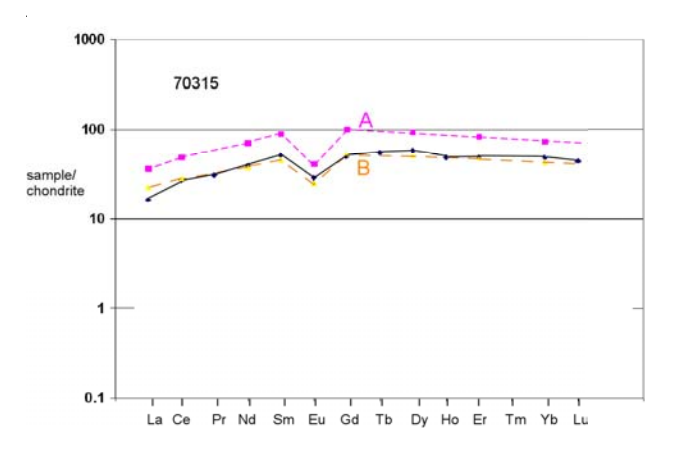
Figure 5: Normalized rare-earth-element diagram for 70315 and type A and B basalts.
Processing
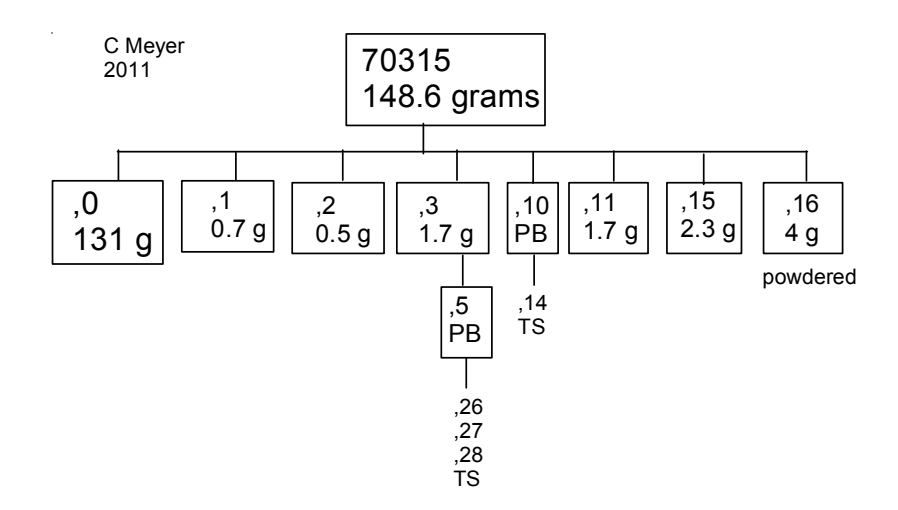
Section titled “Processing”There are 4 thin sections.
References for 70315
Section titled “References for 70315”Brown G.M., Peckett A., Emeleus C.H., Phillips R. and Pinsent R.H. (1975a) Petrology and mineralogy of Apollo 17 mare basalts. Proc. 6th Lunar Sci. Conf. 1-13.
Butler P. (1973) Lunar Sample Information Catalog Apollo 17. Lunar Receiving Laboratory. MSC 03211 Curator’s Catalog. pp. 447.
Eldridge J.S., O’Kelley G.D. and Northcutt K.J. (1975a) Primordial and cosmogenic radionuclides in Descartes and Taurus-Littrow materials: extension of studies by nondestructive x-my spectrometry. Proc. 6th Lunar Sci. Conf. 1407-1418.
Garg A.N. and Ehmann W.N. (1976a) Zr-Hf fractionation in chemically defined lunar rock groups. Proc. 7th Lunar Sci. Conf. 3397-3410.
Lofgren G.E. and Lofgren E.M. (1981) Catalog of Lunar Mare Basalts greater than 40 grams. LPI Cont. 438. Lunar Planetary Institute, Houston
LSPET (1973) Apollo 17 lunar samples: Chemical and petrographic description. Science 182, 659-672.
LSPET (1973) Preliminary Examination of lunar samples. Apollo 17 Preliminary Science Rpt. NASA SP-330. 7-1 – 7-46.
Ma M-S., Schmitt R.A., Warner R.D., Taylor G.J. and Keil K. (1979b) Composition, petrography, and genesis of Apollo 17 high-Ti mare basalts (abs). Lunar Planet. Sci. X, 765 767. Lunar Planetary Institute, Houston.
Muehlberger et al. (1973) Documentation and environment of the Apollo 17 samples: Apreliminary report. Astrogeology 71 322 pp superceeded by Astrogeolgy 73 (1975) and by Wolfe et al. (1981)
Muehlberger W.R. and many others (1973) Preliminary Geological Investigation of the Apollo 17 Landing Site*. In* Apollo 17 Preliminary Science Report. NASA SP-330.
Neal C.R. (2001) Interior of the moon: The presence of garnet in the primitive deep lunar mantle. J. Geophys. Res. 106, 27865-27885.
Neal C.R. and Taylor L.A. (1993) Catalog of Apollo 17 rocks. Vol. 2 Basalts
Warner R.D., Taylor G.J., Conrad G.H., Northrop H.R., Barker S., Keil K., Ma M.-S. and Schmitt R. (1979a) Apollo 17 high-Ti mare basalts: New bulk compositional data, magma types, and petrogenesis. Proc. 10th Lunar Planet. Sci. Conf. 225-247.
Wolfe E.W., Bailey N.G., Lucchitta B.K., Muehlberger W.R., Scott D.H., Sutton R.L and Wilshire H.G. (1981) The geologic investigation of the Taurus-Littrow Valley: Apollo 17 Landing Site. US Geol. Survey Prof. Paper, 1080, pp. 280.