Sample 75075
Vuggy Ilmenite Basalt 1008 grams
Section titled “Vuggy Ilmenite Basalt 1008 grams”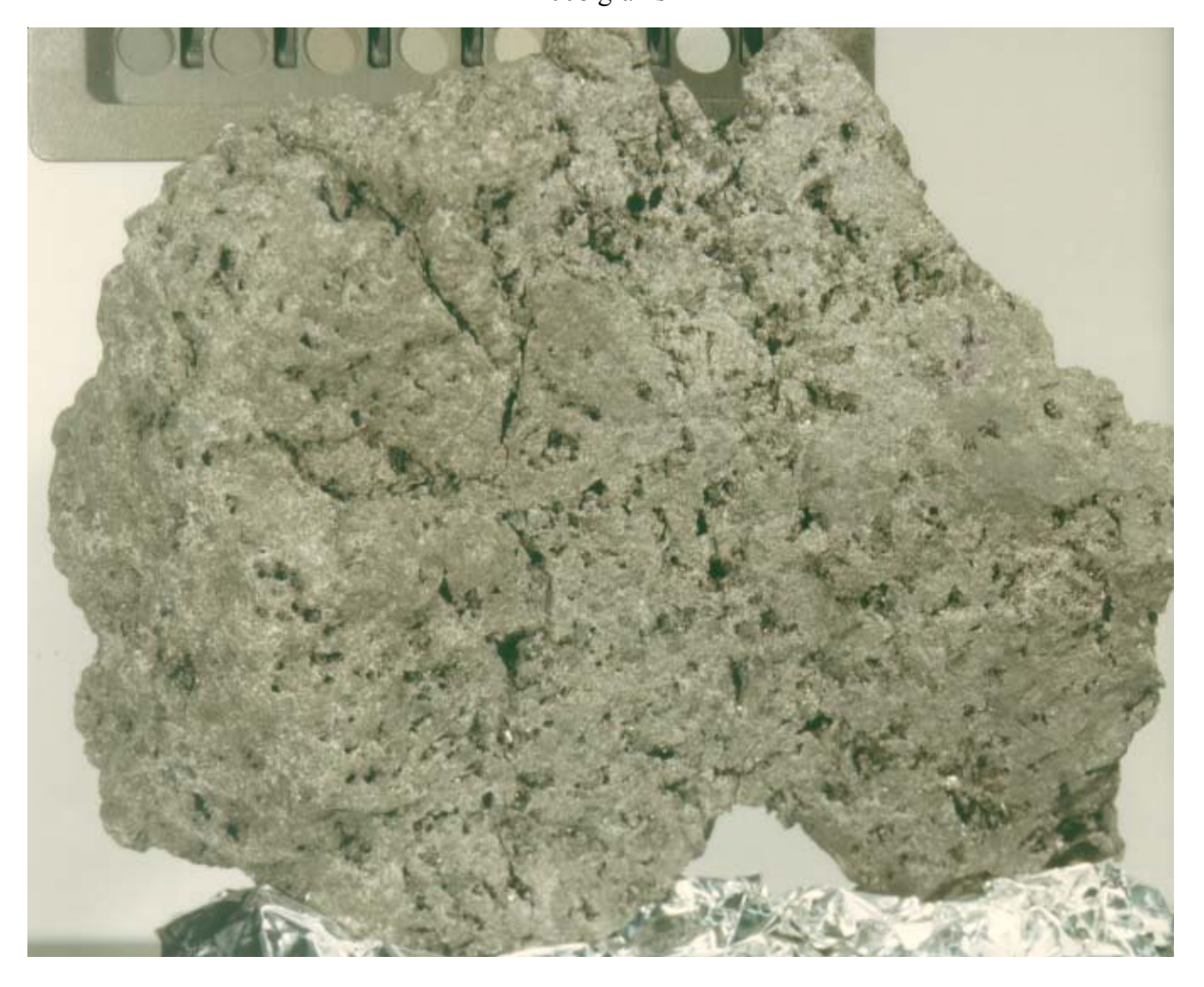
Figure 1: Photo of vuggy mare basalt sample 75075. NASA S73-15337. Sample is about 12 cm across.
Introduction
Section titled “Introduction”75075 was found lying loose on top of a large boulder. It is substantially different in composition from the other basalt samples from Camelot Crater, such that it is believed to have been from a different lava flow from 75055 etc. (Wolfe et al. 1981). Figure 1 shows that 75075 is a very vuggy ilmenite basalt (up to 20% by volume).
The crystallization age of 75075 is 3.74 ± 0.02 m.y. with an apparent old exposure age of 143 m.y. Although it has an old exposure age, and was found on top of a boulder, it doesn’t appear to have many micrometeorite craters. The exposed surface has a pronounced, smooth patina instead (figure 2).
Petrography
Section titled “Petrography”Figure 3 shows the interior texture of 75075. The texture is described as subvariolitic to subophitic (Neal and Taylor 1993). The average grain size is 1-2 mm, with plagioclase and ilmenite forming the larger crystals. Mineral chemistry has not been reported, but it is noted that there is no interstitial glass. Roedder and Weiblen (1975) reported low-K melt inclusions in ilmenite. Vugs in 75075 are 2 – 20 mm in size and interconnecting (figure 1).
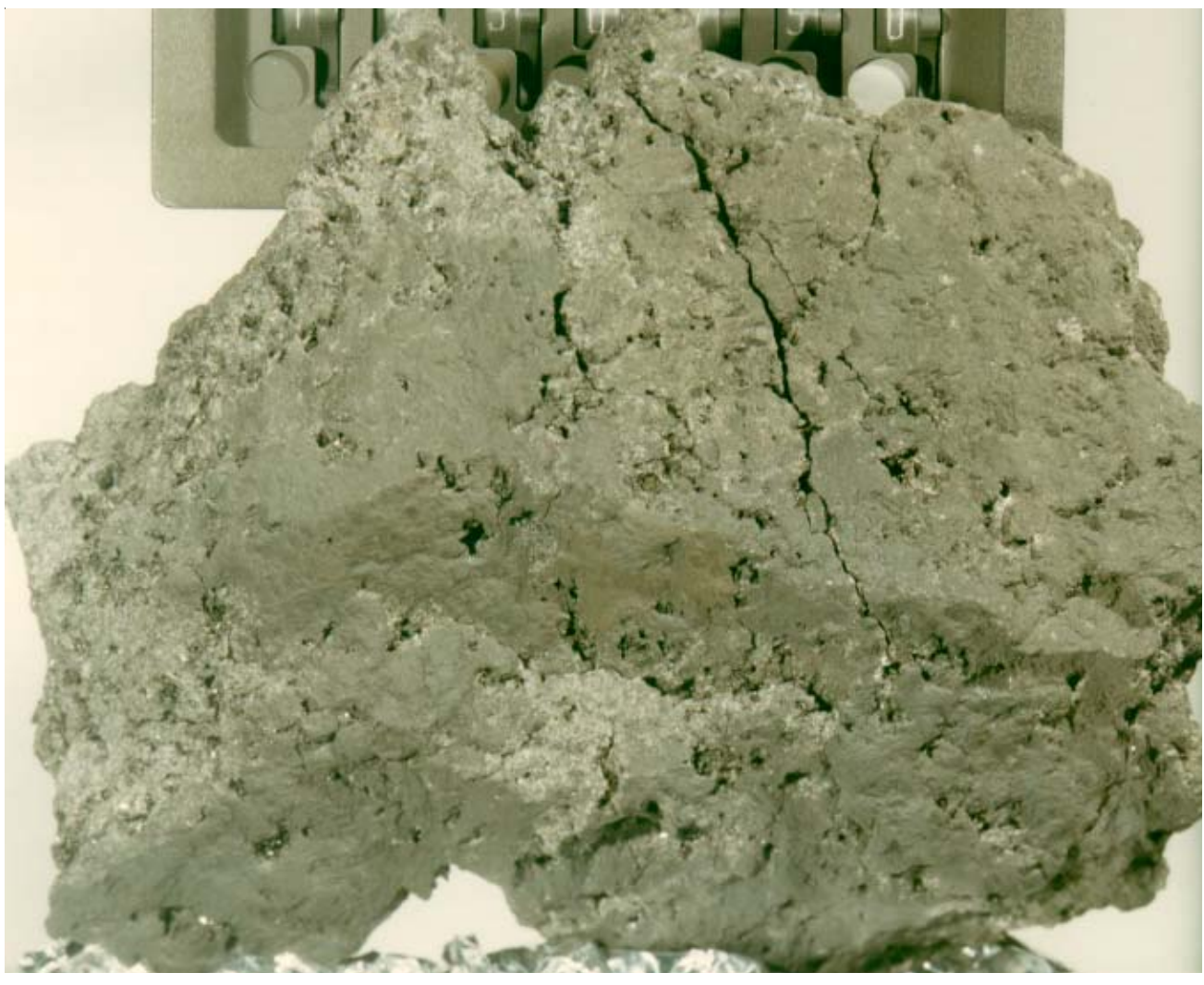
Figure 2: Photo of 75075 (top side) showing thick patina(?). NASA S73-15342.
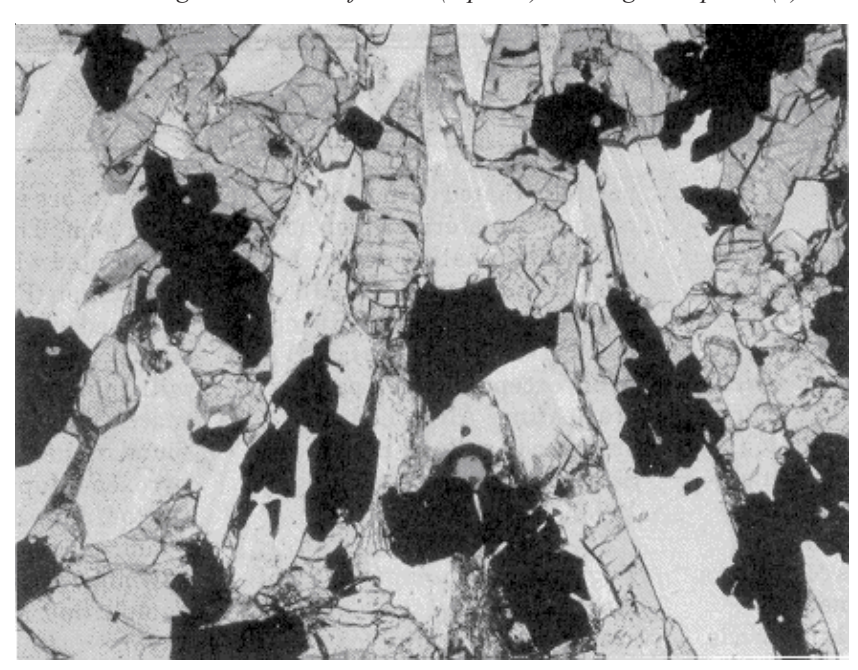
Figure 3: Thin section photomicrograph of 75075(from Neal and Taylor 1993). Field of view 2.5 mm.
Mineralogical Mode of 75075
Section titled “Mineralogical Mode of 75075”| Brown et | |
|---|---|
| al. 1975 | |
| Olivine | 1.2 |
| Pyroxene | 52.2 |
| Plagioclase | 20.7 |
| Ilmenite | 24.1 |
| Silica | 1.5 |
| Mesostasis | 0.3 |
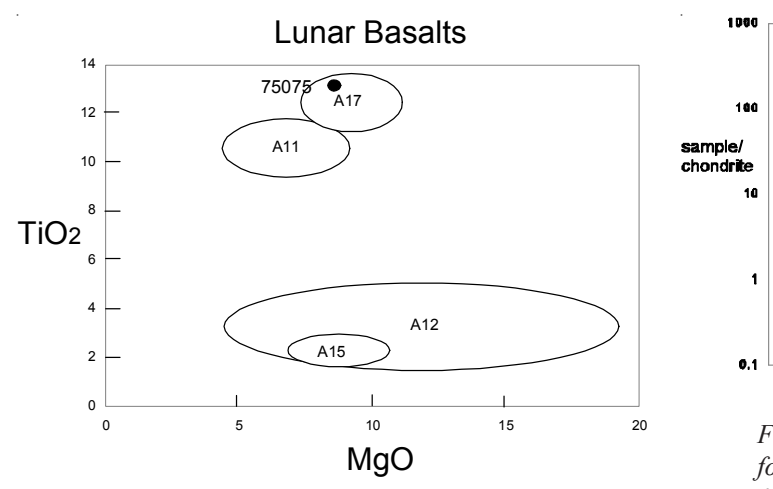
Figure 4: Composition of 75075 compared with other Apollo basalt samples.
Usselman et al. (1975) used experiments to show that 75075 cooled at about 1 deg/hr. O’Hara and Humphries (1975) used 75075 to experimentally determine the early formation of armalcolite. Muan et al. (1974) determined the phase relations.
Note: Pictures show that there was a mysterious red patch on the exterior surface (probably orange soil). The original PET catalog (Butler 1973) mentioned a “burnt sienna” color!
Mineralogy
Section titled “Mineralogy”Olivine: A small amount of olivine is found in cores of pyroxene grains.
Pyroxene: Jagodzinski et al. (1975) demonstrated the presence of exsolved pigeonite in augite cores.
Armalcolite: Neal and Taylor (1993) describe armalcolite in 75075 as a discrete phase, sometimes mantled by ilmenite.
Chemistry
Section titled “Chemistry”The chemical composition is given in table 1 and figures 4, 5 and 6. Paces et al. (1991) classify 75075 as a type B A17 basalt (figure 6). Gibson et al. (1976) determined 1700 ppm S for 75075. Liech et al. (1974), Jovanovic and Allen (1974, 1980) and Allen et al. (1977) studied F, Cl and P concentrations in 75075.
Radiogenic age dating
Section titled “Radiogenic age dating”Nyquist et al. (1975) and Murthy and Coscio (1976) obtained the Rb/Sr age for 75075 (figures 8 and 10). Lugmair et al. (1975) determined the Sm – Nd age by
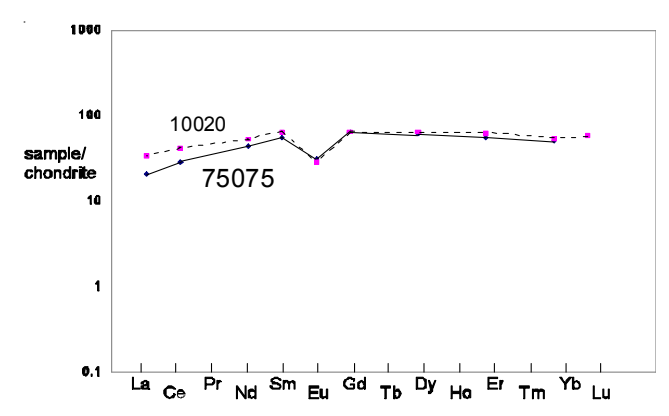
Figure 5: Normalized rare-earth-element diagram for 75075. Isotope dilution data from Shih et al. 1975.
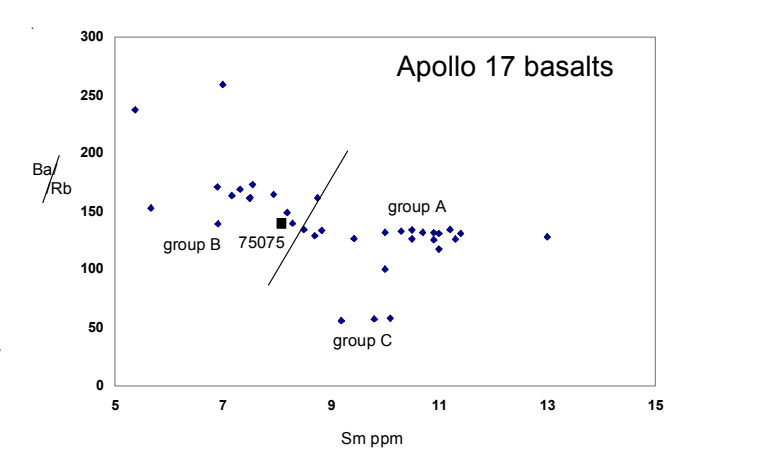
Figure 6: Trace element diagram for Apollo 17 basalts, with data for 75075.
internal mineral isochron (figure 9). Jessberger et al. (1975) and Horn et al. (1975) determined the age by Ar/Ar, with plagioclase being the most reliable (figure 7). Chen et al. (1978) carefully studied the Pb isotopes in 75075, but were unable to obtain age information by this technique. They concluded that there may have been a disturbance in the U – Pb system about 2.8 b.y., suggesting Pb loss by volatility in the temperature range 400 – 900 deg C.
Cosmogenic isotopes and exposure ages
Section titled “Cosmogenic isotopes and exposure ages”The 38Ar exposure age is 118 m.y. (Horn et al. 1975), based on the most reliable plagioclase separate. Lugmair et al. (1975) reported 143 ± 5 m.y. as determined by 81Kr and 144 m.y. by 38Ar. This is older than the apparent age of Camelot Crater (~80 m.y.) as determined from 75035 and 75055 (see discussion in Arvidson et al. 1976).
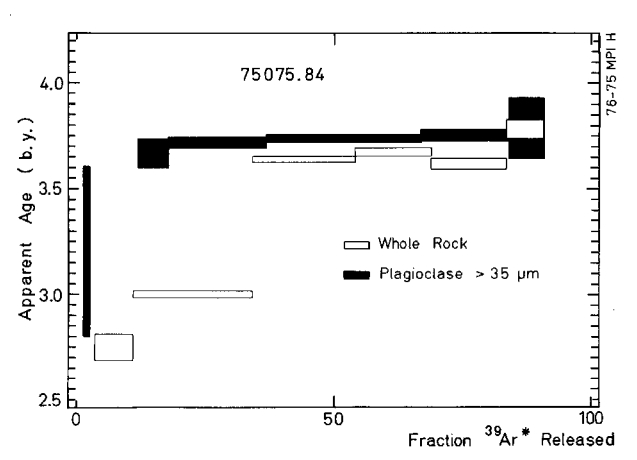
Figure 7: Ar release pattern for coarse plagioclase from 75075 as compared with that of whole rock (Horn et al. 1975).
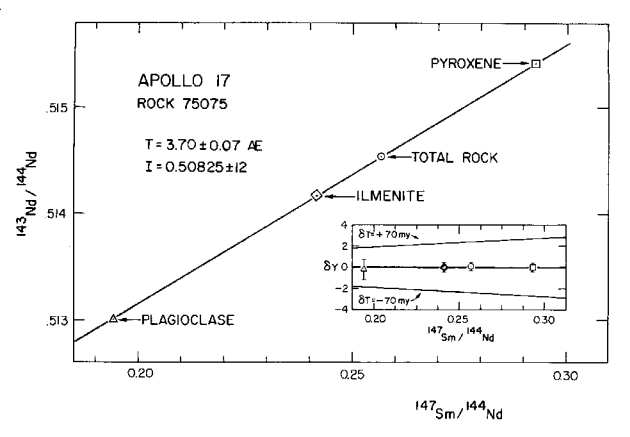
Figure 9: Sm/Nd isochron for 75075 (from Lugmair and Marti 1975).
Other Studies
Section titled “Other Studies”Mayeda et al. (1975) reported the isotopic composition of oxygen for various mineral separates. Petrowski et al. (1975) determined carbon and sulfur isotopes. Chen et al. (1978) performed interesting experiments with Pb isotopes (see above).
Lugmair et al. (1975) reported the isotopic composition of Xe, Kr, Sm and Nd.
Horn et al. (1975) used 75075 to investigate the effects of recoil on Ar/Ar ages.
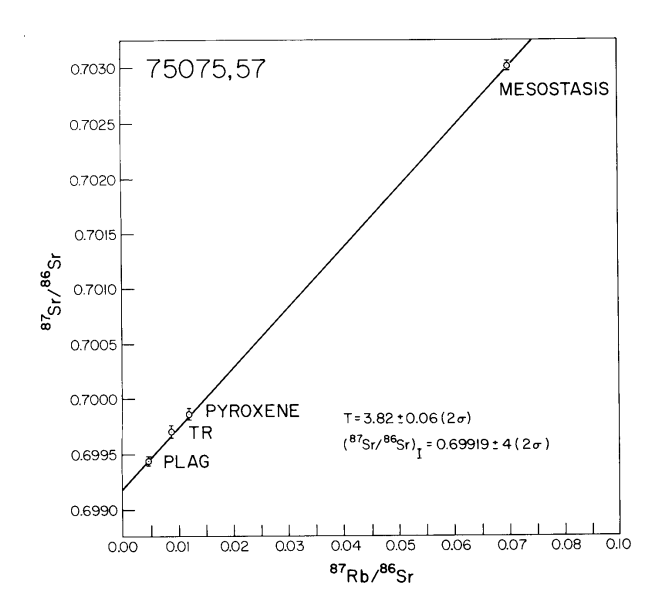
Figure 8: Rb/Sr mineral isochron for 75075 (from Murthy and Coscio 1976).
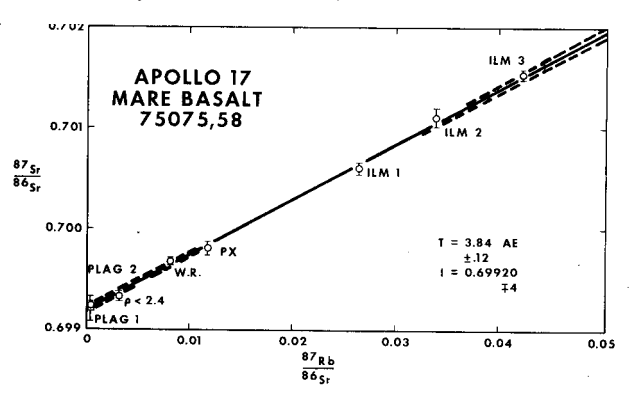
Figure 10: Rb/Sr mineral isochron for 75075 (from Nyquist et al. 1975).
Processing
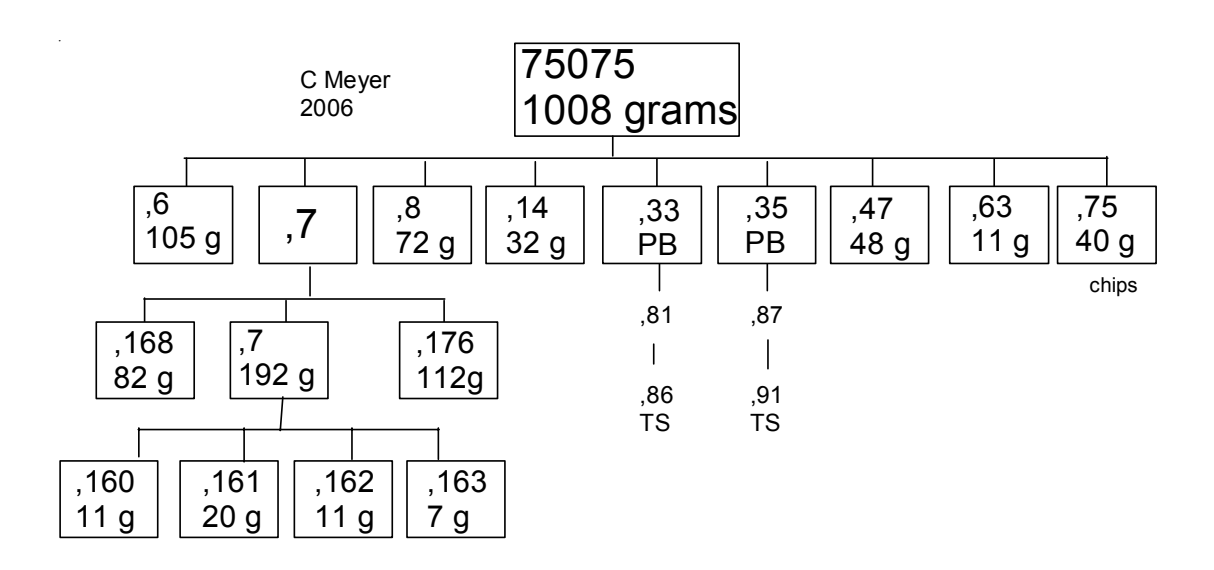
Section titled “Processing”This rock was chipped, not sawn. Neal and Taylor (1993) discuss the analysis of 75075 in their re-catalog. Although a large number of thin sections were distributed, no mineralogical results were forthcoming for this rock.
Summary of Age Data for 75075
Section titled “Summary of Age Data for 75075”Murthy and Coscio 1976 3.82 ± 0.06 b.y. Nyquist et al. 1975 3.84 ± 0.12 Lugmair and Marti 1975 3.70 ± 0.07 Horn et al. 1975 3.74 ± 0.04
Rb/Sr Sm/Nd Ar/Ar
3.71 ± 0.05
3.74 ± 0.02 plag. coarse 3.66 ± 0.02 plag. fine
Table 1. Chemical composition of 75075.
| reference Rhodes 76 | Murthy 76 | Rose 74 | Shih 75 | Masuda 74 | Unruh 83 | Lugmair75 | |||||||
|---|---|---|---|---|---|---|---|---|---|---|---|---|---|
| weight SiO2 % TiO2 Al2O3 FeO MnO MgO CaO Na2O | Rhodes 74 37.64 13.45 8.2 18.78 0.28 9.49 10.29 0.4 | (a) (a) (a) (a) (a) (a) (a) (a) | 38.51 13.33 8.29 18.85 0.25 9.68 10.17 0.37 | (c ) (c ) (c ) (c ) (c ) (c ) (c ) | Wiesmann75 (c ) 0.4 | ||||||||
| K2O P2O5 S % sum | 0.05 0.05 0.16 | (a) (a) | (a) 0.043 | (d) 0.11 0.12 | (c ) | (c ) 0.052 | (d) | ||||||
| Sc ppm | 82 | (c ) 78.3 | (d) | ||||||||||
| V Cr | 3900 | (a) | 108 3763 | (c ) | (c ) 2880 | (d) | |||||||
| Co Ni | 1 | (a) | 32 31 | (c ) | (c ) 20.5 | (d) | |||||||
| Cu Zn | 5 | (a) | |||||||||||
| Ga Ge ppb As | 6.5 | (c ) | |||||||||||
| Se Rb Sr | 0.5 166 | (a) 0.387 (a) 131 | (d) 1 | (d) 390 | (c ) 0.46 (c ) 165 | (d) (d) | |||||||
| Y Zr Nb | 81 208 21 | (a) (a) (a) | 98 296 31 | (c ) (c ) | (c ) 235 | (d) | |||||||
| Mo Ru Rh | |||||||||||||
| Pd ppb Ag ppb | |||||||||||||
| Cd ppb In ppb Sn ppb | |||||||||||||
| Sb ppb Te ppb | |||||||||||||
| Cs ppm Ba | 62.4 | (d) | 64.4 | (d) 72.3 | (d) | ||||||||
| La Ce | 5.01 17.6 | (d) 5.67 (d) 19.5 | (d) (d) | ||||||||||
| Pr Nd Sm | 19.8 8.29 | (d) 21 (d) 8.9 | (d) 17.3 (d) 7.26 | (d) (d) | |||||||||
| Eu Gd | 1.77 12.9 | (d) 2 | (d) 12.9 | (d) (d) | |||||||||
| Tb Dy | 15.1 | (d) 15.7 | (d) | ||||||||||
| Ho Er | 8.89 | (d) 9.48 | (d) | ||||||||||
| Tm Yb | 7.4 | (c ) 8.31 | (d) 8.71 | (d) | |||||||||
| Lu Hf | 1.21 9.3 | (d) | (d) 1.22 | (d) 1.09 7.5 | (d) (d) | ||||||||
| Ta W ppb Re ppb | |||||||||||||
| Os ppb Ir ppb | |||||||||||||
| Pt ppb Au ppb | |||||||||||||
| Th ppm U ppm | 0.32 0.096 | (d) (d) | |||||||||||
| technique: (a) XRF, (b) , (c ) mixed, (d) IDMS |
| Table 2 | U ppm | Th ppm | K ppm | Rb ppm | Sr ppm | Nd ppm | Sm ppm | technique |
|---|---|---|---|---|---|---|---|---|
| Murthy and Coscio 1976 | 356 | 0.387 | 131 | idms | ||||
| Chen et al. 1978 | 0.089 | 0.326 | idms | |||||
| 0.106 | 0.322 | idms | ||||||
| Shih et al. 1985 | 0.096 | 0.32 | 0.46 | 165 | 19.8 | 8.29 | idms | |
| Nyquist et al. 1975 | 0.46 | 164.6 | idms | |||||
| Lugmair and Marti 1975 | 28 | 48 | idms | |||||
| Unruh et al. 1983 | 17.3 | 7.3 | idms | |||||
| Masuda et al. 1974 | 21 | 8.9 | idms |
List of Photo #s for 75075
Section titled “List of Photo #s for 75075”S73-15337 - 341
S73-17259 – 269 B&W
S73-17801
S73-36796 – 800 processing
References for 75075.
Section titled “References for 75075.”Allen R.O., Jovanovic S. and Reed G.W. (1975) Heavy element affinities in Apollo 17 samples. Earth Planet Sci. Lett. 27, 163-169.
Arvidson R., Drozd R., Guiness E., Hohenberg C., Morgan C., Morrison R. and Oberbeck V. (1976) Cosmic ray exposure ages of Apollo 17 samples and the age of Tycho. Proc. 7th Lunar Sci. Conf. 2817-2832.
Bansal B.M., Wiesmann H. and Nyquist L. (1975) Rb-Sr ages and initial 87Sr/86Sr ratios for Apollo 17 mare basalts. In Conference on Origins of Mare Basalts and Their Implications for Lunar Evolution (Lunar Science Institute, Houston), 1-5.
Brown G.M., Peckett A., Emeleus C.H., Phillips R. and Pinsent R.H. (1975a) Petrology and mineralogy of Apollo 17 mare basalts. Proc. 6th Lunar Sci. Conf. 1-13.
Butler P. (1973) Lunar Sample Information Catalog Apollo 17. Lunar Receiving Laboratory. MSC 03211 Curator’s Catalog. pp. 447.
Chen J.H., Tilton G.R., Mattinson J.M. and Vidal P. (1978a) Lead isotope systematics of mare basalt 75075. Proc. 9th Lunar Planet. Sci. Conf. 509-521.
Chen J.H., Tilton G.R. and Mattinson J.M. (1979) Lead isotope systematics of three Taurus-Littrow mare basalts (abs). Lunar Planet. Sci. X, 195-197. Lunar Planetary Institute, Houston
Chen J.H. and Wasserburg G.J. (1980) The isotopic composition of U in meteorites and lunar samples (abs). Lunar Planet. Sci. XI, 131-133. Lunar Planetary Institute, Houston
Chen J.H., Mattinson J.M., Tilton G.R. and Vidal P. (1978b) Lead isotope systematics of mare basalt 75075 (abs). Lunar Planet. Sci. IX, 160-162. Lunar Planetary Institute, Houston
Gibson E.K., Chang S., Lennon K., Moore G.W. and Pearce G.W. (1975a) Sulfur abundances and distributions in mare basalts and their source magmas. Proc. 6th Lunar Sci. Conf. 1287-1301.
Gibson E.K., Usselman T.M. and Morris R.V. (1976a) Sulfur in the Apollo 17 basalts and their source regions. Proc. 7th Lunar Sci. Conf. 1491-1505.
Horn P., Jessberger E.K., Kirsten T. and Richter H. (1975) 39Ar40Ar dating of lunar rocks: Effects of grain size and neutron irradiation. Proc. 6th Lunar Sci. Conf. 1563-1591. Jagodzinski H., Korekawa M., Muller W.F. and Schropfer L. (1975a) X-ray diffraction and electron microscope studies of clinopyroxenes from lunar basalts 75035 and 75075. Proc. 6th Lunar Sci. Conf. 773-778.
Jagodzinski H., Korekawa M., Muller W.F. and Schropfer L. (1975b) X-ray study of clinopyroxenes of lunar basalts 75035 and 75075 (abs). Lunar Sci. VI, 432-434. Lunar Planetary Institute, Houston
Jessberger E.K., Horn P. and Kirsten T. (1975) 39Ar-40Ar dating of lunar rocks: A methodical investigation of mare basalt 75075 (abs). Lunar Sci. VI, 441-443. Lunar Planetary Institute, Houston
Leich D.A., Goldberg R.H., Burnett D.S. and Tombrello T.A. (1974) Hydrogen and fluorine in the surfaces of lunar samples. Proc. 5th Lunar Sci. Conf. 1869-1884.
LSPET (1973) Apollo 17 lunar samples: Chemical and petrographic description. Science 182, 659-672.
LSPET (1973) Preliminary Examination of lunar samples. Apollo 17 Preliminary Science Rpt. NASA SP-330. 7-1 – 7-46.
Lugmair G.W., Scheinin N.B. and Marti K. (1975a) Sm-Nd age and history of Apollo 17 basalt 75075: Evidence for early differentiation of the lunar interior. Proc. 6th Lunar Sci. Conf. 1419-1429.
Lugmair G.W., Scheinin N.B. and Marti K. (1975b) Sm-Nd age of Apollo 17 basalt 75075: Two-stage igneous processes (abs). Lunar Sci. VI, 531-533. Lunar Planetary Institute, Houston
Masuda A., Tanaka T., Nakamura N. and Kurasawa H. (1974) Possible REE anomalies of Apollo 17 REE patterns. Proc. 5th Lunar Sci. Conf. 1247-1253.
Mayeda T.K., Shearer J. and Clayton R.N. (1975) Oxygen isotope fractionation of Apollo 17 rocks. Proc. 6th Lunar Sci. Conf. 1799-1802.
Muan A., Lofall T. and Ma C.-B. (1974) Liquid-solid equilibria in lunar rocks from Apollo 15, 16 and 17, and phase relations in parts of the system CaMgSi206 CaFeSi206-Fe2SiO4-CaAl2Si208 (abs). Lunar Sci. V, 529 530. Lunar Planetary Institute, Houston.
Murthy V.R. and Coscio C. (1976) Rb-Sr ages and isotopic systematics of some Serenitatis mare basalts. Proc. 7th Lunar Sci. Conf. 1529-1544.
Muehlberger et al. (1973) Documentation and environment of the Apollo 17 samples: Apreliminary report. Astrogeology 71 322 pp superceeded by Astrogeology 73 (1975) and by Wolfe et al. (1981)
Muehlberger W.R. and many others (1973) Preliminary Geological Investigation of the Apollo 17 Landing Site*. In* Apollo 17 Preliminary Science Report. NASA SP-330.
Neal C.R., Taylor L.A., Patchen A.D., Hughes S.S. and Schmitt R.A. (1990a) The significance of fractional crystallization in the petrogenesis of Apollo 17 Type A and B high-Ti basalts. Geochim. Cosmochim. Acta 54, 1817 1833.
Neal C.R. and Taylor L.A. (1993) Catalog of Apollo 17 rocks. Vol. 3 Central Valley
Nyquist L.E., Bansal B.M. and Wiesmann H. (1975a) Rb-Sr ages and initial 87Sr/86Sr for Apollo 17 basalts and KREEP basalt 15386. Proc. 6th Lunar Sci. Conf. 1445 1465.
O’Hara M.J., Biggar G.M., Hill P.G., Jefferies B. and Humphries D.J. (1974) Plagioclase saturation in lunar high-Titanium basalt. Earth Planet. Sci. Lett. 21, 253-268.
O’Hara M.J., Biggar G.M., Humphries D.J. and Saha P. (1974b) Experimental petrology of high titanium basalt (abs). Lunar Sci. V, 571-573. Lunar Planetary Institute, Houston
O’Hara M.J. and Humphries D.J. (1975) Armalcolite crystallization, phenocryst assemblages, eruption conditions and origin of eleven high titanium basalts from Taurus Littrow (abs). Lunar Sci. VI, 619-621. Lunar Planetary Institute, Houston.
Paces J.B., Nakai S., Neal C.R., Taylor L.A., Halliday A.N. and Lee D.-C. (1991) A strontium and neodymium isotopic study of Apollo 17 high-Ti mare basalts: Resolution of ages, evolution of magmas, and origin of source heterogeneities. Geochim. Cosmochim. Acta 55, 2025-2043.
Petrowski C., Kerridge J.F. and Kaplan I.R. (1974) Light element geochemistry of the Apollo 17 site. Proc. 5th Lunar Sci. Conf. 1939-1948.
Rhodes J.M., Rodgers K.V., Shih C., Bansal B.M., Nyquist L.E., Wiesmann H. and Hubbard N.J. (1974a) The relationships between geology and soil chemistry at the Apollo 17 landing site. Proc. 5th Lunar Sci. Conf. 1097 1117.
Rhodes J.M., Hubbard N.J., Wiesmann H., Rodgers K.V., Brannon J.C. and Bansal B.M. (1976a) Chemistry, classification, and petrogenesis of Apollo 17 mare basalts. Proc. 7th Lunar Sci. Conf. 1467-1489.
Rose H.J., Cuttitta F., Berman S., Brown F.W., Carron M.K., Christian R.P., Dwornik E.J. and Greenland L.P. (1974a) Chemical composition of rocks and soils at Taurus-Littrow. Proc. 5th Lunar Sci. Conf. 1119-1133.
Roedder E. and Weiblen P.W. (1975a) Anomalous low-K silicate melt inclusions in ilmenite from Apollo 17 basalts. Proc. 6th Lunar Sci. Conf. 147-164.
Shih C.-Y., Haskin L.A., Wiesmann H., Bansal B.M. and Brannon J.C. (1975a) On the origin of high-Ti mare basalts. Proc. 6th Lunar Sci. Conf. 1255-1285.
Unruh D.M., Stille P., Patchett P.J. and Tatsumoto M. (1984) Lu-Hf and Sm-Nd evolution in lunar mare basalts. Proc. 14th Lunar Planet. Sci. Conf. in J. Geophys. Res. 88, B459 B477.
Usselman T.M., Lofgren G.E., Donaldson C.H. and Williams R.J. (1975) Experimentally reproduced textures and mineral chemistries of high-titanium mare basalts. Proc. 6th Lunar Sci. Conf. 997-1020.
Wolfe E.W., Bailey N.G., Lucchitta B.K., Muehlberger W.R., Scott D.H., Sutton R.L and Wilshire H.G. (1981) The geologic investigation of the Taurus-Littrow Valley: Apollo 17 Landing Site. US Geol. Survey Prof. Paper, 1080, pp. 280.