Sample 76055
76055 Impact melt Breccia 6412 grams
Section titled “76055 Impact melt Breccia 6412 grams”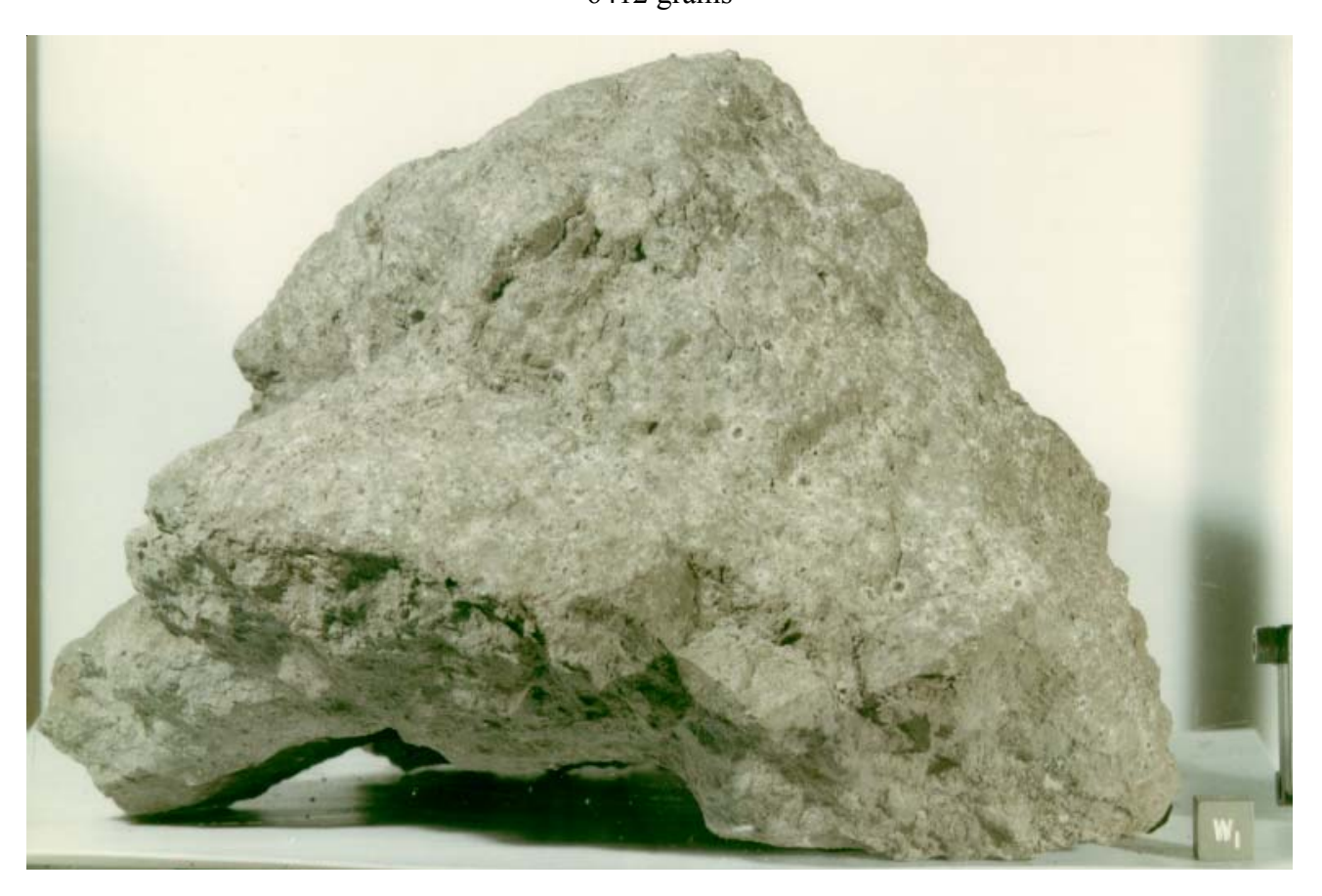
Figure 1: Lunar sample 76055. Cube is 1 cm. NASA S73-15717. Note the micrometeorite craters.
Introduction
Section titled “Introduction”Sample 76055 was picked up from the lunar regolith at some distance (10-15 meter) from the large Station 6 Boulder, but is probably not derived from it (Wolfe et al. 1981). The hand specimen appeared to be relatively homogeneous and clast free (figure 1), but the thin sections show many minute clasts (figure 3). The rock contains a prominent foliation that is defined by many small lenticular vesicles (or vugs) up to 0.2 x 3 mm in size (figures 2 and 4). Sawn surfaces show three apparent lithologies: a) vesicular, b) nonvesicular meltrock, and c) unstudied dense region (figure 12). All surfaces except B1 are covered by many micrometeorite craters, including one glass splash of about 1 cm, making this rock a potential sample for the study of solar and cosmic ray interactions.
This sample appears to be slightly older and more mafic than the Station 6 boulder and other aphanitic impact melts from Apollo 17 and may be a “unique” sample. It has not been well studied. The “age” is about 4.0 b.y. with an exposure to cosmic rays about 120 m.y. (longer than big boulder, ~ 22 m.y.).
Petrography
Section titled “Petrography”Stuart Agrell in the Lunar Sample Catalog (Butler 1973) provided a good description of 76055. Chao (1973), Warner (1973), Albee et al. (1973) and Meyer (1994) studied portions of the sample, but, in general, the rock as a whole, has not been well studied.
Lunar sample 76055 is a coherent polymict breccia with a fine-grained vesicular groundmass. Lithic clasts include (a) metatroctolite with a poikiloblastic matrix that is coarser grained than the breccia matrix, (b)
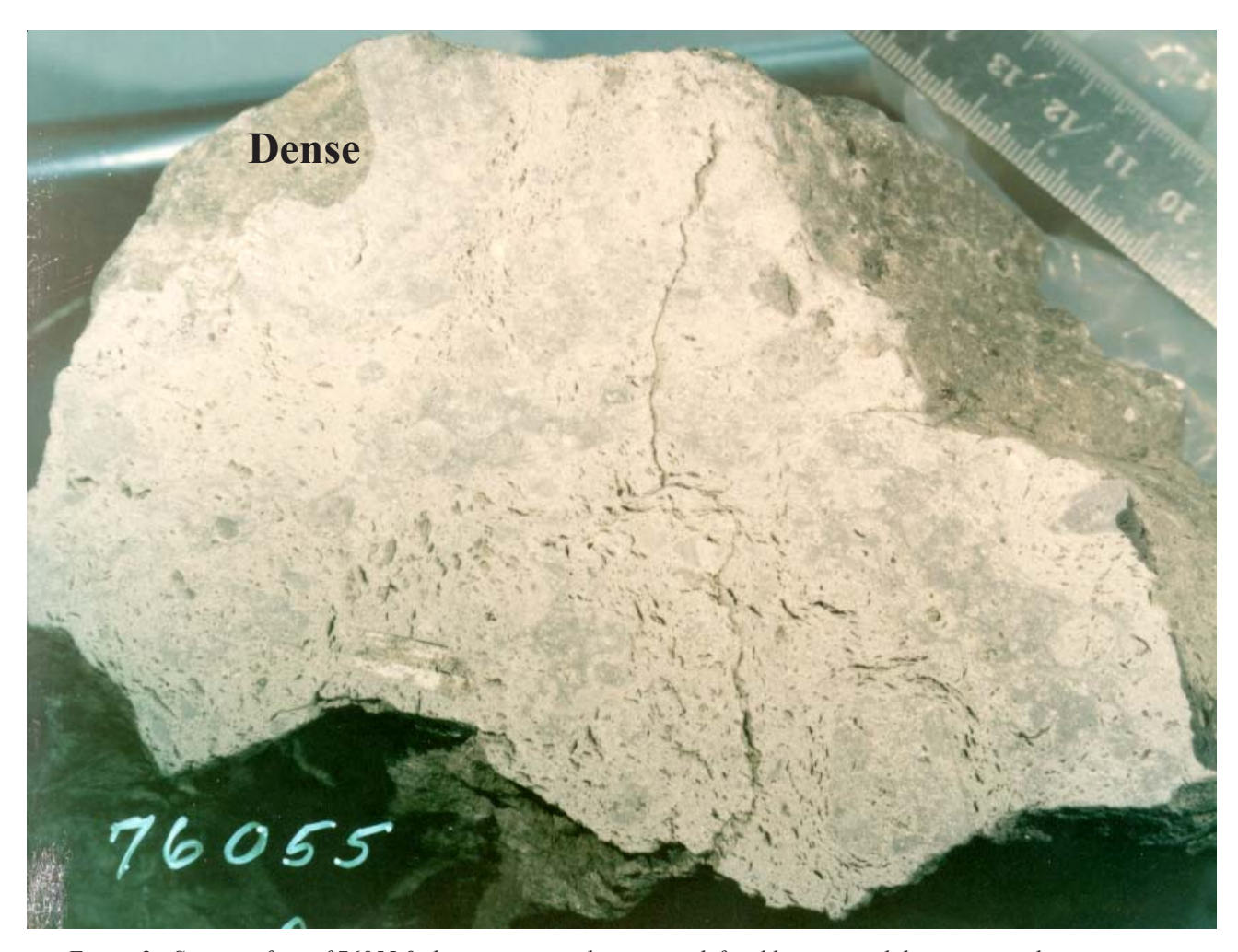
Figure 2: Sawn surface of 76055,0 showing oriented structure defined by vugs and dense material as “clasts”. Scale in cm. NASA S93-045965.
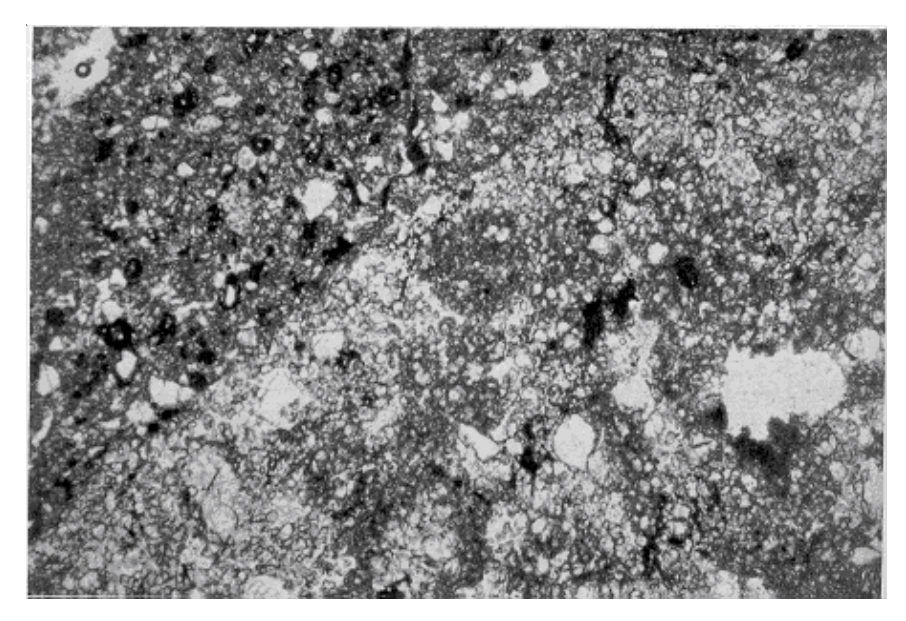
Figure 3: Photomicrograph of thin section of 76055. Field of view is 3 mm. NASA S73-19868.
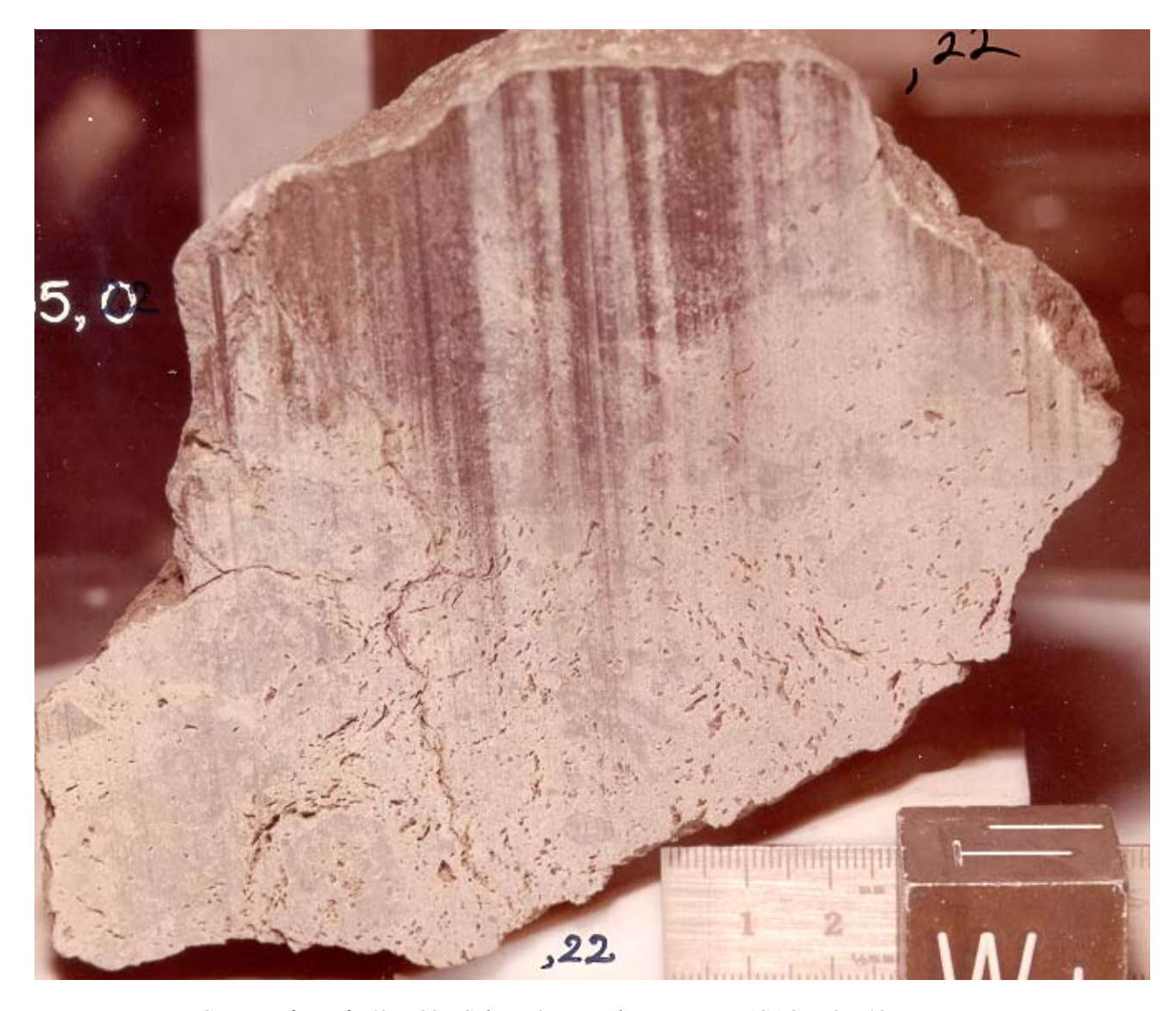
Figure 4: Sawn surface of 76055,22. Cube is 1 in., scale is in cm. NASA S75-34418.
“dunite” cataclasite, (c) “anorthosite” cataclasite and (d) felsic melt rock with an uneven ophitic to intersertal texture (Chao 1973). Sawn surfaces (figures 2 and 4) show that the interior of 76055 is an assemblage of aphanitic breccia clasts, included in larger aphanitic “pods”, all included in a vesicular aphanitic matrix that displays a swirled, banded foliation.
The vesicular matrix of 76055 is holocrystalline and consists of ~10% subangular plagioclase and olivine clasts (50 to 500 microns) set in a finer-grained (10 micron) poikilitic matrix of subhedral orthopyroxene intrgrown with anhedral plagioclase (figure 3). The pyroxene has a constant composition of about $Wo_4En_{77}Fs_{19}$ , plagioclase $An_{86-90}$ and olivine $Fo_{77}$ (figure 5). Mineral clasts are sometimes slightly more mafic.
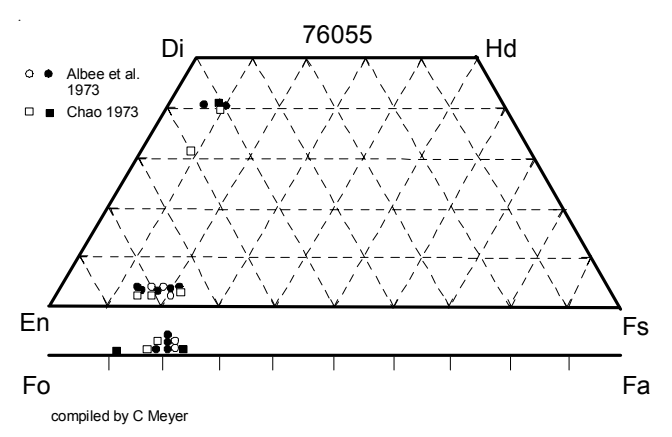
Figure 5: Pyroxene and olivine composition of 76055 (from Chao 1973, Albee et al. 1973).
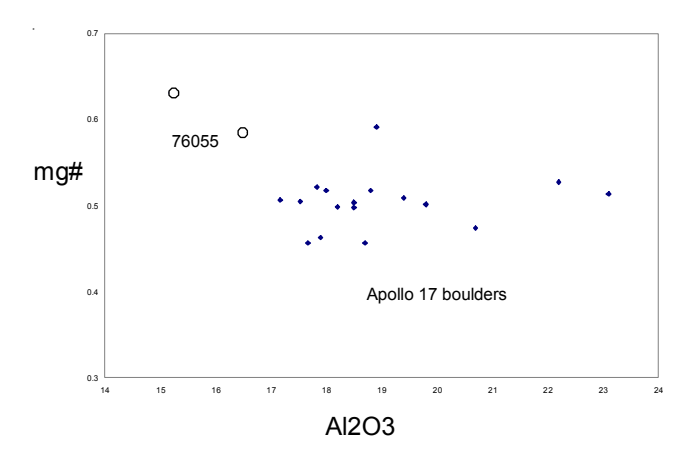
Figure 6: Composition of Apollo 17 impact melt breccias from stations 2, 3, 6 and 7 (data from Meyer 1994 and Ryder 1993).
Sawn surfaces show that there is also a portion of the sample that is nonvesicular, but apparently metaclastic in nature (figure 2, 12). Note that within this dense meltrock breccia, there is an even more dense region (unstudied).
A mysterious metaclastic “pod” in 76055 was studied by Chao (1973) and Albee et al. (1973). It has a poikilitic texture with fine clasts of plagioclase and olivine (50 to 500 microns) enclosed in a polygonal mosaic of low-Ca pyroxene oikocrysts (200 to 500 microns). Chao termed this “pod” “olivine micronorite hornfels”.
Mineralogical Mode
Section titled “Mineralogical Mode”According to Albee et al. (1973), the mode of 76055 is about 41% plagioclase, 24% low-Ca pyroxene and 18% olivine, with minor augite, armalcolite and iron metal. The poikilitic clast or “pod” in 76055 studied by Albee et al. had ~24% olivine.
The clast assemblage of the breccia has not been well documented, except in a few serial thin sections studied by Chao (1973) and Albee et al. (1973).
Mineralogy
Section titled “Mineralogy”Olivine: The abundant olivine in 76055 is relatively Mg-rich (Fo78-82), with larger clasts being more magnesian (Fo89, Chao 1973).
Pyroxene: The most abundant pyroxene is low-Ca pyroxene, but some grains of augite are reported (figure 4).
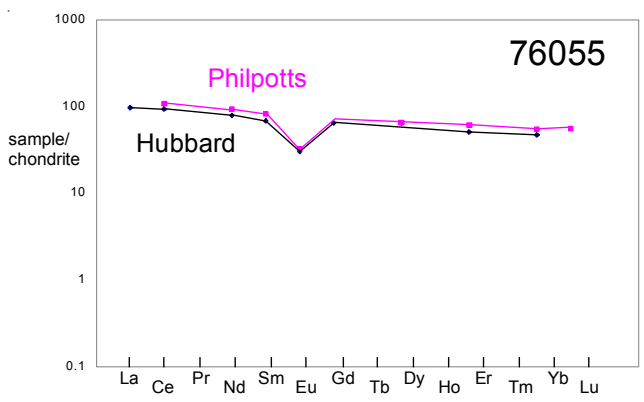
Figure 7: Normalized rare-earth-element diagram for 76055 (data obtained by isotope dilution mass spectrometry, Hubbard et al. 1974, Philpotts et al. 1974).
Plagioclase: Plagioclase is generally calcic An95-85. Chao reports one xenocryst with An97.
Pink Spinel: Chao (1973) reports pink Mg,Al spinel in reaction relation with the matrix.
Armalcolite: Albee et al. (1973) reports the composition of armalcolite present in some clasts (table 2).
Metallic Iron: Albee et al. (1973) found the metallic iron grains were in the range of the meteoritic component (12 % Ni).
Chemistry
Section titled “Chemistry”The chemical composition of 76055 is more mafic than the otherwise similar adjacent boulder at Station 6 (figure 6). The abundance of incompatible trace element is also slightly lower (figure 7). There appears to be a slight difference in chemical composition between the vesicular and non-vesicular regions of this rock (Albee et al. 1973, Table 1). The trace meteoritic siderophile elements have been determined (Palme et al. 1978), but an assignment to a lunar basin deposit has apparently not been made (Hertogen et al. 1977). Gibson and Moore (1974) reported 720 ppm S.
Radiogenic age dating
Section titled “Radiogenic age dating”Tera et al. (1974) used a two point Rb-Sr isochron to obtain an age of 3.86 b.y. for 76055. However, Kirsten et al. (1973), Turner et al. (1973), Huneke et al. (1973) and Kirsten and Horn (1974) obtained significantly older ages for the matrix and a clast in 76055 by the Ar/Ar plateau technique (figures 8, 9, 10). Nyquist et
Table 1. Chemical composition of 76055.
| reference LSPET73 weight | Albee 73 Albee 73 ”pod” | vesicular | Hubbard74 Wiesmann75 Philpotts74 49 mg. | Nava 74 | Palme78 | ||||||||
|---|---|---|---|---|---|---|---|---|---|---|---|---|---|
| SiO2 % TiO2 Al2O3 FeO MnO MgO CaO Na2O | 44.65 1.24 16.47 9.11 0.11 16.33 9.93 0.48 | (a) | (a) 45.2 (a) 0.7 (a) 15.2 (a) 9 (a) 19.8 (a) 9.6 (a) 0.3 | 45 1.4 16.1 9.2 17.1 10.3 0.3 | (b) (b) (b) (b) (b) (b) (b) | 1.25 | 45.7 (c ) 1.38 15.84 9.27 0.122 17.89 9.13 0.55 | (d) 45.08 (d) 1.28 (d) 16 (d) 9.26 (d) 0.12 (d) 16.63 (d) 9.7 (d) 0.57 | (e) (e) (e) (e) (e) (e) (e) (e) | ||||
| K2O P2O5 S % sum | 0.2 0.19 0.07 | (a) (a) (a) | 0.21 | 0.21 | 0.22 | (c ) 0.223 0.22 | (d) | (d) 0.19 | (e) | ||||
| Sc ppm V | 14 | (e) | |||||||||||
| Cr Co | 1300 | (a) | 1283 | (c ) 1300 | (d) 1356 43.1 | (e) (e) | |||||||
| Ni | 155 | (a) | 490 | (e) | |||||||||
| Cu Zn Ga Ge ppb As | 1 | (a) | 2.98 0.81 3.55 700 78 | (e) (e) (e) (e) (e) | |||||||||
| Se Rb | 5.1 | (a) | 5.17 | 5.17 | 5 | (c ) | 50 5.62 | (e) (e) | |||||
| Sr Y | 155 76 | (a) (a) | 156.6 | 157 | 154 | (c ) | 158 84 | (e) (e) | |||||
| Zr Nb | 341 23 | (a) (a) | 399 | (c ) | 345 24 | (e) (e) | |||||||
| Mo Ru | |||||||||||||
| Rh Pd ppb | |||||||||||||
| Ag ppb Cd ppb | |||||||||||||
| In ppb Sn ppb | |||||||||||||
| Sb ppb Te ppb | |||||||||||||
| Cs ppm Ba | 253 | 253 | 291 | (c ) | 0.093 285 | (e) (e) | |||||||
| La Ce | 22.6 56.3 | 22.6 56.3 | 65.5 | (c ) (c ) | 25.1 65 | (e) (e) | |||||||
| Pr Nd | 35.8 | 35.8 | 42.1 | (c ) | 8.7 40 | (e) (e) | |||||||
| Sm Eu | 10.1 1.71 | 10.1 1.71 | 12 1.81 | (c ) (c ) | 10.62 1.73 | (e) (e) | |||||||
| Gd Tb | 12.7 | 12.7 | (c ) | 12.9 2.36 | (e) (e) | ||||||||
| Dy Ho | 13.5 | 13.5 | 16 | (c ) | 15.3 3.36 | (e) (e) | |||||||
| Er Tm | 8.18 | 8.18 | 9.66 | (c ) | 9.31 1.44 | (e) (e) | |||||||
| Yb Lu | 7.64 | 7.64 1.14 | 8.84 1.37 | (c ) (c ) | 8.72 1.21 | (e) (e) | |||||||
| Hf Ta | 8.78 1.24 | (e) (e) | |||||||||||
| W ppb Re ppb | 0.44 1.6 | (e) (e) | |||||||||||
| Os ppb Ir ppb | 13 | (e) | |||||||||||
| Pt ppb Au ppb | 60 7.2 | (e) (e) | |||||||||||
| Th ppm U ppm | 1.12 | (c ) | 3.52 0.88 | (e) (e) | |||||||||
| technique: (a) XRF, (b) elec. Probe, (c ) IDMS, (d) XRF, (e) INAA, RNAA, XRF |
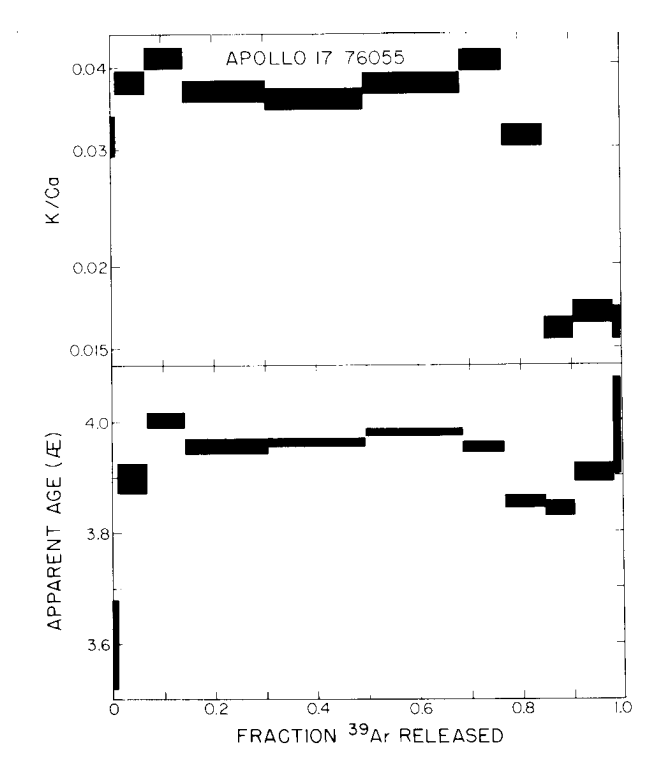
Figure 8: Argon plateau age of 76055 (from Huneke et al. 1973).
Summary of Age Data for 76055
Section titled “Summary of Age Data for 76055”| Ar/Ar Rb/Sr | |
|---|---|
| Kirsten et al. 1973 | 4.05 ± 0.07 b.y. |
| Kirsten and Horn 1974 | |
| Huneke et al. 1973 | 3.97 ± 0.04 |
| Turner et al. 1973 | 3.98 ± 0.05 |
| Tera et al. 1974 | 3.86 ± 0.04 |
Note: These are with the old decay constants.
al. (1974) have also reported Rb-Sr data for the matrix of 76055.
Cosmogenic isotopes and exposure ages
Section titled “Cosmogenic isotopes and exposure ages”Kirsten et al. (1973) and Kirsten and Horn (1974) Storzer et al. (1973) determined a mean galactic track determined a cosmic ray exposure age of 120 ± 15 m.y. density of 6.7 x 106 by 38Ar method. Huneke et al. (1973) and Turner et al. Taylor and Epstein (1973) determined this isotopic (1973) determined 140 m.y. and 125 m.y. respectively. composition of oxygen and of silicon.
Other Studies Processing
Section titled “Other Studies Processing”Delano (1977) showed that 76055 has olivine as its 76055 was sawn twice, into three chunks, but was not liquidus phase in the pressure range 0 to 23 kbars joined “slabbed” (figure 11). There are 17 thin sections. by orthopyroxene above 23 kbars. He concludes that the bulk 76055 composition does not represent magma derived by partial melting of either cosmic or differentiated source regions at any pressure on the Moon.
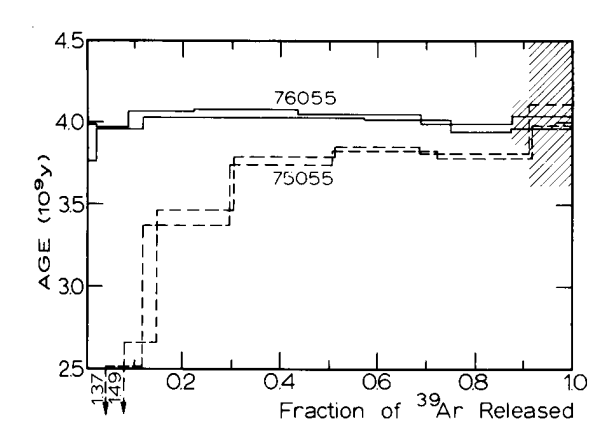
Figure 9: Argon release pattern for 76055 and 75055 (from Kirsten et al. 1973).
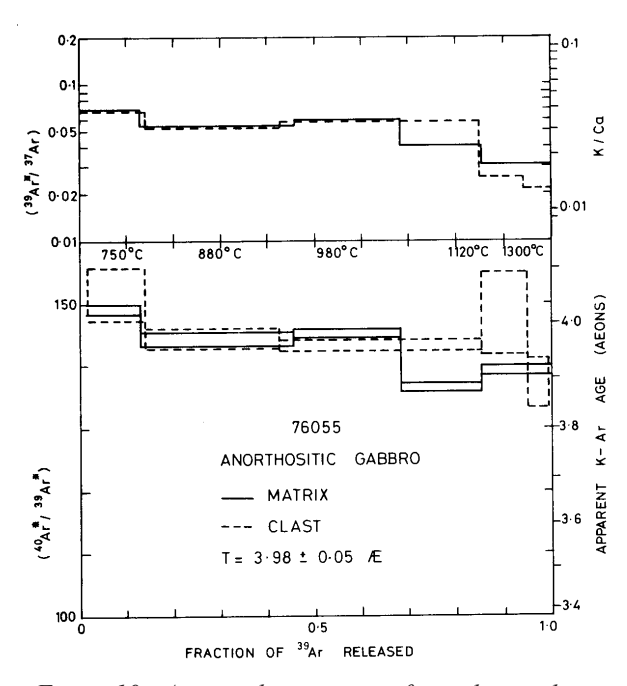
Figure 10: Argon release pattern for a clast and matrix of 76055 (from Turner et al. 1973).
tracks/cm2 for feldspar in 76055.
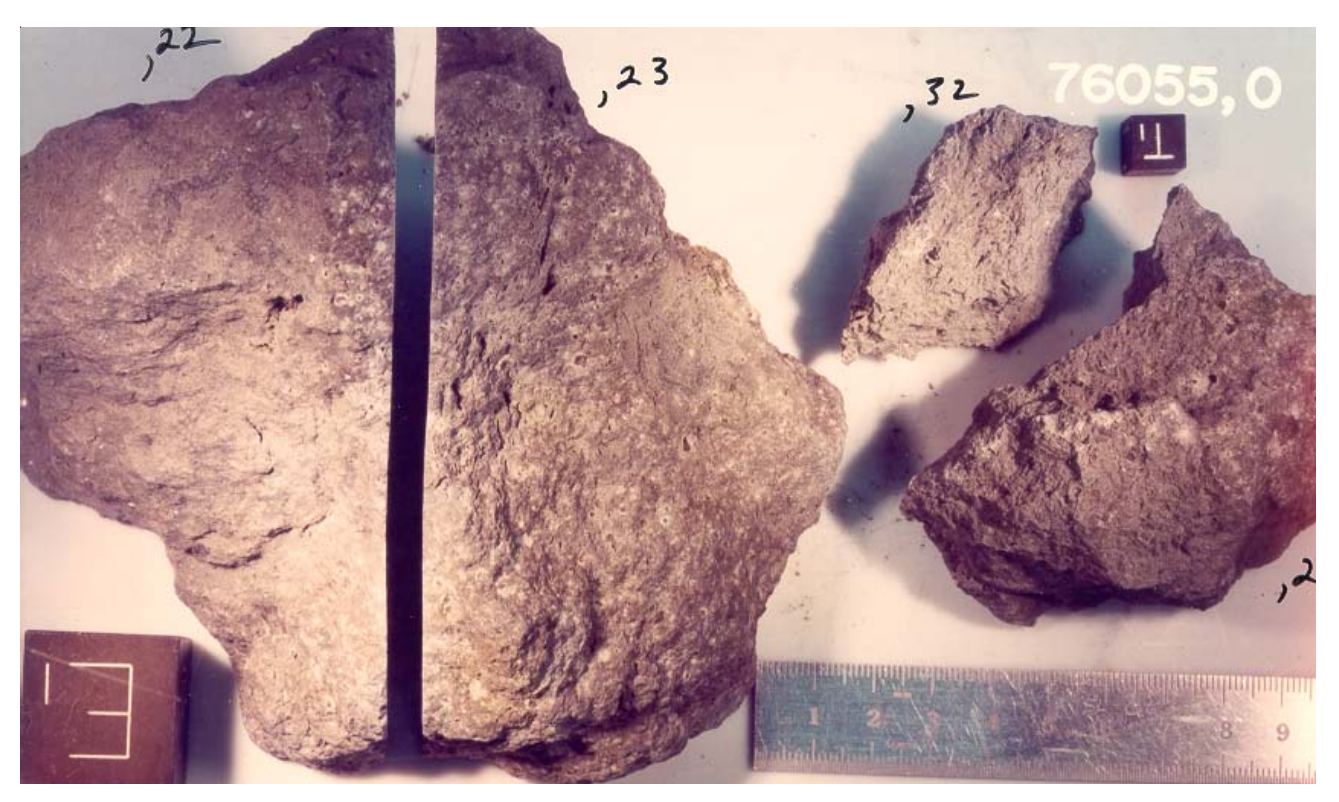
Figure 11: Group photo of 76055 after cutting. NASA S76-20175. Large cube is 1 in., small cube is 1 cm.
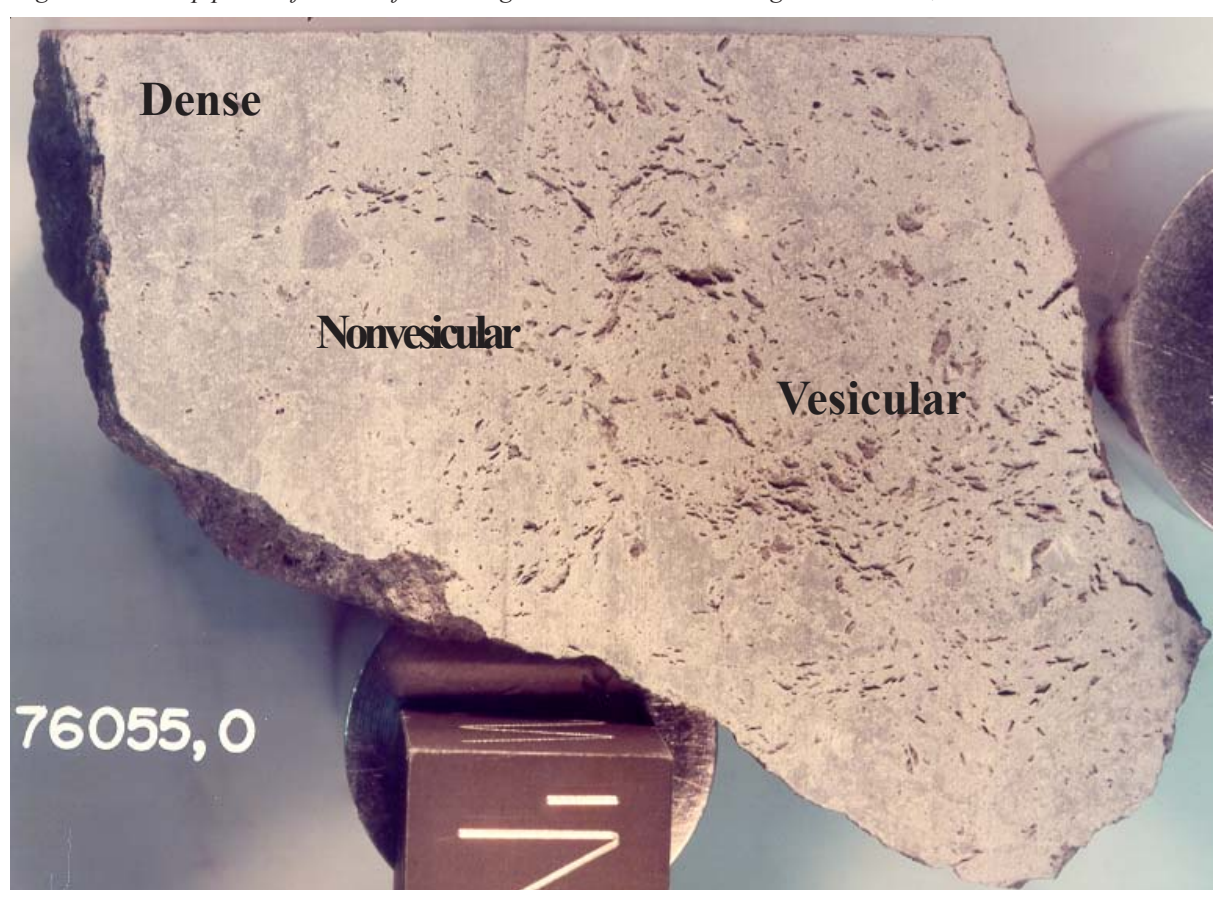
Figure 12: Sawn surface of 76055,23 showing three lithological units; a) tan vesicular, b) blueish nonvesicular, c) dense. NASA S76-20172. Cube is 1 inch.
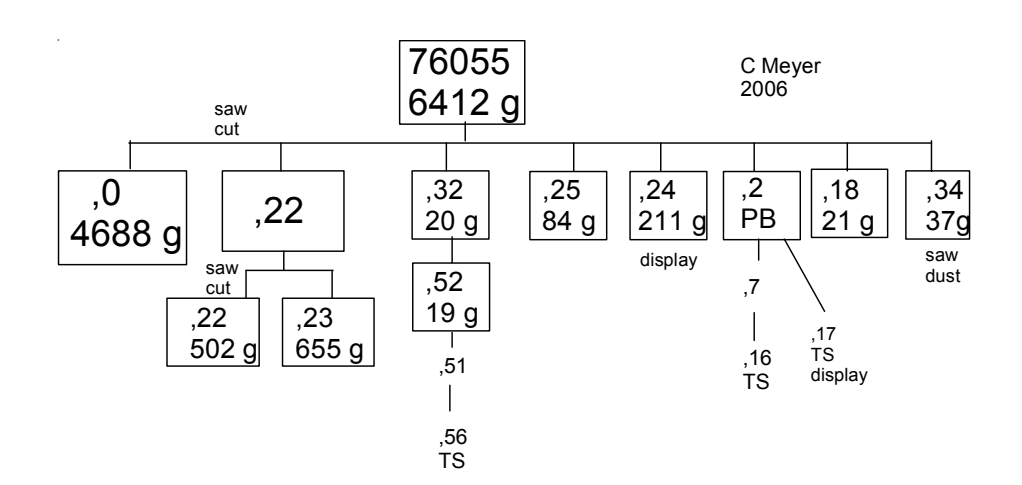
Table 2: Armalcolite
Section titled “Table 2: Armalcolite”| SiO2 | 0.3 |
|---|---|
| Al2O3 | 1.33 |
| Cr2O3 | 1.9 |
| TiO2 | 70.45 |
| MgO | 8.39 |
| FeO | 14.4 |
| MnO | 0.1 |
| ZrO2 | 2.25 |
| total | 99.12 |
Photo numbers for 76055
Section titled “Photo numbers for 76055”| S73-24158 – 24173 | B & W |
|---|---|
| S73-24158B – 24173 B | |
| S73-15713 - 15718 | Color |
| S73-16950 | |
| S75-34418 - 34426 | |
| S75-25820 | |
| S76-20168 - 20176 | |
| S93-045963 - 045965 | |
References for 76055
Section titled “References for 76055”Albee A.L., Gancarz A.J. and Chodos A.A. (1973) Metamorphism of Apollo 16 and 17 and Luna 20 metaclastic rocks at about 3.95 AE: Samples 61156, 64423,14-2, 65015, 67483,15-2, 76055, 22006, and 22007. Proc. 4th Lunar Sci. Conf. 569-595.
Butler P. (1973) Lunar Sample Information Catalog Apollo 17. Lunar Receiving Laboratory. MSC 03211 Curator’s Catalog. pp. 447.
Chao E.C.T. (1973a) The petrology of 76055,10, a thermally metamorphosed fragment-laden olivine micronorite homfels. Proc. 4th Lunar Sci. Conf. 719-732.
Chao E.C.T. (1973b) 76055, a fragment-laden contactmetamorphosed :magnesian hornfels (abs). EOS 54, 584.
Delano J.W. (1977) Experimental melting relations of 63545, 76015, and 76055. Proc. 8th Lunar Sci. Conf. 2097 2123.
Gibson E.K. and Moore G.W. (1974a) Sulfur abundances and distributions in the valley of Taurus-Littrow. Proc. 5th Lunar Sci. Conf. 1823-1837.
Huneke J.C., Jessberger E.K., Podosek F.A. and Wasserburg G.J. (1973) 40Ar/39Ar measurements in Apollo 16 and 17 samples and the chronology of metamorphic and volcanic activity in the Taurus-Littrow region. Proc. 4th Lunar Sci. Conf. 1725-1756.
Hubbard N.J., Rhodes J.M., Wiesmann H., Shih C.Y. and Bansal B.M. (1974) The chemical definition and interpretation of rock types from the non-mare regions of the Moon. Proc. 5th Lunar Sci. Conf. 1227-1246.
Kirsten T., Horn P., Heymann D., Hubner W. and Storzer D. (1973c) Apollo 17 crystalline rocks and soils: Rare gases, ion tracks, and ages (abs). EOS 54, 595-597. AGU
Kirsten T. and Horn P. (1974a) Chronology of the Taurus-Littrow region III: ages of mare basalts and highland breccias and some remarks about the interpretation of lunar highland rock ages. Proc. 5th Lunar Sci. Conf. 1451-1475.
LSPET (1973) Apollo 17 lunar samples: Chemical and petrographic description. Science 182, 659-672.
LSPET (1973) Preliminary Examination of lunar samples. Apollo 17 Preliminary Science Rpt. NASA SP-330. 7-1 – 7-46.
Meyer C. (1994) Catalog of Apollo 17 rocks. Vol. 4 North Massif
Muehlberger et al. (1973) Documentation and environment of the Apollo 17 samples: Apreliminary report. Astrogeology 71 322 pp superceeded by Astrogeolgy 73 (1975) and by Wolfe et al. (1981)
Muehlberger W.R. and many others (1973) Preliminary Geological Investigation of the Apollo 17 Landing Site*. In* Apollo 17 Preliminary Science Report. NASA SP-330.
Nava D.F. (1974a) Chemical compositions of some soils and rock types from the Apollo 15, 16, and 17 lunar sites. Proc. 5th Lunar Sci. Conf. 1087-1096.
Nava D.F. (1974b) Chemistry of some rock types and soils from the Apollo 15, 16 and 17 lunar sites (abs). Lunar Sci. V, 547-549. Lunar Planetary Institute, Houston.
Nyquist L.E., Bansal B.M., Wiesmann H. and Jahn B.-M. (1974a) Taurus-Littrow chronology: some constraints on early lunar crustal development. Proc. 5th Lunar Sci. Conf. 1515-1539.
Palme H., Baddenhausen H., Blum K., Cendales M., Dreibus G., Hofmeister H., Kmse H., Palme C., Spettel B. Vilcsek E. and Wanke H. (1978) New data on lunar samples and achondrites and a comparison of the least fractionated samples from the earth, the moon, and the eucrite parent body. Proc. 9th Lunar Planet. Sci. Conf. 25-57.
Philpotts J.A., Schuhmann S., Schnetzler C.C., Kouns C.W., Doan A.S., Wood F.M., Bickel A.L. and Lum R.K.L. (1973a) Apollo 17: Geochemical aspects of some soils, basalts, and breccia (abs). EOS 54, 603-604. Amer. Geophys. Union
Philpotts J.A., Schuhmann S., Kouns C.W., Lum R.K.L. and Winzer S. (1974a) Origin of Apollo 17 rocks and soils. Proc. 5th Lunar Sci. Conf. 1255-1267.
Storzer D., Poupeau G. and Kratschmer W. (1973) Trackexposure and formation ages of some lunar samples. Proc. 4th Lunar Sci. Conf. 2363-2377.
Taylor H.P. and Epstein S. (1973) O18/O16 and Si30/Si28 studies of some Apollo 15, 16 and 17 samples. Proc. 4th Lunar Sci. Conf. 1657-1679.
Tera F., Papanastassiou D.A. and Wasserburg G.J. (1973) A lunar cataclysm at 3.95 AE and the structure of the lunar crust (abs). Lunar Sci. IV, 723-725 Lunar Planetary Institute, Houston.
Tera F., Papanastassiou D.A. and Wasserburg G.J. (1974a) Isotopic evidence for a terminal lunar cataclysm. Earth Planet. Sci. Lett. 22, 1-21.
Tera F., Papanastassiou D.A. and Wasserburg G.J. (1974b) The lunar time scale and a summary of isotopic evidence for a terminal lunar cataclysm (abs). Lunar Sci. V, 792-794. Lunar Planetary Institute, Houston.
Turner G., Cadogan P.H. and Yonge C.J. (1973a) Argon selenochronology. Proc. 4th Lunar Sci. Conf. 1889-1914.
Turner G., Cadogan P.H. and Yonge C.J. (1973b) Apollo 17 age determinations. Nature 242, 513-515.
Warner J.L., Simonds C.H., Phinney W.C. and Gooley R. (1973a) Petrology and genesis of two “igneous” rocks from Apollo 17 (76055 and 77135) (abs). EOS 54, 620-621. AGU
Wolfe E.W., Bailey N.G., Lucchitta B.K., Muehlberger W.R., Scott D.H., Sutton R.L and Wilshire H.G. (1981) The geologic investigation of the Taurus-Littrow Valley: Apollo 17 Landing Site. US Geol. Survey Prof. Paper, 1080, pp. 280.