Sample 78546
78546 – 42.66 grams 78547 – 29.91 grams Speckled Regolith Breccia
Section titled “78546 – 42.66 grams 78547 – 29.91 grams Speckled Regolith Breccia”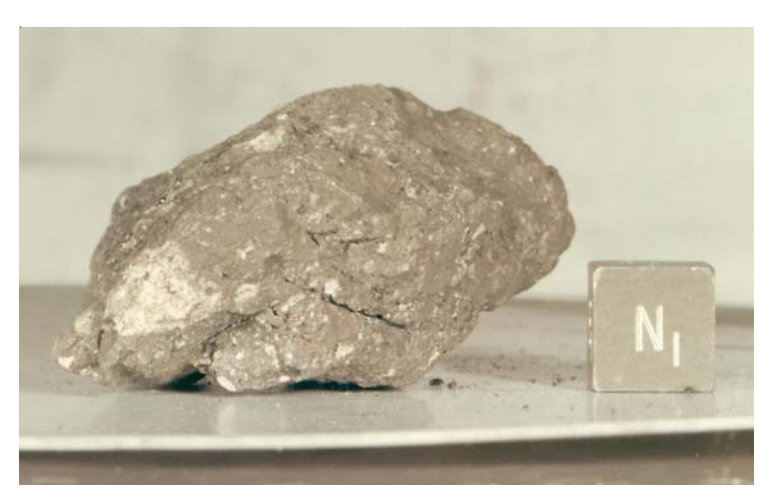
Figure 1: Photo of 78546. Cube is 1 cm. S73-21406
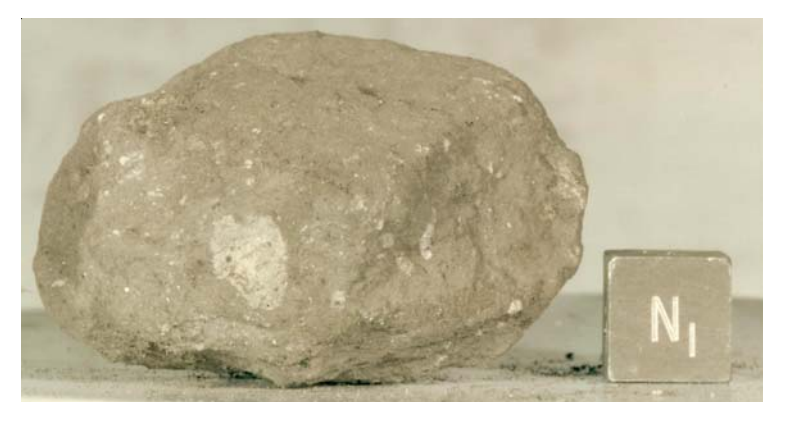
Figure 2: Photo of 78547. Cube is 1 cm. S73-21404
Introduction
Section titled “Introduction”78546 and 78547 are coherent dark matrix regolith breccias that were collected as rake samples from the base of the Sculptured Hills, Apollo 17 (Wolfe et al. 1981). The B1 side of 78546 has numerous micrometeorite craters. 78535 and related samples may be additional pieces of this rock type. These samples of regolith breccia have a speckled appearance with about 5 % small plagioclase clasts, set in a dark aphanitic matrix.
Petrography
Section titled “Petrography”Butler (1973), Keil et al. (1974), Warner et al. (1979, Fruland (1983) and Meyer (1994) included 78546 and 78547 in their catalogs. Both samples have feldspathic
Mineralogical Mode for 78546
Section titled “Mineralogical Mode for 78546”| (Simon et al. 1990) | ||||
|---|---|---|---|---|
| Matrix | 52.6 % | |||
| 20-90 micron | 90-100 micron | |||
| Mare Basalt | 0.1 | 3.7 | ||
| KREEP Basalt | ||||
| Feld. Basalt | 0.1 | |||
| Plutonic | 0.1 | 1.8 | ||
| Granulitic | 0.2 | 0.5 | ||
| Breccia | 0.6 | 4.2 | ||
| Olivine | 1.4 | 0.4 | ||
| Pyroxene | 3.8 | 1.2 | ||
| Plagioclase | 4.2 | 3.4 | ||
| Opaques | 0.8 | |||
| Glass | 8.7 | 7.7 | ||
| Agglutinate | 0.7 | 3.5 |
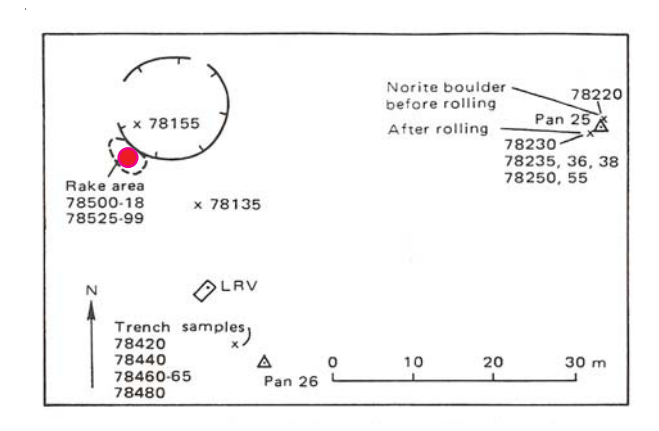
Figure 3: Map of station 8, Apollo 17 showing location of rake samples.
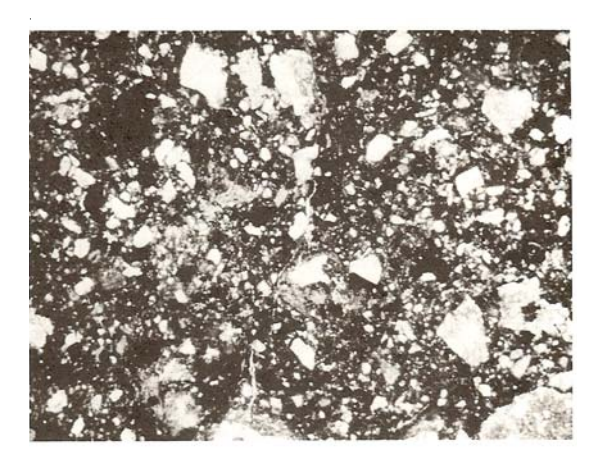
Figure 4: Photomicrograph of thin section 78546,8. Field of view is 3 x 4 mm.
clasts about 5 mm across (figures 1 and 2). Simon et al. (1990) determined the mode and compared 78546 with other regolith breccias from Apollo 17.
The matrix is primarily dark brown glass and is lacking in void space. The clastic portion has seriate grain size and made up of minerals from mare basalt.
Glass (especially glass beads) from these regolith breccias have been studied by Warner et al. (1979) and Shearer et al. (1991). Some of the glass beads were found to be poor is silica and sodium (rock rain?). Other glass beads appear analogous to the volcanic orange glass from Shorty Crater. Some glass is agglutinate.
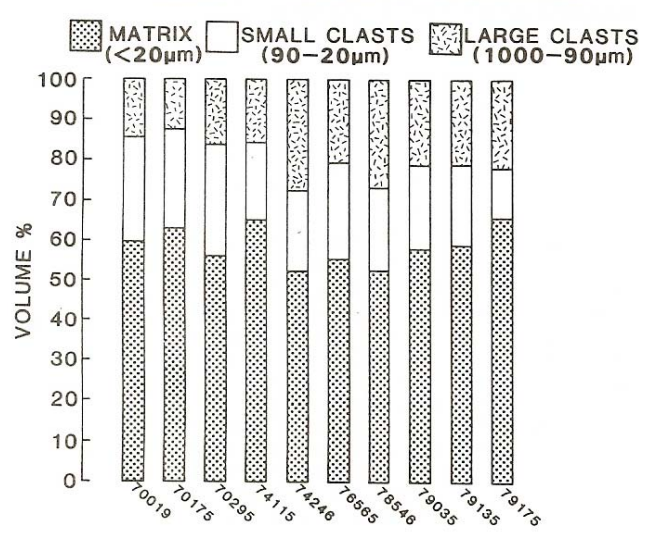
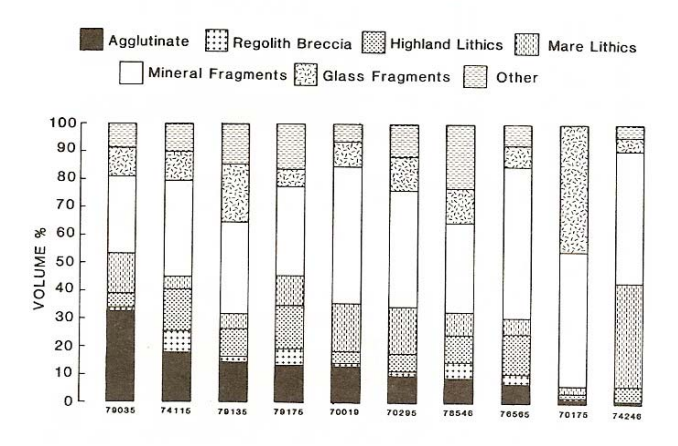
summary diagrams from Simon et al. 1990
Chemistry
Section titled “Chemistry”Laul and Schmitt (1975) determined the chemical composition (figures 5 and 6).
Processing
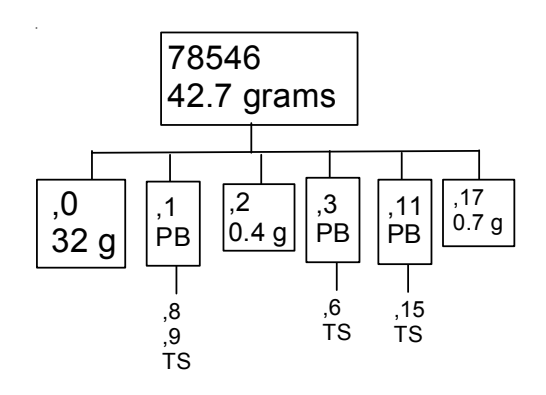
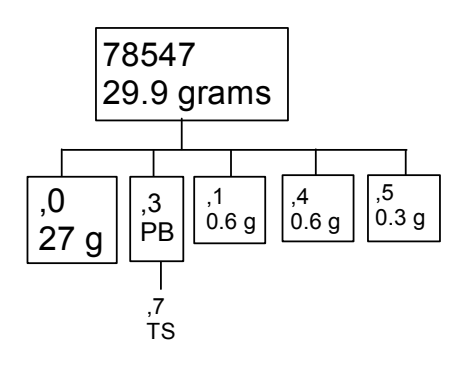
Section titled “Processing”There are 4 thin sections of 78546, but only one for 78547. The white clasts remain unstudied.
Table 1. Chemical composition of 78546.
| 14510 11 | 78546 | 78547 | J | ||
|---|---|---|---|---|---|
| reference weight | Simon90 | Laul75 | 70347 | ||
| SiO2 % TiO2 Al2O3 FeO MnO MgO CaO Na2O K2O P2O5 S % sum | 4.33 13.9 13.6 0.18 10.6 11.5 0.47 0.11 | (a) (a) (a) (a) (a) (a) (a) | 13.2 0.16 10 11 0.45 | 2.2 16.3 11.8 0.16 11 11.1 0.36 0.085 | (a) (a) (a) (a) (a) (a) (a) |
| Sc ppm V | 40 | (a) | 31 70 | 30 90 | (a) (a) |
| Cr Co Ni | 2805 37 100 | (a) (a) (a) | 2463 33 150 | (a) (a) (a) | |
| Cu Zn Ga Ge ppb As Se | 60 | (a) | |||
| Rb Sr Y | 10.8 150 | (a) (a) | |||
| Zr Nb Mo Ru Rh Pd ppb Ag ppb Cd ppb In ppb Sn ppb Sb ppb Te ppb | 110 | (a) | |||
| Cs ppm Ba La Ce Pr | 0.13 110 8.62 22.7 | (a) (a) (a) (a) | 100 7.8 22 | 6.4 18 | (a) (a) (a) |
| Nd Sm Eu Gd | 17.8 5.8 1.4 7.3 | (a) (a) (a) (a) | 16 5.5 1.4 | 4.2 0.94 | (a) (a) (a) |
| Tb Dy Ho Er | 1.3 8.6 | (a) (a) | 1.2 7.6 | 0.8 5 | (a) (a) |
| Tm Yb Lu Hf Ta W ppb Re ppb Os ppb | 0.71 4.42 0.66 4.7 0.76 | (a) (a) (a) (a) (a) | 0.56 4.7 | 3.4 0.48 2.9 0.47 | (a) (a) (a) (a) |
| Ir ppb Pt ppb | 4.5 | (a) | 6 | (a) | |
| Au ppb Th ppm U ppm technique: | 6 1.15 0.33 (a) INAA | (a) (a) (a) | 1 0.8 | 1 | (a) (a) |
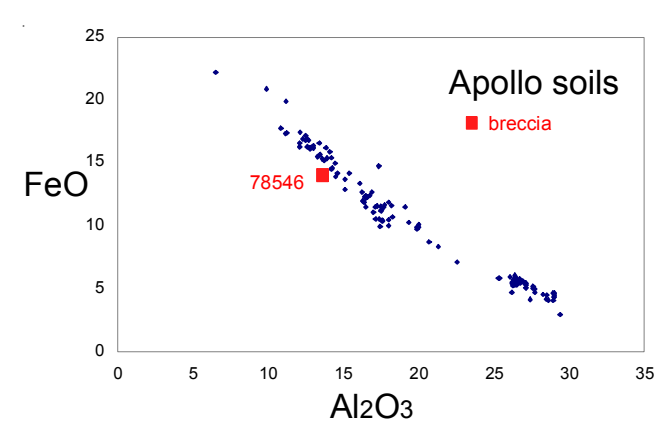
Figure 5: Composition of 78546 compared with lunar soils.
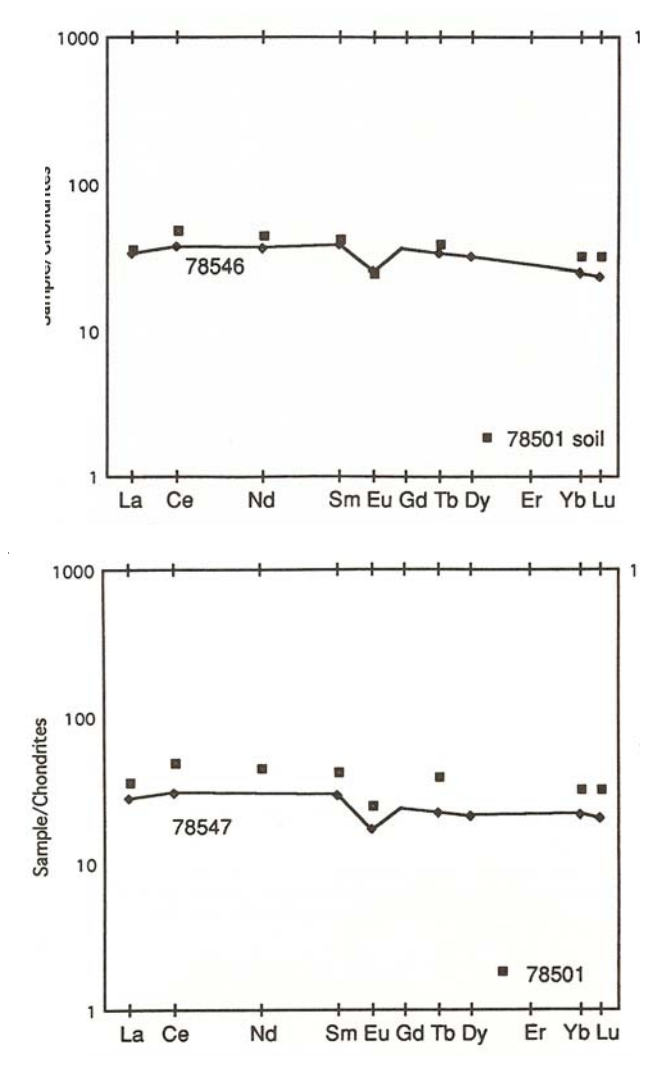
Figure 6 a, b: Normalized rare-earth-element diagrams for 78546 and 78547.
References for 78546 and 78547
Section titled “References for 78546 and 78547”Butler P. (1973) Lunar Sample Information Catalog Apollo 17. Lunar Receiving Laboratory. MSC 03211 Curator’s Catalog. pp. 447.
Fruland R.M. (1983) Regolith Breccia Workbook. Curatorial Branch Publication # 66. JSC 19045.
Keil K., Dowty E. and Prinz M. (1974) Description, classification and inventory of 113 Apollo 17 rake samples from stations 1A, 2, 7 and 8. Curator’s Catalog, pp. 149.
Laul J.C. and Schmitt R.A. (1975c) Chemical composition of Apollo 17 samples: Boulder breccias (2), rake breccias (8), and others (abs). Lunar Sci. VI, 489-491. Lunar Planetary Institute, Houston.
78548 78549 78535 78546 78547 78527 78526
LSPET (1973) Apollo 17 lunar samples: Chemical and petrographic description. Science 182, 659-672.
LSPET (1973) Preliminary Examination of lunar samples. Apollo 17 Preliminary Science Rpt. NASA SP-330. 7-1 – 7-46.
Meyer C. (1994) Catalog of Apollo 17 rocks: Volume 4. Curator’s Office JSC 26088 pp. 644 76 78
Shearer C.K., Papike J.J., Galbreath K.C. and Shimizu N. (1991) Exploring the lunar mantle with secondary ion mass spectometry: A comparison of lunar picritic glass beads from the Apollo 14 and Apollo 17 sites. Earth Planet. Sci. Lett. 102, 134-147.
Simon S.B., Papike J.J. and Laul J.C. (1981) The lunar regolith: Comparative studies of the Apollo and Luna sites. Proc. 12th Lunar Planet. Sci. Conf. 371-388.
Simon S.B., Papike J.J., Gosselin D.C., Laul J.C., Hughes S.S. and Schmitt R.A. (1990) Petrology and chemistry of Apollo 17 regolith breccias: A history of mixing of highland and mare regolith. Proc. 20th Lunar Planet. Sci. 219-230. Lunar Planetary Institute, Houston.
Warner R.D., Keil K., Nehru C.E. and Taylor G.J. (1978) Catalogue of Apollo 17 rake samples from Stations la, 2, 7, and 8. Spec. Publ. #18, UNM Institute of Meteoritics, Albuquerque. 88 pp.
78535 78537 78546 78547 78548 78549 78555 78567 78568
Warner R.D., Taylor G.J. and Keil K. (1979c) Composition of glasses in Apollo 17 soil breccias (abs). Lunar Planet. Sci. X, 1298-1300. Lunar Planetary Institute, Houston.
Warner R.D., Taylor G.J., Wentworth S.J., Huss G.R., Mansker W.L., Planner H.N., Sayeed U.A. and Keil K. (1979d) Electron microprobe analyses of glasses from Apollo 17 rake sample breccias and Apollo 17 drill core. UNM Spec. Publ. #20, Albuquerque, 20 pp.
Wolfe E.W., Bailey N.G., Lucchitta B.K., Muehlberger W.R., Scott D.H., Sutton R.L and Wilshire H.G. (1981) The geologic investigation of the Taurus-Littrow Valley: Apollo 17 Landing Site. US Geol. Survey Prof. Paper, 1080, pp. 280.