Sample 78597
78597 Ilmenite Basalt 319 grams
Section titled “78597 Ilmenite Basalt 319 grams”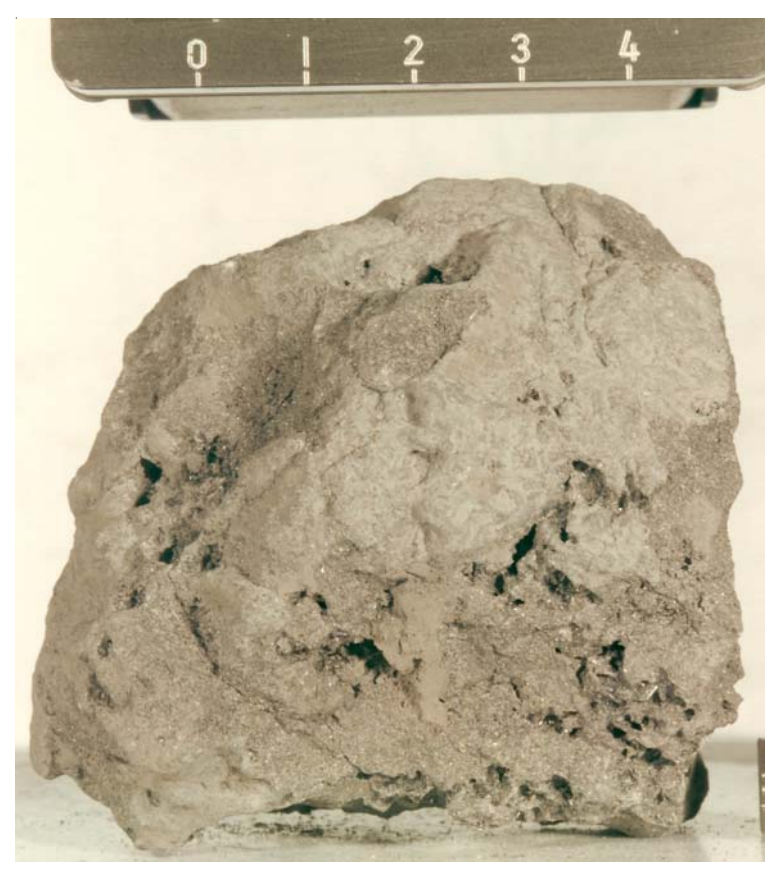
Figure 1: Photo of 78597. Scale in cm. S73-21421
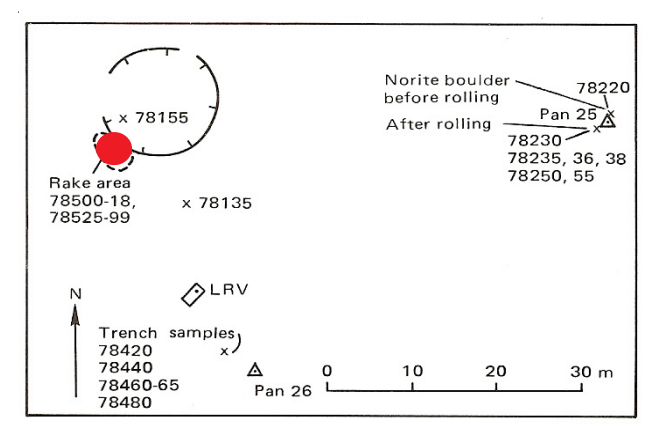
Figure 2: Location where 78597 was found.
Introduction
Section titled “Introduction”78597 is a vuggy, medium-grained high-Ti basalt (figure 1 and 3). It was collected as part of a rake sample and large comprehensive sample at station 8, Apollo 17 (figure 2).
Petrography
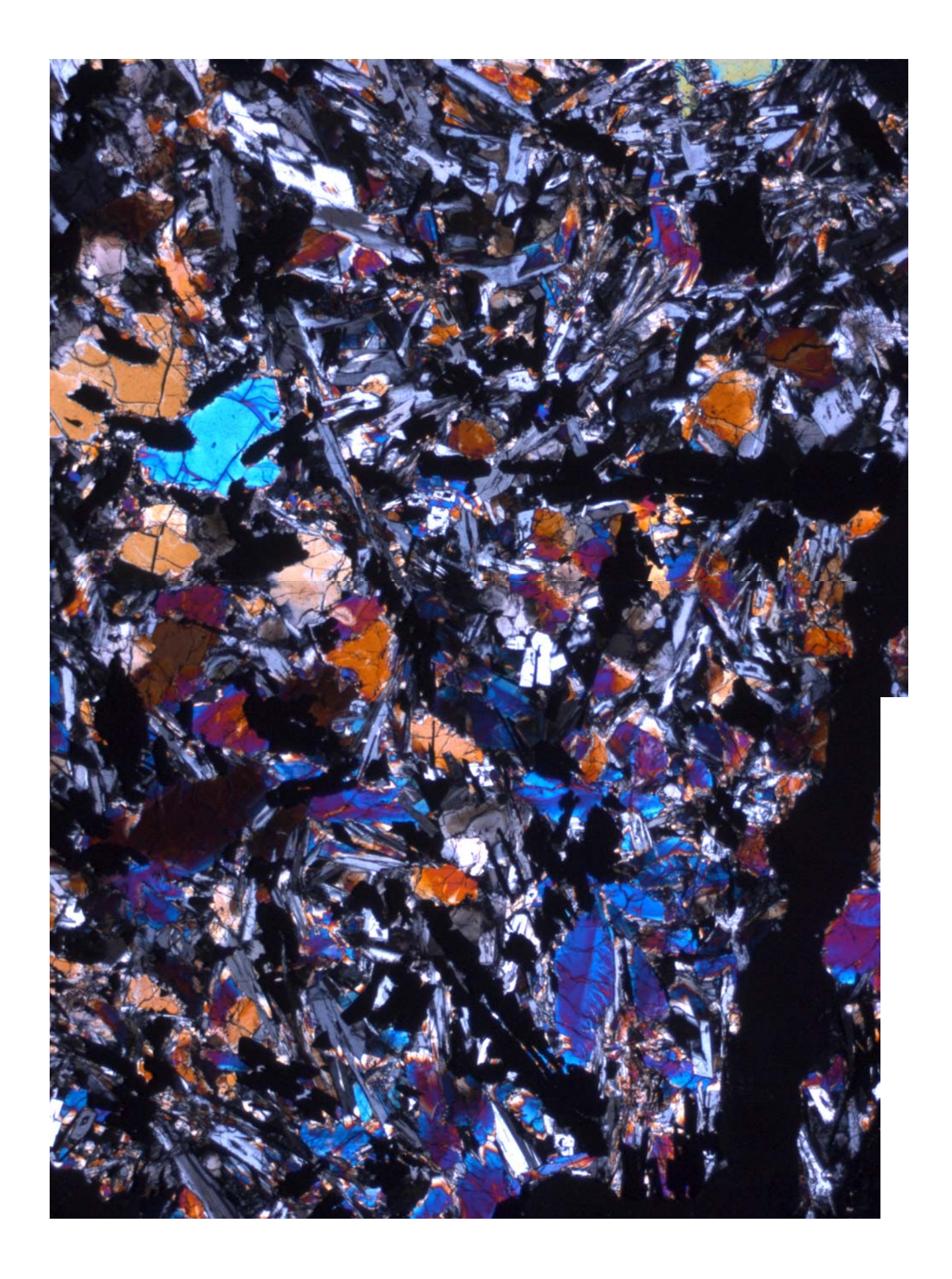
Section titled “Petrography”78597 is an olivine-microporphritic ilmenite basalt with large olivine grains set in a predominantly variolitic groundmass (figure 5). Plagioclase laths in the groundmass have hollow cores (interfaciculate) and are bundled in sheaths with intergrown pyroxene. Ilmenite occurs in chains. Trace tranquillityite has been reported (Warner et al. 1978).
Chemistry
Section titled “Chemistry”Warner et al. (1975) and Rhodes et al. (1976) reported the chemical composition of 78597 (table 1, figures 6,
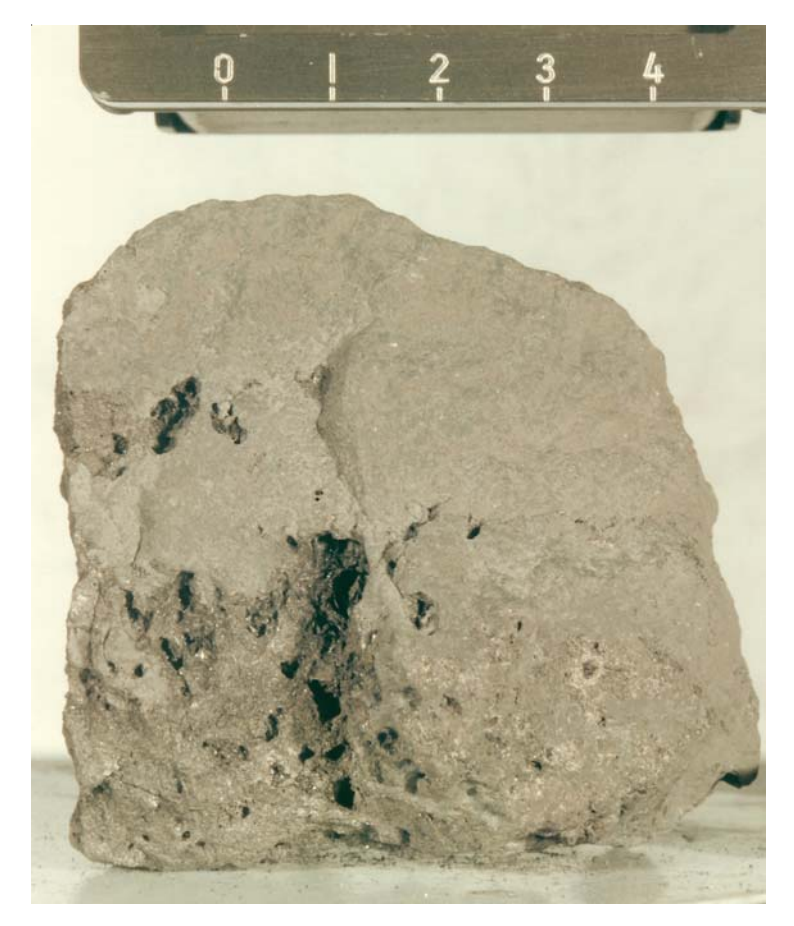
Figure 3: Phot of 78597. Scale in cm. S73-21422
7 and 8). Note that the Rb content is low, compared with other Apollo 17 basalts.
Gibson et al. (1976) reported 1990 ppm S.
Radiogenic age dating
Section titled “Radiogenic age dating”Nyquist et al. (1976) studied the Rb-Sr isotope system, but did not determine an age. However, the age of Apollo 17 basalt is 3.72 b.y.
Cosmogenic isotopes and exposure ages
Section titled “Cosmogenic isotopes and exposure ages”O’Kelley et al. (1974) determined the cosmic-rayinduced activity of 22Na = 33 dpm/kg., 26Al = 48 dpm/ kg., 46Sc = 25 dpm/kg., 54Mn = 80 dpm/kg and 56Co = 80 dpm/kg.
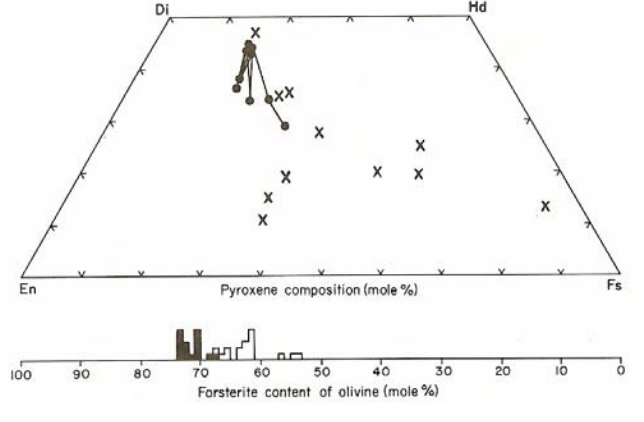
Figure 4: Composition of olivine and pyroxene in 78597 (Warner et al. 1978).
Mineralogical Mode
Section titled “Mineralogical Mode”| Processing | Olivine | 5.9 | |
|---|---|---|---|
| There is only one (small) thin section of 78597. | Pyroxene | 42.2 | |
| Plagioclase | 29.5 | ||
| Opaques | 16.5 | ||
| Silica | 5.4 | ||
| Meostasis | 0.5 |
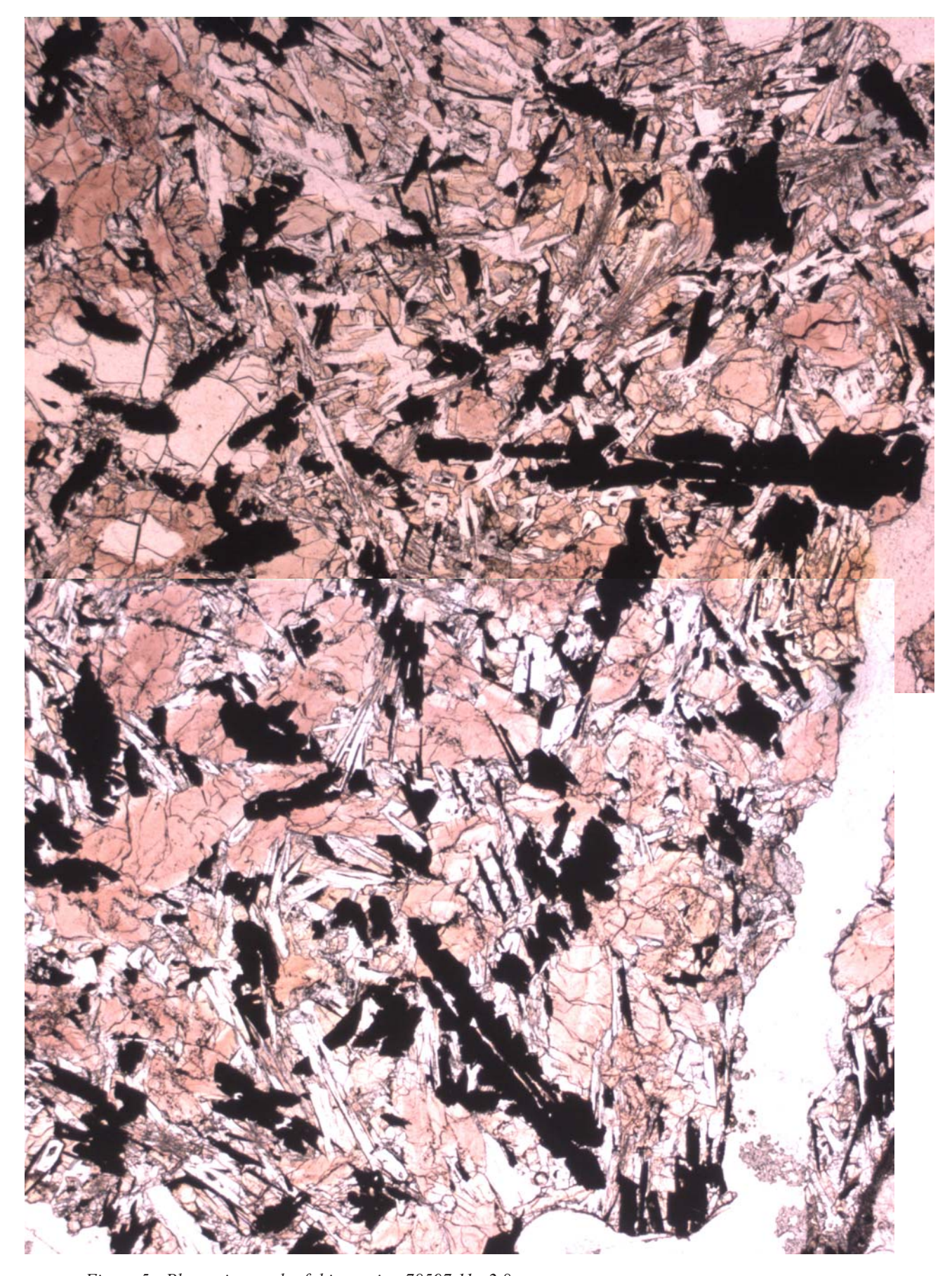
Figure 5: Photomicrgraph of thin section 78597,11. 2.8 mm across
| weight | reference Eldridge74 | Rhodes76 Nyquist76 | Warner75 | A17 78597 12 | |
|---|---|---|---|---|---|
| SiO2 % TiO2 Al2O3 FeO MnO MgO CaO Na2O K2O P2O5 S % sum | 0.046 | 38.54 12.39 8.85 19.67 0.29 7.83 10.94 0.39 (a) 0.04 0.11 0.19 | (d) (d) 11.8 (d) 9 (d) 18 (d) 0.24 (d) 7.1 (d) 10.7 (d) 0.42 (d) 0.06 (d) (d) | (b) (b) (b) (b) (b) (b) (b) (b) | A11 10 8 TiO2 6 4 A12 A15 2 0 0 5 10 15 MgO |
| Sc ppm V | 85 | (b) 75 100 | (b) (b) | Figure 6: Composition of lunar basalts. | |
| Cr Co Ni Cu | 2190 20.7 | (d) (b) 18.5 | (b) | 300 Apollo 17 basalts 250 | |
| Zn Ga Ge ppb As Se Rb Sr Y Zr Nb Mo Ru Rh Pd ppb Ag ppb Cd ppb | 0.37 130 | (c ) (c ) | 200 Ba/ 78597 /Rb group A 150 group B 100 50 group C 0 5 7 9 11 13 Sm ppm Figure 7: Trace element characteristics of Apollo | ||
| In ppb Sn ppb Sb ppb Te ppb Cs ppm Ba La Ce Pr Nd Sm Eu Gd Tb Dy Ho Er Tm Yb Lu Hf Ta W ppb Re ppb Os ppb Ir ppb Pt ppb Au ppb Th ppm | 0.38 (a) | 60.6 5.67 17.9 18.8 7.17 1.48 11.2 13 7.94 7.37 1.07 6.8 | (c ) (c ) 5.3 (c ) 18 (c ) (c ) 7.3 (c ) 1.4 (c ) 1.9 (c ) 12 (c ) (c ) 6.7 (b) 1 (b) 6.2 1.5 | (b) (b) (b) (b) (b) (b) (b) (b) (b) (b) | 17 basalts. Figure 8: Normalized rare-earth-element diagram for 78597 compared with A and B types of Apollo 17 basalt. |
| U ppm | 0.11 (a) | technique: (a) radiation count., (b) INAA, (c ) IDMS, (d) XRF |
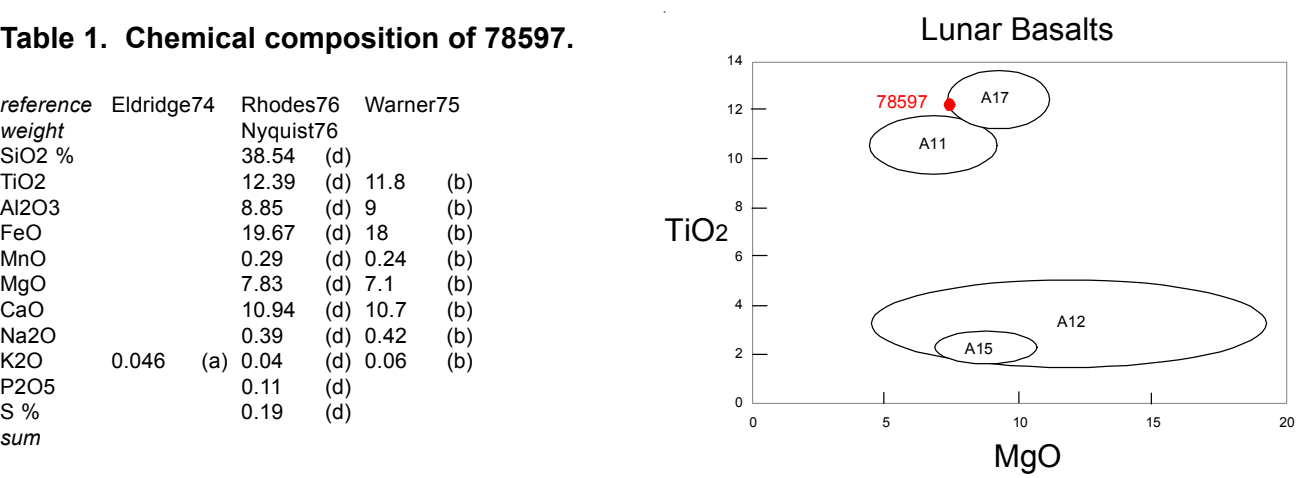
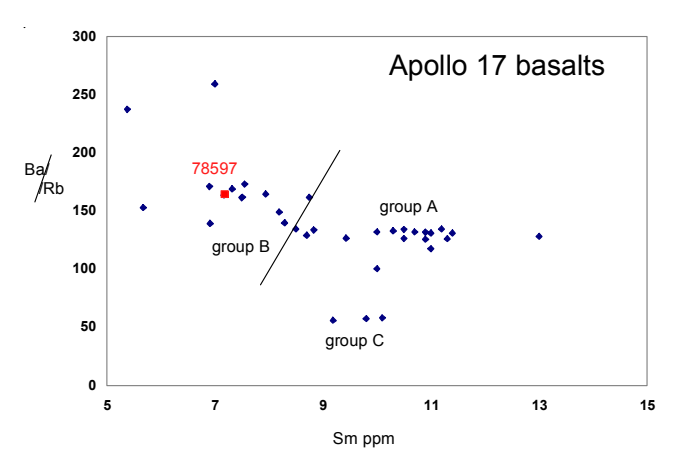
Figure 7: Trace element characteristics of Apollo
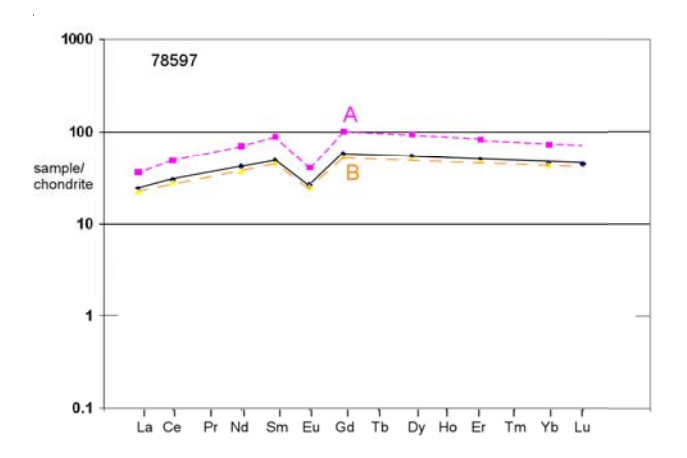
Figure 8: Normalized rare-earth-element diagram for 78597 compared with A and B types of Apollo 17 basalt.
References for 78597
Section titled “References for 78597”Brown G.M., Peckett A., Emeleus C.H., Phillips R. and Pinsent R.H. (1975a) Petrology and mineralogy of Apollo 17 mare basalts. Proc. 6th Lunar Sci. Conf. 1-13.
Butler P. (1973) Lunar Sample Information Catalog Apollo 17. Lunar Receiving Laboratory. MSC 03211 Curator’s Catalog. pp. 447.
Gibson E.K., Usselman T.M. and Morris R.V. (1976a) Sulfur in the Apollo 17 basalts and their source regions. Proc. 7th Lunar Sci. Conf. 1491-1505.
LSPET (1973) Apollo 17 lunar samples: Chemical and petrographic description. Science 182, 659-672.
LSPET (1973) Preliminary Examination of lunar samples. Apollo 17 Preliminary Science Rpt. NASA SP-330. 7-1 – 7-46.
Ma M-S., Schmitt R.A., Warner R.D., Taylor G.J. and Keil K. (1979b) Composition, petrography, and genesis of Apollo 17 high-Ti mare basalts (abs). Lunar Planet. Sci. X, 765-767. Lunar Planetary Institute, Houston.
Meyer C. (1994) Catalog of Apollo 17 rocks. Vol. 4 North Massif
Muehlberger et al. (1973) Documentation and environment of the Apollo 17 samples: A preliminary report. Astrogeology 71 322 pp superceeded by Astrogeology 73 (1975) and by Wolfe et al. (1981)
Muehlberger W.R. and many others (1973) Preliminary Geological Investigation of the Apollo 17 Landing Site. In Apollo 17 Preliminary Science Report. NASA SP-330.
Neal C.R. (2001) Interior of the moon: The presence of garnet in the primitive deep lunar mantle. J. Geophys. Res. 106, 27865-27885.
Nyquist L.E., Bansal B.M. and Wiesmann H. (1976a) Sr isotopic constraints on the petrogenesis of Apollo 17 mare basalts. Proc. 7th Lunar Sci. Conf. 1507-1528.
O’Kelley G.D., Eldridge J.S. and Northcutt K.J. (1974a) Cosmogenic radionuclides in samples from Taurus-Littrow: Effects of the solar flare of August 1972. Proc. 5th Lunar Sci. Conf. 2139-2147.
Rhodes J.M., Hubbard N.J., Wiesmann H., Rodgers K.V., Brannon J.C. and Bansal B.M. (1976a) Chemistry, classification, and petrogenesis of Apollo 17 mare basalts. Proc. 7th Lunar Sci. Conf. 1467-1489.
Ryder G. (1993) Catalog of Apollo 17 rocks. Vol. 1 South Massif
Warner R.D., Keil K., Prinz M., Laul J.C., Murali A.V. and Schmitt R.A. (1975b) Mineralogy, petrology, and chemistry of mare basalts from Apollo 17 rake samples. Proc. 6th Lunar Sci. Conf. 193-220.
Warner R.D., Taylor G.J., Conrad G.H., Northrop H.R., Barker S., Keil K., Ma M.-S. and Schmitt R. (1979a) Apollo 17 high-Ti mare basalts: New bulk compositional data, magma types, and petrogenesis. Proc. 10th Lunar Planet. Sci. Conf. 225-247.
Wolfe E.W., Bailey N.G., Lucchitta B.K., Muehlberger W.R., Scott D.H., Sutton R.L and Wilshire H.G. (1981) The geologic investigation of the Taurus-Littrow Valley: Apollo 17 Landing Site. US Geol. Survey Prof. Paper, 1080, pp. 280